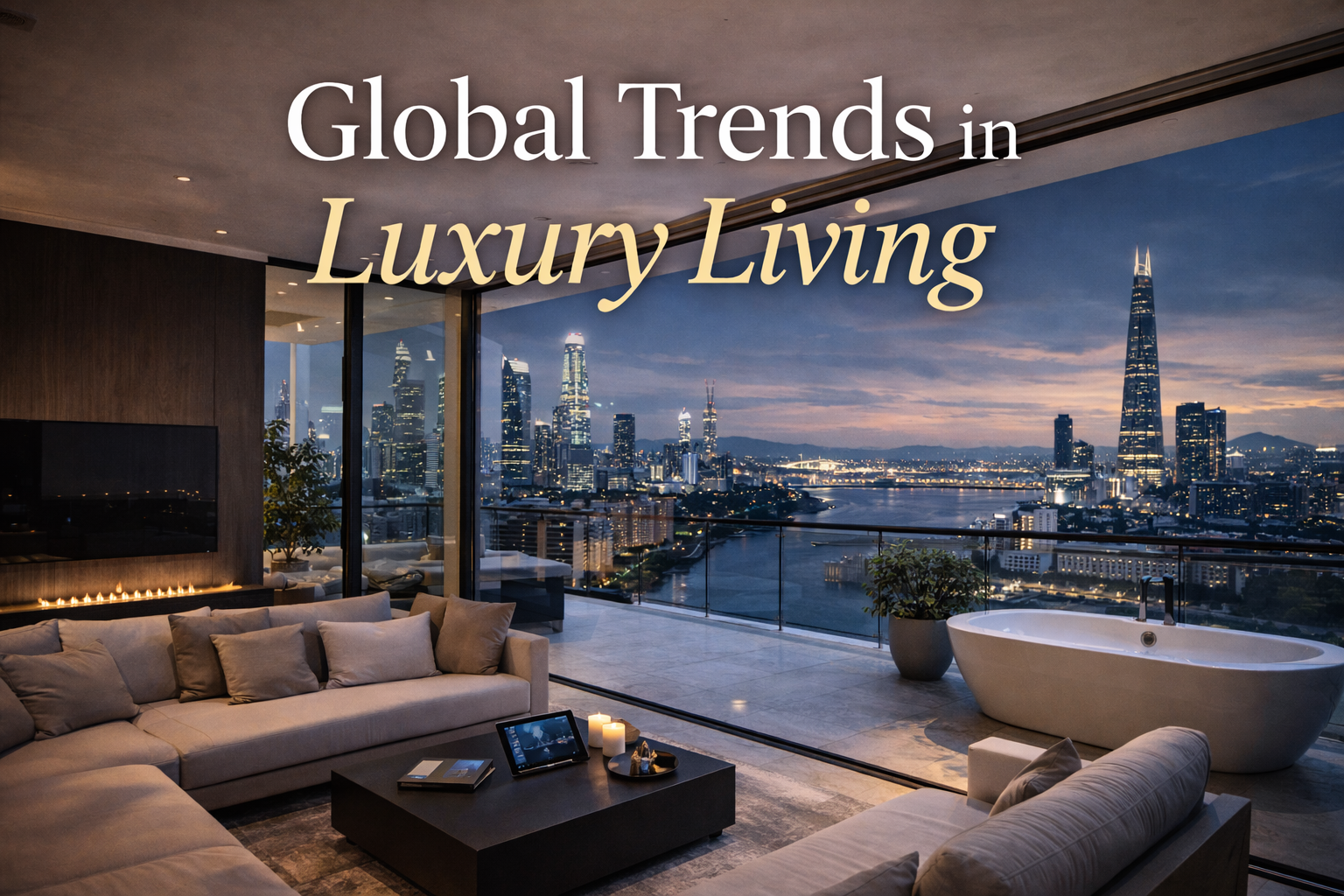
Luxury living continues to evolve alongside global shifts in technology, lifestyle preferences, and wealth dynamics. Today’s high-end properties are no longer defined solely by size or prestige, but by how intelligently they enhance comfort, convenience, wellness, and long-term value. Across major prime markets, several key trends are reshaping what buyers expect from luxury real estate.
One of the most significant developments is the growing emphasis on wellness-oriented living. Modern luxury homeowners increasingly prioritize environments that promote physical and mental well-being. Natural light, clean air systems, spa-inspired bathrooms, private fitness spaces, and seamless indoor-outdoor integration have become essential components of high-end residences. Homes are designed not just as living spaces, but as personal sanctuaries.
Technology has also become central to contemporary luxury. Smart home integration is now an expectation rather than a novelty. Advanced automation systems allow owners to control lighting, climate, security, entertainment, and energy efficiency with ease. Beyond convenience, these technologies provide enhanced security, privacy, and operational efficiency, aligning with the demands of globally mobile and digitally connected buyers.
Sustainability represents another defining shift in luxury living. High-net-worth individuals are placing greater importance on energy efficiency, eco-friendly materials, and responsible design. Sustainable architecture, renewable energy solutions, and environmentally conscious construction practices are increasingly influencing purchasing decisions. Luxury and sustainability are no longer viewed as opposing concepts, but as complementary priorities.
Flexibility and multifunctional design are likewise gaining prominence. As remote work and hybrid lifestyles become more common, buyers seek properties that accommodate diverse needs. Spaces that effortlessly transition between living, working, entertaining, and relaxation add substantial appeal. Adaptability has become a critical dimension of modern luxury properties.
Privacy and exclusivity remain enduring drivers of demand, yet their interpretation is evolving. Buyers are not only seeking secluded locations but also secure, low-density environments that offer discretion without sacrificing connectivity. Gated communities, branded residences, and architecturally distinctive homes continue to attract attention from international clients.
Ultimately, global trends in luxury living reflect a broader transformation in buyer priorities. Prestige and aesthetics remain important, but intelligent design, wellness, sustainability, and technology now play equally decisive roles. Luxury real estate is increasingly defined by experience, functionality, and long-term lifestyle enhancement rather than mere opulence.
For investors and buyers alike, understanding these shifts is essential. Properties aligned with emerging preferences tend to demonstrate stronger demand, greater resilience, and enhanced long-term value within competitive prime markets.