In luxury real estate, demand rarely depends on aesthetics alone. While architecture, location, and design shape buyer interest, political stability often exerts a deeper and more structural influence on high-end property markets. For affluent individuals and globally mobile investors, governance, legal certainty, and institutional reliability increasingly guide acquisition decisions.
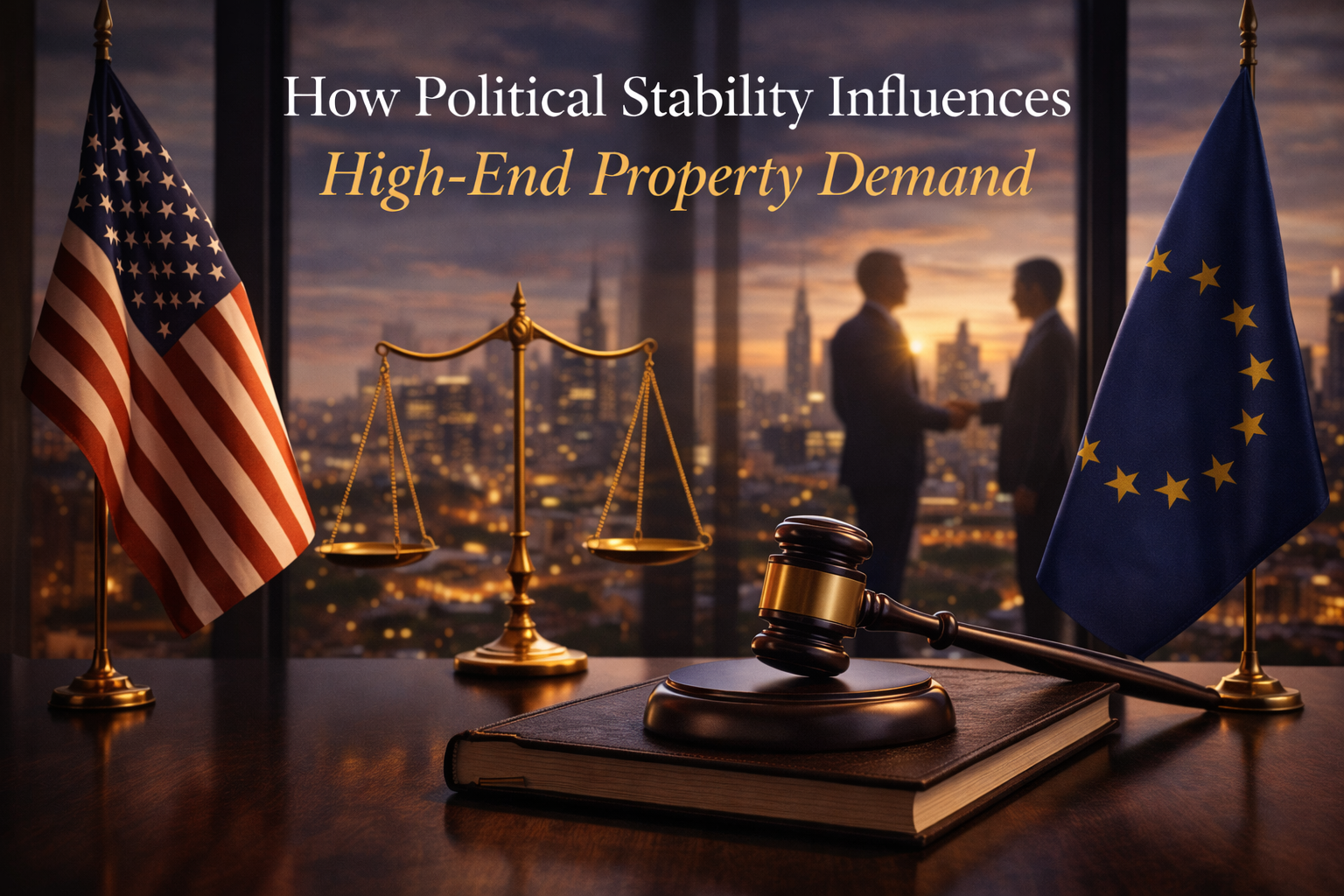
High-net-worth buyers approach property not merely as a residence, but as a strategic asset. Political stability directly affects long-term confidence. Transparent legal systems, predictable regulatory frameworks, and secure property rights create environments where capital feels protected. In contrast, uncertainty surrounding governance, taxation, or policy direction can weaken demand, even in architecturally exceptional markets.
Security remains a central factor. Buyers operating across borders frequently prioritize jurisdictions that offer safety, social stability, and a consistent rule of law. Luxury properties often represent significant capital allocations, and investors seek environments where political shifts are unlikely to disrupt ownership structures or asset value. Stability reduces perceived risk and strengthens buyer conviction.
Tax policy plays a particularly influential role. Changes in property taxation, residency requirements, or foreign ownership regulations can rapidly alter demand patterns in prime markets. When governments introduce unpredictable fiscal measures, international buyers may redirect capital toward more stable jurisdictions. Conversely, markets that maintain clear and consistent frameworks often attract sustained high-end investment.
Political stability also shapes liquidity. Prime markets located within stable democracies or economically resilient regions tend to attract diversified global demand. This breadth of buyer interest enhances transactional fluidity and supports pricing resilience across market cycles. Stability creates confidence not only in ownership, but also in eventual resale.
Global wealth mobility amplifies this dynamic. Ultra-high-net-worth individuals increasingly diversify geographically, allocating assets across multiple jurisdictions. Political predictability becomes a screening criterion when selecting secondary residences, investment properties, or legacy assets. Buyers evaluate more than lifestyle — they assess long-term governance outlook.
Importantly, political stability interacts with perception. Even subtle reputational shifts can influence demand in high-end markets. International media narratives, diplomatic relations, and economic policy debates often shape how buyers perceive risk. In luxury segments, perception can move capital as powerfully as measurable data.
However, stability alone does not guarantee demand. Markets must also offer cultural vibrancy, infrastructure quality, privacy, and global connectivity. Political reliability provides the foundation, but lifestyle and prestige reinforce desirability. Together, these elements create the conditions under which prime and ultra-prime markets flourish.
In an era marked by geopolitical shifts, economic transitions, and increasing global mobility, political stability has become a decisive factor in high-end property demand. Buyers no longer separate lifestyle from strategic considerations. They view luxury real estate as part of a broader wealth architecture, one that must withstand uncertainty and protect long-term value.
Ultimately, markets that combine institutional strength with lifestyle appeal are likely to remain magnets for global capital. In the world of high-end real estate, stability is not merely a backdrop — it is a competitive advantage.