
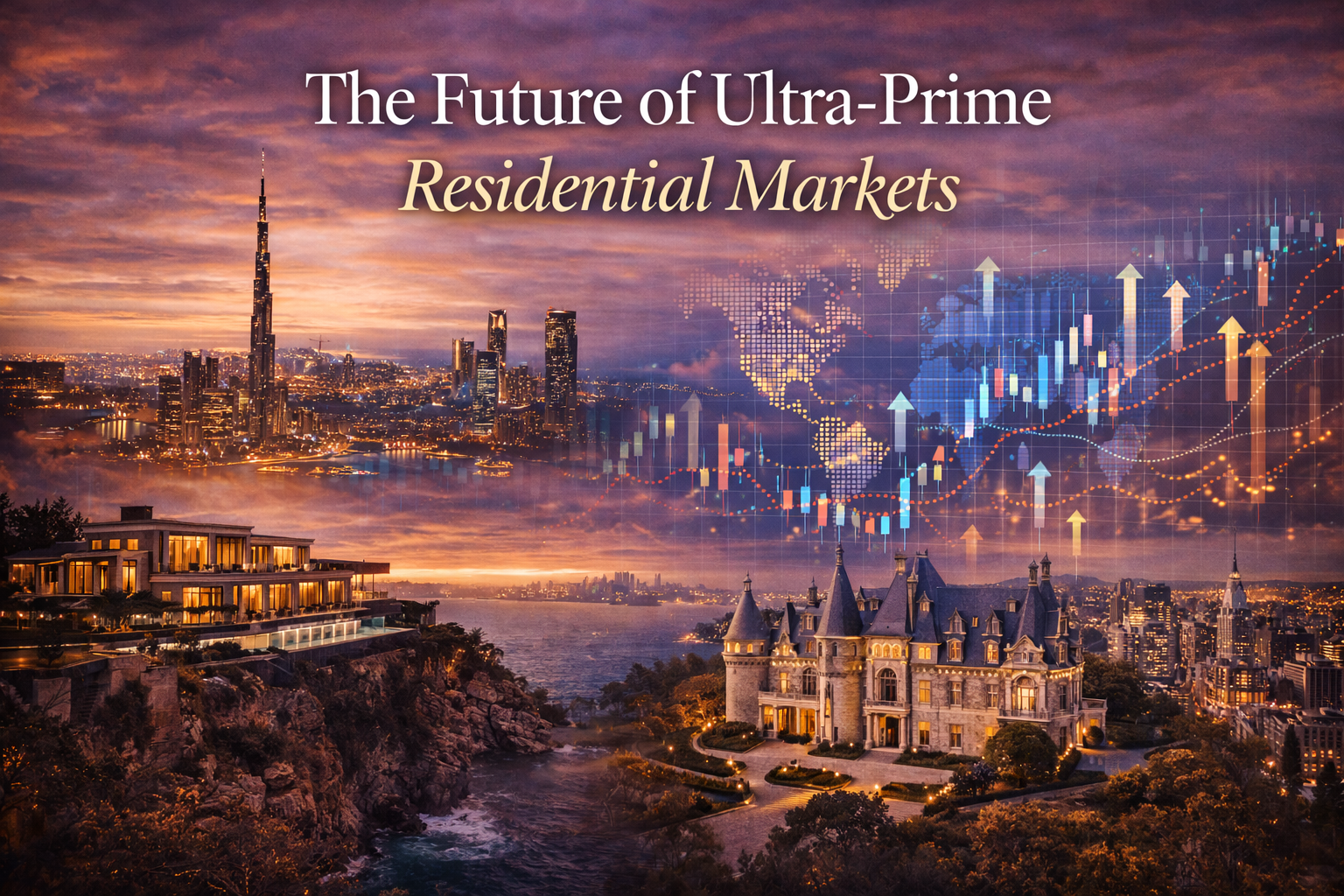
Ultra-prime residential markets occupy a unique position within global real estate. Defined not merely by price but by rarity, prestige, and international demand, these segments have historically demonstrated resilience even amid economic turbulence. As global wealth dynamics evolve, the future of ultra-prime property markets is being shaped by structural shifts that extend far beyond traditional real estate cycles.
At the core of ultra-prime market stability lies scarcity. Truly exceptional properties — those combining irreplaceable locations, architectural distinction, and enduring prestige — remain inherently limited. Unlike broader housing segments, supply cannot easily expand to meet demand. This imbalance continues to underpin long-term value preservation and pricing power across leading global destinations.
Global wealth mobility represents another defining force. High-net-worth individuals increasingly operate without geographic constraints, allocating capital and establishing residences across multiple regions. Ultra-prime markets benefit directly from this fluidity, attracting buyers motivated by diversification, security, lifestyle, and legacy considerations rather than purely domestic factors.
Importantly, buyer motivations within ultra-prime segments differ fundamentally from conventional property markets. Acquisitions often reflect wealth preservation strategies, generational planning, and status-driven decisions. These properties function simultaneously as residences, financial stores of value, and symbolic assets, reinforcing demand stability even during broader market slowdowns.
Technological and lifestyle shifts are also redefining preferences. Privacy, security, and autonomy have become increasingly central to ultra-prime demand. Buyers prioritize expansive spaces, architectural individuality, and environments that support wellness and discretion. The definition of luxury continues to evolve toward experience, control, and personalization rather than mere scale.
Economic cycles will inevitably influence transaction volumes, yet ultra-prime pricing dynamics tend to exhibit lower volatility compared to mainstream markets. Value drivers such as land scarcity, global demand, and prestige perception operate over extended horizons. Temporary fluctuations rarely alter the structural desirability of world-class assets.
Another critical factor shaping the future is the growing institutionalization of wealth. Family offices, private investment vehicles, and globally diversified portfolios increasingly incorporate ultra-prime real estate as strategic components. These buyers approach acquisitions with long-term perspectives, reinforcing market stability and absorbing high-value inventory.
However, not all markets will perform uniformly. Ultra-prime resilience depends heavily on jurisdictional stability, regulatory environments, tax frameworks, and geopolitical considerations. Destinations that combine lifestyle appeal with economic security and transparent legal systems will likely continue attracting disproportionate capital flows.
Sustainability and design intelligence are also becoming decisive. Sophisticated buyers increasingly value architectural quality, energy efficiency, and timeless design. Properties that integrate environmental responsibility with enduring aesthetics are positioned to outperform as buyer expectations mature.
Ultimately, the future of ultra-prime residential markets appears defined by continuity rather than disruption. Scarcity, global wealth expansion, and evolving definitions of luxury continue to support demand for exceptional properties. While transaction patterns may shift, the fundamental drivers of ultra-prime value remain deeply structural.
For investors and buyers alike, understanding these dynamics is essential. Ultra-prime real estate is not merely a reflection of wealth concentration — it is an asset class shaped by psychology, global mobility, and long-term capital preservation logic. In an increasingly uncertain world, the appeal of irreplaceable property assets is unlikely to diminish.