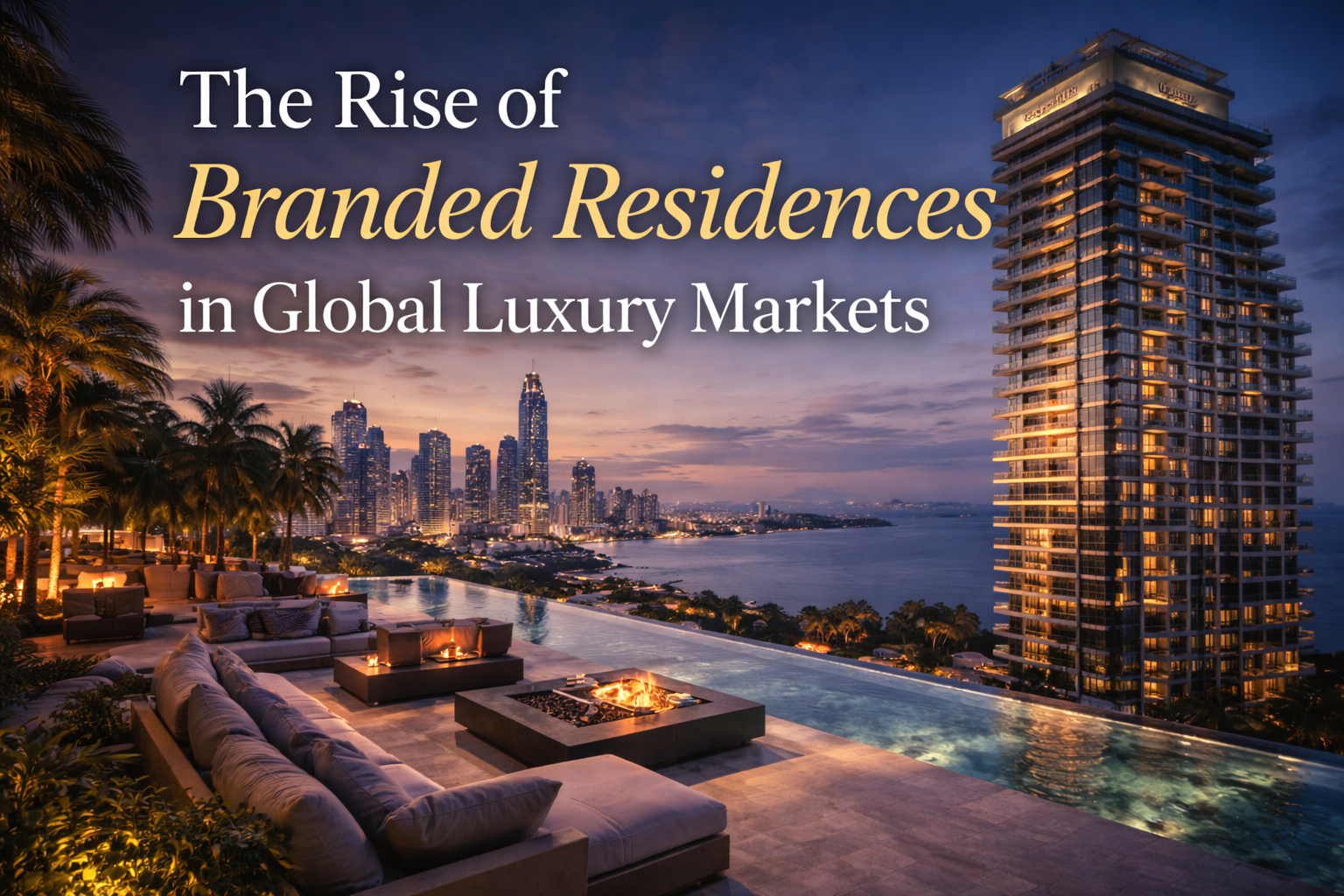
Branded residences have become one of the most influential forces shaping the global luxury real estate landscape. Once considered a niche segment, these properties now represent a rapidly expanding category that attracts high-net-worth individuals, international investors, and lifestyle-driven buyers seeking a distinctive blend of prestige, service, and investment security.
At their core, branded residences combine luxury property ownership with the identity and standards of globally recognized brands. These may include hospitality groups, fashion houses, automotive marques, or lifestyle companies. The brand’s reputation becomes embedded within the property itself, influencing design, amenities, service levels, and overall experience.
One of the primary drivers behind this growth is trust. In an increasingly globalized market, buyers often seek reassurance when acquiring high-value assets, particularly in international destinations. A well-established brand signals consistency, quality, and operational excellence, reducing perceived risk and enhancing buyer confidence. The brand effectively functions as a powerful credibility layer.
Beyond reputation, branded residences offer a service-oriented lifestyle that differentiates them from traditional luxury properties. Owners frequently benefit from concierge services, property management, wellness facilities, security, and hospitality-inspired amenities. This integration of residential living with five-star service standards strongly appeals to globally mobile clients who value convenience and seamless experiences.
Design and architecture also play a critical role in the appeal of branded developments. Many projects collaborate with world-renowned designers and architects to create visually distinctive, experience-driven environments. The result is often a highly curated living concept that reflects the brand’s philosophy while elevating the property’s exclusivity.
From an investment perspective, branded residences often demonstrate strong pricing power and market resilience. The brand association can enhance perceived value, support premium pricing, and attract international demand. In certain markets, branded properties may also exhibit improved liquidity compared to non-branded counterparts, particularly when backed by reputable hospitality operators.
Global wealth trends further accelerate this phenomenon. As high-net-worth populations expand and international buyers diversify their portfolios, demand for recognizable, turnkey luxury assets continues to rise. Branded residences align perfectly with these preferences, offering both lifestyle appeal and asset positioning advantages.
Importantly, the success of branded developments depends on authenticity and execution. Not all projects deliver equal value. Buyers increasingly evaluate the strength of the brand, the quality of management, location fundamentals, and long-term sustainability of the concept. The brand name alone is influential but not sufficient.
Ultimately, the rise of branded residences reflects a broader transformation in luxury real estate. Today’s buyers seek more than exceptional properties; they seek experiences, identity, and confidence. Branded developments respond directly to these priorities, merging lifestyle, design, and global prestige into a single real estate offering.
As luxury markets continue to evolve, branded residences are poised to remain a defining segment, reshaping how high-end property is conceived, marketed, and valued worldwide.