
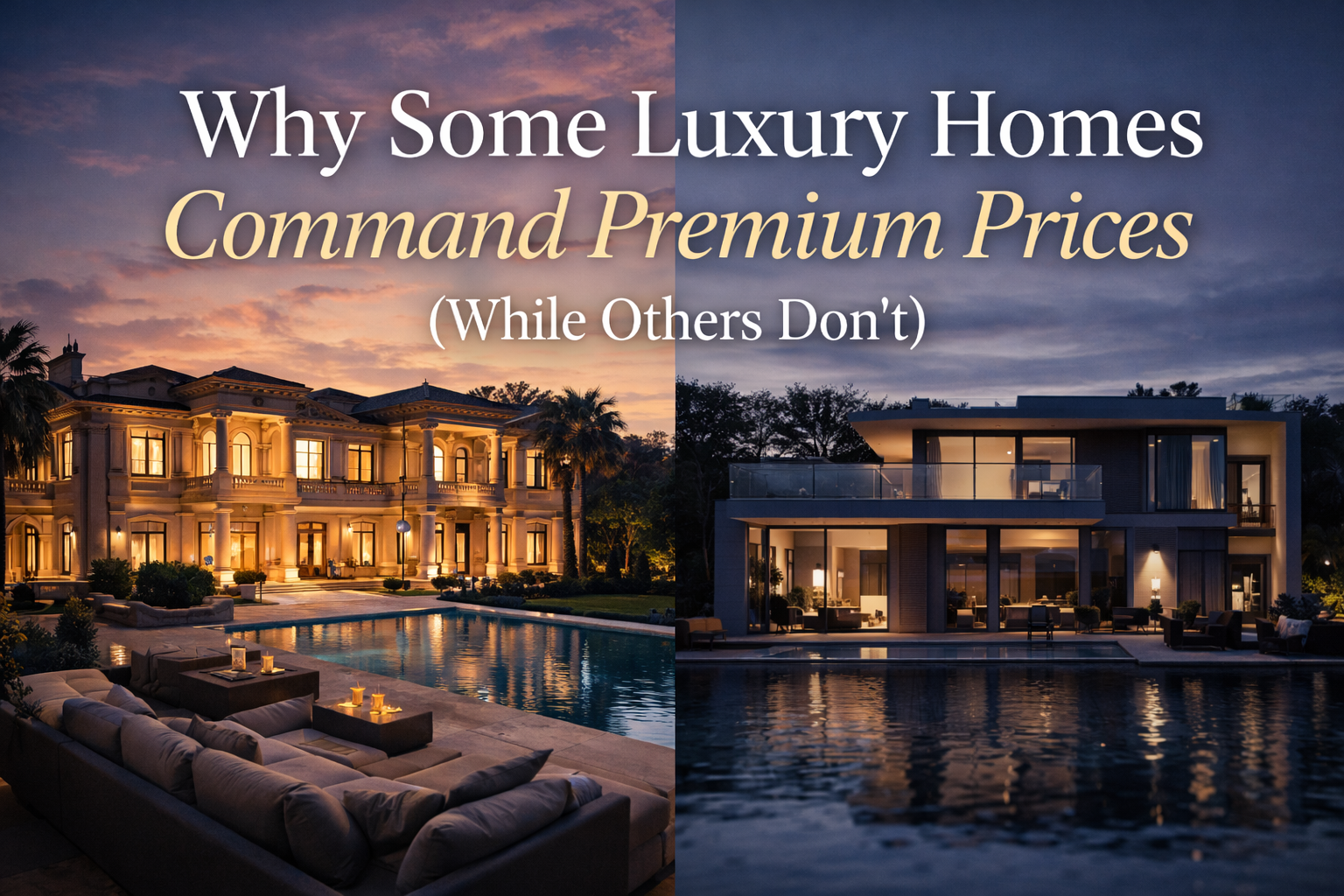
In luxury real estate, pricing is rarely straightforward. Two properties located in the same prestigious neighborhood may display strikingly different valuations, leaving many buyers and sellers wondering what truly drives premium prices. Contrary to common assumptions, square footage and location alone do not fully explain why certain luxury homes achieve exceptional market performance.
One of the most influential factors is uniqueness. Luxury property buyers are not simply purchasing space; they are acquiring distinction. Homes with irreplaceable characteristics — whether architectural significance, iconic views, or exceptional design — often command higher prices because they cannot be easily replicated. Scarcity naturally increases perceived value, particularly in prime markets where truly distinctive assets are limited.
Design and architectural quality also play a decisive role. Sophisticated buyers are highly sensitive to proportion, light, layout, and material selection. A property that offers a harmonious living experience, seamless flow, and timeless aesthetics will typically outperform homes that rely solely on size or decorative elements. In the high-end segment, refinement frequently outweighs excess.
Another critical driver of premium pricing is emotional impact. Luxury purchases are deeply psychological. Certain homes evoke an immediate sense of aspiration, prestige, or lifestyle alignment. This emotional resonance can substantially influence buyer behavior, creating competitive demand and strengthening pricing power. Properties that inspire strong emotional reactions often generate faster sales and superior valuations.
Market positioning further differentiates property performance. How a luxury home is presented, marketed, and priced shapes buyer perception. Strategic pricing combined with compelling storytelling, high-quality visuals, and targeted exposure can elevate a property’s desirability. Conversely, even exceptional homes may struggle if poorly positioned or mispriced within the competitive landscape.
Privacy, exclusivity, and intangible attributes also contribute to valuation disparities. Features such as discretion, security, architectural pedigree, and historical significance often carry weight beyond measurable metrics. For many high-net-worth buyers, these qualitative aspects justify substantial price differentials.
Importantly, not all expensive homes are inherently valuable. Some properties carry high asking prices without possessing the characteristics that sustain long-term demand. Premium pricing is ultimately supported by fundamentals: rarity, quality, desirability, and market relevance. Without these elements, price alone does not guarantee performance.
Understanding these dynamics is essential for both buyers and sellers. For buyers, it clarifies why seemingly comparable properties differ in value. For sellers, it highlights the importance of presentation, strategy, and realistic positioning. In luxury real estate, price is as much a function of perception and psychology as it is of physical attributes.
Ultimately, luxury homes command premium prices when they offer something genuinely exceptional — an experience, identity, or asset quality that transcends conventional measures. True value in the high-end market is rarely accidental; it is carefully constructed through design, scarcity, and buyer demand.