
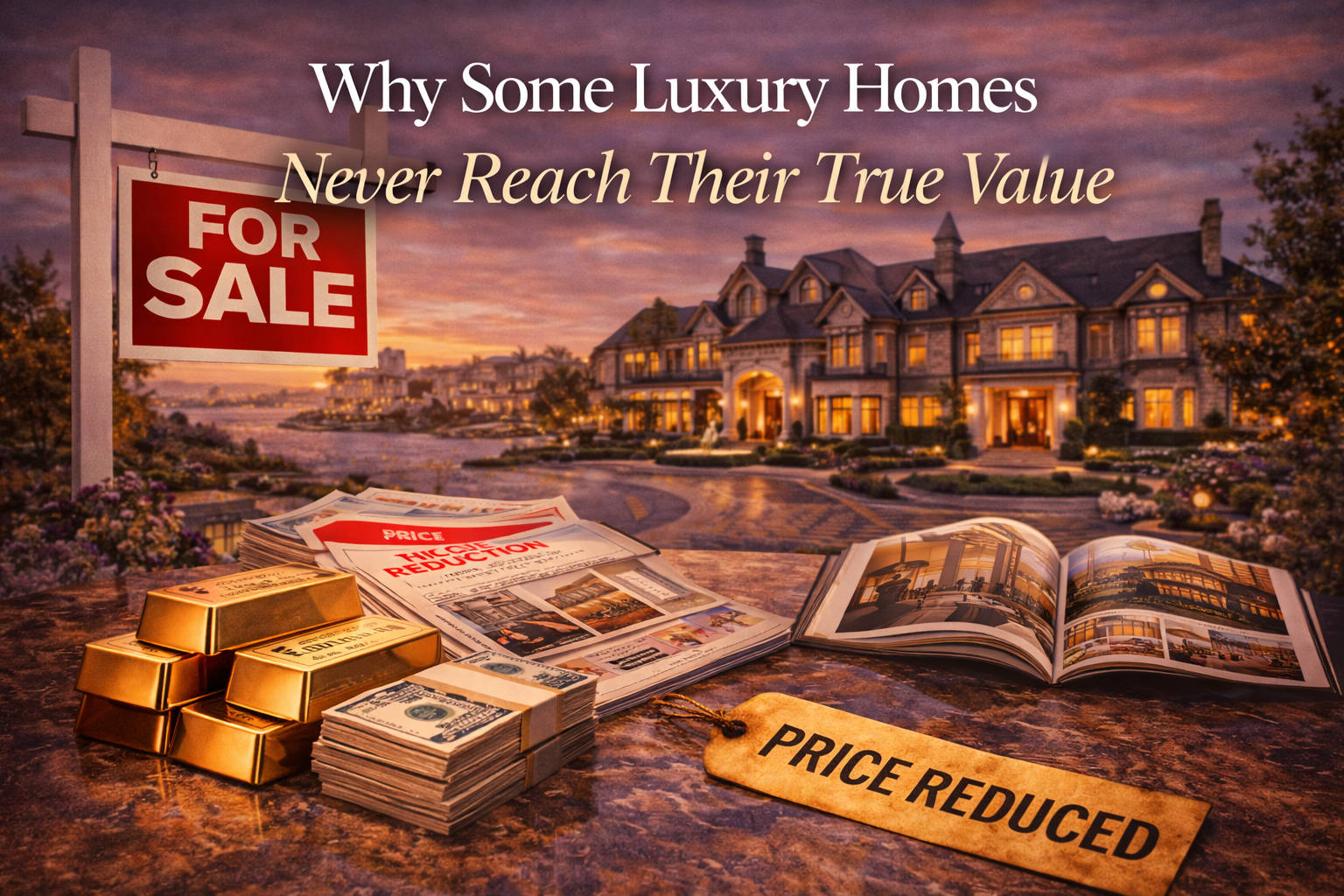
In luxury real estate, pricing alone does not determine success. While certain properties achieve exceptional results, others — despite impressive features and prestigious locations — struggle to realize their full market potential. This disparity often leaves sellers perplexed, particularly when comparable homes appear to command stronger demand and higher valuations.
One of the most common factors behind underperformance is a misaligned pricing strategy. In the luxury segment, pricing is as much about psychology as it is about valuation. Overpricing can quietly erode a property’s desirability, extending time on market and weakening buyer perception. Affluent buyers are highly sensitive to signals of value, and prolonged exposure may inadvertently suggest reduced appeal or hidden issues.
Presentation and perception also play decisive roles. Luxury homes compete not merely on specifications, but on emotional impact and experiential quality. Properties that lack cohesive staging, refined visual storytelling, or architectural emphasis may fail to generate the aspirational response that drives high-end purchasing decisions. Even exceptional residences can lose momentum if their strengths are not clearly communicated.
Market positioning is another critical variable. In high-end real estate, how a property is introduced to the market significantly influences buyer behavior. A poorly timed launch, inadequate targeting, or inconsistent branding can limit visibility among qualified buyers. Unlike mass-market listings, luxury properties require precision exposure to the appropriate audience rather than broad dissemination.
Importantly, not all value limitations stem from marketing or pricing. Functional or design-related factors may also constrain buyer interest. Highly personalized interiors, unconventional layouts, or dated architectural elements can narrow the pool of potential purchasers. Luxury buyers frequently seek homes that combine distinction with adaptability, and excessive customization may hinder perceived versatility.
Economic and behavioral dynamics further shape outcomes. Luxury markets are particularly sensitive to shifts in global wealth flows, investment sentiment, and macroeconomic conditions. Properties entering the market during periods of reduced buyer confidence may face slower absorption, regardless of intrinsic quality. Timing and context are therefore inseparable from valuation performance.
Seller psychology can also influence results. Emotional attachment, aspirational pricing expectations, or reluctance to adapt strategy may delay necessary adjustments. In a segment where perception drives value, responsiveness to market feedback is essential. Static strategies often undermine otherwise strong assets.
Another subtle but powerful factor is competition. Even within prime locations, inventory composition evolves. Newly constructed properties, architecturally superior homes, or better-positioned listings may redirect demand. Value is not determined in isolation, but relative to competing opportunities available to buyers at any given moment.
Ultimately, true market value in luxury real estate emerges from the intersection of pricing discipline, presentation quality, buyer psychology, and market conditions. Properties that fail to align these elements may never reach their full potential, even when fundamentally desirable.
For sellers, recognizing these dynamics is crucial. Maximizing value requires not only an exceptional property but also strategic precision, adaptability, and deep market understanding. In luxury real estate, achieving true value is rarely accidental — it is carefully engineered.