Christmas in Marbella 2026: The Complete Guide to Lights, Markets & Traditions
Christmas markets rarely come with sea breeze and a 16°C swim on offer for anyone determined enough to call it tradition, but Marbella manages exactly that combination — cobblestone Old Town streets strung with thousands of warm white lights, a Christmas market anchored by Salvador Dalí’s bronze sculptures along Avenida del Mar, and a glamorous second market floating right on the marina at Puerto Banús, backed by superyachts rather than a typical German-style Christmas village. Christmas in Marbella runs from late November through to Three Kings Day on January 6, and this guide covers exactly what happens, where, and how to build a genuinely memorable festive season around it — from family-friendly market wandering to the specific Spanish traditions worth understanding if this is your first Christmas on the Costa del Sol.
This guide goes beyond a simple events list. It covers how Marbella’s specific version of Christmas developed, the genuine Spanish and Andalusian traditions layered underneath the markets and lights, practical advice on weather, dining and day trips, and how to build an itinerary that captures both the town’s festive spectacle and its quieter, more authentic corners.
How Marbella Built Its Own Version of Christmas
Marbella’s Christmas identity reflects the same underlying pattern that shapes nearly every aspect of the town’s modern character — a deeply rooted Andalusian and Spanish cultural foundation, layered with an international, cosmopolitan sensibility drawn from the town’s decades of welcoming residents and visitors from across Europe and beyond. This isn’t a Christmas market imported wholesale from Central Europe and dropped onto the Mediterranean; it’s a genuinely Spanish festive season, with the markets, lights and entertainment programming added specifically to meet the expectations of an increasingly international resident and visitor base.
This dual character shows up clearly in how the season is actually structured. Nochebuena, Belenes and the Three Kings Parade — covered in detail later in this guide — remain the genuine cultural backbone of the season, exactly as they would in any Spanish town regardless of tourism. The markets, ice rinks and international food trucks layered on top reflect Marbella’s more recent evolution into a genuinely global destination, giving the town’s Christmas programme a considerably broader appeal than a purely traditional Andalusian celebration alone would offer.
Marbella Town Hall’s own role in coordinating this dual programme deserves specific mention — rather than leaving the season’s more international elements purely to private commercial operators, the town hall specifically curates a festive programme designed for all ages, spanning multiple neighbourhoods and price points, reflecting a genuine civic commitment to making the season accessible across the town’s full, genuinely diverse population rather than concentrating festive investment purely in the most tourist-facing areas.
|
Quick Answer Marbella’s Christmas lights switch on in late November, typically the last Friday of the month, and the season runs through Three Kings Day on January 6. The main Christmas market runs along Avenida del Mar and into Alameda Park from early December, with a second, more glamorous market at Puerto Banús’s Plaza Antonio Banderas featuring an ice rink and gourmet food trucks right on the marina. Beyond the two headline markets, smaller neighbourhood events, a botanical garden light show, and the genuinely central Three Kings Parade on January 5 round out a season that blends authentic Andalusian tradition with an internationally minded festive programme. |
|
Did You Know? Some residents genuinely swim in the sea on Christmas Day or New Year’s Day as a personal tradition, despite the water sitting around 16°C — most people, sensibly, stick to a heated villa or community pool instead, or simply a long beach walk to soak up the December sunshine. |
When Christmas Actually Starts in Marbella
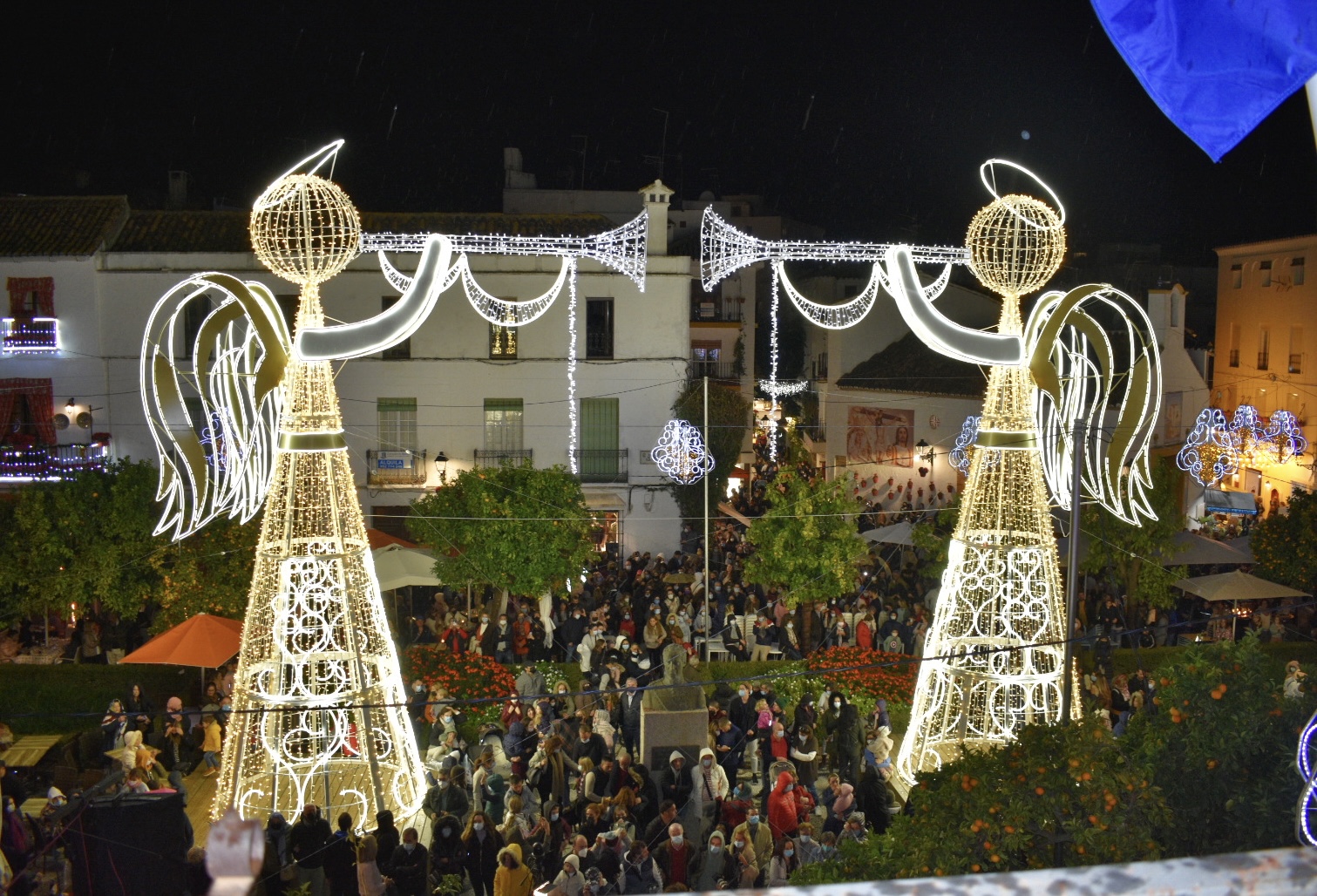
The Christmas lights switch-on marks the genuine, official start of the season, typically taking place on the last Friday of November — San Pedro Alcántara’s lights switch on slightly earlier than central Marbella’s own ceremony, giving visitors and residents effectively two separate light-up evenings within a day of each other if timed right. From that point through to January 6, Avenida Ricardo Soriano, the Old Town, San Pedro and the main avenues across town remain fully illuminated every evening.
Unlike a purely commercial countdown, this switch-on genuinely functions as a community event in its own right — expect a stage, music, and a real crowd gathered specifically to watch the town’s decorations come alive rather than simply noticing them appear gradually over subsequent days. San Pedro Alcántara in particular has built a reputation for one of the most impressive light installations anywhere on the Costa del Sol, worth the short trip from central Marbella specifically to see.
Avenida Ricardo Soriano itself deserves specific mention among the town’s illuminated streets — thousands of LED lights and elegant light tunnels transform what’s normally a busy thoroughfare into one of the season’s most photographed stretches, connecting the more traditional Old Town decorations with the broader, more contemporary lighting scheme found elsewhere across the resort area. Walking this specific route after dark, ideally on the way between the Old Town and Puerto Banús, gives visitors a genuine sense of how comprehensively the town commits to its festive transformation each year.
The specific engineering behind these larger installations deserves a brief mention for anyone curious about the scale involved — light tunnels of the kind found along Ricardo Soriano require considerable planning and coordination with the town’s electrical infrastructure, typically installed by specialist contractors working through much of November ahead of the official switch-on. This behind-the-scenes preparation, largely invisible to visitors who simply experience the finished display, reflects a genuinely significant annual civic investment in the town’s festive presentation, comparable in scale to the lighting programmes found in considerably larger European cities.
🎄 The Christmas Markets
Alameda Park & Avenida del Mar — The Main Market
Marbella’s principal Christmas market runs from early December through to January 6, stretching from the iconic bronze Dalí sculptures along Avenida del Mar into Alameda Park itself, with more than 30 wooden stalls selling everything from nativity figures and handmade crafts to turrón and polvorones, the classic Spanish Christmas sweets. Opening hours typically run midday to 10pm on weekdays, extending to midnight on weekends, giving genuine flexibility for both a family afternoon visit and a livelier evening wander.
The surrounding Old Town streets are simultaneously draped in illumination and host a dedicated nativity route alongside musical light shows, meaning a visit to this market naturally extends into a broader evening exploring Marbella’s historic centre rather than functioning as a single, isolated stop. Reaching the Plaza de los Naranjos specifically to see the town’s main Belén, the central nativity scene that anchors Spain’s broader Christmas tradition, is worth building into any Old Town evening during this period.
The Avenida del Mar sculpture walk deserves particular mention for visitors unfamiliar with it — this open-air gallery of bronze Dalí works, running along the pedestrian boulevard connecting the Old Town to the seafront, takes on a genuinely different character once wrapped in festive lighting, with the surrealist sculptures silhouetted against strings of warm white bulbs creating one of the more distinctive, photogenic backdrops anywhere on the Costa del Sol during December specifically.
Dalí’s specific connection to this stretch of coastline adds genuine cultural weight beyond the purely visual spectacle — the sculptures represent an officially sanctioned collection, distinct from mere decorative statuary, and their presence along this route reflects Marbella’s broader, longstanding relationship with significant 20th-century artistic and cultural figures. For visitors specifically interested in art alongside the festive programming, taking time to actually engage with each individual sculpture, rather than simply walking past en route to the market stalls further along, rewards a slower, more deliberate pace through this particular stretch of the route.
💡 Insider tip: Evenings after 6pm, once the lights are fully on, offer the most atmospheric visit — arriving earlier in the day misses the specific magic that makes this market genuinely distinct from a purely daytime shopping trip.
📍 Parque de la Alameda & Avenida del Mar, Marbella · ⏰ Approx. 12:00–22:00 daily, later on weekends · 💰 Free entry · Best for: traditional Spanish crafts, the town’s central nativity scene, an authentic Old Town evening
Puerto Banús — The Glamorous Market
Opening on December 6 and running through to January 6, Puerto Banús transforms its Plaza Antonio Banderas into a festive village set directly against the marina’s row of superyachts — wooden chalets, an ice-skating rink, gourmet international food trucks and pop-up shops, organised in partnership with El Corte Inglés. This is the more glamorous, more polished of Marbella’s two main markets, and reviewers and visitors consistently describe it as delivering exactly the kind of elevated festive atmosphere the marina’s reputation would suggest.
For families specifically, the ice rink and children’s attractions give this market a genuinely different character from the more purely traditional Alameda market — expect a livelier, more entertainment-focused evening here, well suited to visitors staying in or near Puerto Banús and Nueva Andalucía who want a shorter trip than heading into central Marbella.
The contrast between this market’s polished, marina-front setting and the more historic, cobblestone character of the Old Town’s own market is precisely what makes visiting both worthwhile within a single festive season — rather than choosing one over the other, treating them as two genuinely distinct experiences, each capturing a different side of Marbella’s overall character, gives visitors the fullest possible picture of how the town celebrates. The juxtaposition of a traditional wooden Christmas chalet against a backdrop of moored superyachts remains one of the more genuinely striking, only-in-Marbella images the season produces each year.
El Corte Inglés’s specific involvement in organising the Puerto Banús market deserves brief mention, since it explains some of the market’s more polished, retail-forward character compared to the more grassroots, artisan-driven Alameda market — this is a genuinely commercial partnership bringing established retail expertise and brand-name food and beverage partners to the marina setting, distinct from the more independent, locally run stalls that characterise the Old Town’s own offering. Neither approach is inherently superior; they simply reflect two different, equally valid models for organising a festive market, and Marbella’s genuine advantage is hosting both simultaneously rather than being forced to choose one single approach for the entire town.
📍 Plaza Antonio Banderas, Muelle Ribera, Puerto Banús · 📅 6 December – 6 January · 💰 Free entry, paid ice rink access · Best for: families, an elevated marina setting, combining shopping with festive entertainment
Smaller Neighbourhood Markets Worth Knowing
Beyond the two headline markets, several smaller, genuinely local events run across Marbella’s wider urbanisations throughout December, offering a considerably more intimate, community-driven alternative for anyone who’s already covered the main Old Town and Puerto Banús circuits. The La Virginia Christmas Market, held on a single day in early December from 11am to 6pm, sets up within a small, hidden urbanisation that feels like a genuine traditional village, complete with crafts, vintage clothes and homemade food.
San Pedro Alcántara, Nueva Andalucía and Elviria all run their own smaller-scale programmes too, spanning concerts, Santa visits and zambomba celebrations — flamenco-infused Christmas parties unique to Andalusian tradition — giving residents across the wider Marbella area a genuinely local festive option without needing to travel into the town centre every single time.
These neighbourhood markets serve a genuine social function beyond simple shopping or entertainment, particularly for residents in the more residential urbanisations surrounding central Marbella — they offer a rare chance for an entire community to gather in one place at one time, reinforcing exactly the kind of neighbourhood connection covered throughout LUXO’s other guides to Marbella’s international resident population. For anyone specifically living in or near these areas rather than simply visiting for the season, checking the specific dates for your own urbanisation’s local market is worth doing directly with the community association or local town hall office, since these smaller events don’t always receive the same broad promotional coverage as the two headline markets.
Elviria’s own programme deserves specific mention among these neighbourhood events, given its position toward the eastern end of Marbella’s municipal area, considerably further from the Old Town and Puerto Banús circuits covered earlier in this guide — for residents specifically based in this direction, a well-developed local programme means genuine access to festive activities without the drive into central Marbella that the two main markets would otherwise require. This decentralised approach to festive programming, spreading genuine activity across the town’s full geographic spread rather than concentrating it purely in the most visited central areas, reflects the same broader civic commitment to accessibility mentioned earlier in this guide.
The Botanical Garden Light Show at La Concepción
For a considerably more immersive festive experience than a standard market visit, the Botanical Garden Light Show at La Concepción runs from late November through to January 6, transforming Marbella’s historic botanical garden into an illuminated evening walk combining themed light installations with music. This is a genuinely different kind of Christmas experience from the markets — quieter, more contemplative, and set within the garden’s mature, established landscaping rather than a purpose-built festive village.
For visitors specifically looking for something beyond the standard market-and-lights circuit, or simply wanting a calmer, more atmospheric evening away from the busiest crowds of the Old Town and Puerto Banús, this light show is consistently recommended as one of the season’s genuine highlights, worth booking ahead given its popularity during peak December weekends.
La Concepción’s own history adds a further layer of interest for visitors beyond the festive lighting itself — the garden dates back to the 19th century and holds genuine botanical significance as one of the finest subtropical gardens in Europe, meaning a December visit combines the seasonal light installation with a setting that would be worth exploring in its own right at any time of year. The specific combination of established, mature trees and pathways with contemporary light design creates a genuinely different visual experience from a purpose-built market’s more uniform, temporary festive infrastructure.
The evening walking route through the garden is typically structured to guide visitors through a sequence of distinct themed zones, each with its own specific lighting design and musical accompaniment, rather than a single uniform display repeated throughout — this structured, almost narrative progression through the space is part of what distinguishes La Concepción’s specific offering from a more straightforward illuminated walkway, giving the visit a genuine sense of discovery as each new section of the garden reveals a different visual theme.
Quick Guide: Christmas in Marbella by What You Want
With so much running simultaneously across the town during December, this table offers a fast way to prioritise depending on what specifically matters most for your particular visit or evening plans.
| If you want… | Go to | Why |
|---|---|---|
| Traditional Spanish Christmas atmosphere | Alameda Park & Avenida del Mar Market | 30+ stalls, nativity route, historic Old Town setting |
| A glamorous, family-friendly evening | Puerto Banús Christmas Market | Ice rink, marina backdrop, international food trucks |
| An intimate, local community experience | La Virginia or neighbourhood markets | Genuine village atmosphere, less crowded |
| A quieter, more atmospheric evening | La Concepción Light Show | Illuminated garden walk, themed installations and music |
| The best light display on the coast | San Pedro Alcántara | Reputation for the most impressive illuminations locally |
🎁 Spanish Christmas Traditions Worth Knowing
For anyone spending their first Christmas in Marbella, several genuinely central Spanish traditions differ meaningfully from what visitors from Northern Europe, the US or elsewhere might expect, and understanding them adds real depth to the season beyond simply visiting the markets.
Nochebuena — Christmas Eve, Not Christmas Day
The most important family gathering of the entire Spanish festive calendar happens on the evening of December 24, not the 25th. Nochebuena centres around an extended family dinner, often running late into the night, meaning shops and markets typically close early on the 24th as everyone heads home to prepare. For visitors specifically, this is worth planning around directly — restaurant bookings and market visits should generally happen earlier in the day, or on a different date entirely, rather than assuming a normal evening schedule applies.
The specific menu associated with Nochebuena varies by region but typically features seafood, roasted meats and a genuinely substantial spread designed to sustain a family gathering running for several hours rather than a single, contained meal. For visitors without local family to host them, several restaurants across Marbella specifically offer a set Nochebuena menu designed to replicate this traditional experience, worth booking well ahead given how central this specific evening is to the entire Spanish Christmas calendar.
Turrón — a nougat-based sweet typically made from almonds and honey — deserves specific mention as genuinely central to the Spanish Christmas table, available across the market stalls covered earlier in this guide in dozens of regional and artisanal variations, from the classic hard Alicante style through to the softer Jijona version. Polvorones, crumbly shortbread-style biscuits often flavoured with cinnamon or almond, complete the traditional sweet spread alongside turrón, and both make genuinely distinctive, easily transportable gifts for visitors wanting to bring a taste of Marbella’s Christmas home with them.
Midnight Mass and Belenes
Many families attend Midnight Mass following the Nochebuena dinner, and visiting a Belén — a nativity scene, ranging from a simple household display to Marbella’s own elaborate town centre installation in Plaza de los Naranjos — remains a genuinely widespread tradition across every generation, not simply a religious formality maintained out of habit.
The scale and craftsmanship of Marbella’s central Belén specifically draws visitors well beyond those attending for purely religious reasons — these elaborate nativity installations often include entire miniature villages, moving figures and detailed landscaping surrounding the core nativity scene itself, representing genuine artisan craft passed down through generations of specialist Belén-makers across Spain. For visitors unfamiliar with this specific tradition, treating a visit to Plaza de los Naranjos’s Belén as a genuine cultural experience, similar in spirit to viewing a significant piece of public art, gives the visit considerably more depth than simply passing by en route to the Christmas market itself.
Zambombas — Flamenco Christmas Parties
A distinctly Andalusian addition to the broader Spanish Christmas calendar, zambombas are lively, flamenco-infused musical gatherings specific to this region, featuring traditional instruments, singing and dancing around Christmas carols reworked into flamenco rhythm. Several venues and neighbourhood events across Marbella specifically host zambombas throughout December, offering visitors a genuinely regional, culturally specific experience unavailable at a standard European Christmas market.
These events originated in the working-class neighbourhoods of Jerez de la Frontera and Cádiz, considerably further along the Andalusian coast, before spreading across the wider region — attending one in Marbella specifically connects visitors to a genuinely older, more grassroots regional tradition than the town’s more recently developed international market scene, worth seeking out for anyone wanting a deeper cultural experience beyond shopping and lights.
The specific instrumentation associated with a genuine zambomba deserves a brief mention for anyone unfamiliar with the tradition — the zambomba itself, the friction drum instrument that gives the celebration its name, produces a distinctive, deep percussive sound achieved by rubbing a stick through a stretched membrane, traditionally accompanied by tambourines, castanets and improvised rhyming verses specific to each performer or family group. Modern zambomba events in Marbella specifically often blend this traditional core with a more contemporary festive atmosphere, making them genuinely accessible to visitors without deep prior familiarity with flamenco musical tradition while still preserving the authentic regional character that distinguishes the format from a generic festive concert.
The Three Kings Parade — The Real Finale
In Spain, the Three Wise Men — not Santa Claus — traditionally bring the gifts, and their arrival is marked by a spectacular parade on the evening of January 5, with elaborate floats making their way through Marbella’s streets while the Kings throw thousands of sweets to the crowds lining the route. This is genuinely the season’s climactic event rather than a minor addendum — many residents and long-term visitors specifically describe the Three Kings Parade as more central to their Marbella Christmas experience than the earlier lights switch-on, given its scale, spectacle and the sheer local enthusiasm it draws.
Arriving early to secure a good position along the parade route is genuinely worth doing, since crowds build considerably as the evening approaches, particularly along the more central stretches of the route through the Old Town and main avenues. Children specifically should be positioned close to the barriers if collecting thrown sweets is a priority, since the volume thrown from the floats, while substantial, still gets claimed quickly by the crowds closest to the route’s edge.
The floats themselves typically depict elaborate, brightly lit scenes accompanying each of the three kings, with local schools, community groups and civic organisations often involved in the wider procession alongside the main royal floats — giving the parade a genuinely community-wide character beyond a purely commercial spectacle. Following the parade, many families continue the Reyes tradition at home, with children finding gifts left by the Three Kings the following morning, January 6, which functions as Spain’s genuine equivalent to the gift-opening morning more familiar to visitors from countries where December 25 carries that specific role instead.
🍽️ Where to Eat: Christmas Dining in Marbella
Many restaurants across Marbella specifically open for Christmas Day itself, particularly those attached to hotels and venues in the town’s main tourist areas, offering a genuine alternative for visitors not spending the day with extended family in the Spanish tradition. Booking well in advance is essential rather than optional — popular spots across the Old Town, Golden Mile and Puerto Banús fill up weeks ahead of the day itself, and this guide’s research consistently found this to be the single most commonly repeated piece of practical advice across every source covering Marbella’s festive dining scene.
Beach clubs and chiringuitos along the coast frequently run special Christmas menus too, offering a genuinely different, more relaxed setting than a formal hotel dining room for anyone wanting sea views alongside a traditional festive meal. For Nochebuena specifically, several restaurants offer a set family-style menu designed to replicate the traditional Spanish Christmas Eve dinner experience for visitors without local family to host them.
For visitors specifically wanting to combine Christmas dining with the wider festive atmosphere, several restaurants along Avenida del Mar and within the Old Town itself offer outdoor or partially covered seating with direct views of the market stalls and illuminated streets, letting diners enjoy both a proper festive meal and the visual spectacle of the season simultaneously rather than treating them as two entirely separate outings. New Year’s Eve dining follows a similarly competitive booking pattern, with venues ranging from low-key family dinners through to full-scale galas, worth researching and booking with the same urgency as Christmas Day itself given how quickly Marbella’s most popular venues fill for both dates.
Beyond Marbella: Nearby Christmas Destinations Worth a Day Trip
For visitors staying in Marbella for an extended period over the festive season, several nearby towns offer a genuinely worthwhile change of scenery. Málaga, roughly 45 minutes away, runs one of Spain’s most celebrated Christmas light and sound shows on Calle Larios, alongside its own traditional market at Paseo del Parque — genuinely spectacular enough to warrant the drive specifically for this display alone. The Calle Larios show specifically runs multiple nightly performances, with the light-and-sound synchronisation drawing visitors from across the entire region specifically for this single street’s transformation each December.
Mijas Pueblo, a whitewashed mountain village considerably closer than Málaga, offers a quieter, more picture-postcard version of an Andalusian Christmas — narrow streets filled with lights and nativity scenes, sweeping sea views, and a genuinely magical atmosphere that residents specifically recommend for a slower, less crowded festive day trip. Estepona’s seafront promenade runs its own charming market with wooden chalets and children’s attractions, offering a coastal alternative closer to Marbella’s western side.
Fuengirola and Benalmádena, further along the coast toward Málaga, both run their own smaller-scale Christmas programmes worth knowing about for visitors specifically covering more ground during an extended Costa del Sol stay, though neither matches the scale of Málaga’s own city-centre display or Marbella’s combined market and lighting programme. For most visitors, a single day trip to either Málaga or Mijas Pueblo, paired with the full range of experiences already available within Marbella itself, offers a genuinely well-rounded sense of how the wider region celebrates the season without requiring an exhausting, multi-stop touring schedule.
What Christmas Weather Actually Feels Like in Marbella
December in Marbella typically brings daytime temperatures in the mid-to-high teens Celsius, cool by the town’s own summer standards but genuinely mild compared to a Northern European or North American winter. The sea itself drops to around 16°C, cold enough that most residents stick to a heated villa or community pool rather than a genuine sea swim, though a small number treat a Christmas Day or New Year’s dip as a personal tradition regardless.
Evenings can feel genuinely cool once the sun sets, particularly along the seafront where a breeze picks up — worth packing a proper coat rather than assuming Marbella’s broader sunny reputation means shirt-sleeves weather applies to every part of the day, especially for the evening market visits and light shows that form the core of the season’s best experiences.
Rainfall is genuinely possible during December and January, part of Marbella’s Mediterranean climate pattern that concentrates most of the year’s precipitation into the cooler months — worth checking a short-range forecast before committing to an outdoor evening specifically, since a market visit or the Three Kings Parade covered earlier in this guide is considerably less enjoyable in genuinely wet conditions. That said, extended periods of continuous rain remain relatively uncommon even during the wetter winter months, and most December days still deliver at least some genuine sunshine even when temperatures sit meaningfully cooler than the town’s famous summer heat.
Wind is a further, less commonly discussed weather factor worth understanding specifically for outdoor evening plans — Marbella’s coastal position means occasional stronger gusts, particularly along the seafront and marina areas, can make an otherwise mild evening feel considerably colder than the daytime temperature alone would suggest. Layering rather than relying on a single coat, and checking conditions specifically for exposed outdoor venues like Puerto Banús’s marina-front market, helps avoid being caught out by this specific, easily overlooked variable.
Decorating a Villa for Christmas in Marbella
For residents and long-term visitors specifically decorating a private villa for the season, Marbella’s specific climate and architectural style shape what actually works best compared to a more traditional Northern European Christmas display. Outdoor lighting genuinely reads differently against whitewashed Andalusian walls and terracotta roof tiles than it would against brick or render, and warm white tones, rather than the cooler blue-white sometimes favoured elsewhere, tend to complement this specific architectural palette considerably more effectively.
Fresh trees remain genuinely available across Marbella through several specialist seasonal suppliers, though many villa owners specifically opt for high-quality artificial alternatives given the climate’s impact on genuine pine freshness over a full six-week season, alongside genuine consideration for fire safety in a region where dry conditions can persist even through the cooler winter months. Whichever route a household chooses, sourcing early — ideally by mid-November — avoids the more limited selection and higher prices that inevitably develop as the switch-on date approaches and demand intensifies across the wider Costa del Sol.
Several of the interior design and furniture businesses covered in LUXO’s companion guide to Marbella’s best interior design shops specifically offer seasonal decoration services, sourcing everything from a full-height fresh tree through to bespoke outdoor lighting schemes for villa exteriors, gardens and pool areas. For residents specifically wanting a genuinely polished, professionally installed display rather than a DIY approach, engaging one of these specialists well ahead of the season — ideally by early November — avoids the scheduling crunch that inevitably builds as the switch-on date approaches and demand for professional installation peaks.
Outdoor decoration specifically benefits from Marbella’s mild December climate in a way that wouldn’t be practical in a genuinely cold winter destination — al fresco dining areas, pool terraces and garden spaces can all be decorated and genuinely used throughout the season, rather than a display existing purely for visual effect while the underlying space itself sits unused due to cold. This practical usability is precisely why several residents specifically describe outdoor Christmas entertaining, rather than purely indoor gatherings, as one of the more distinctive pleasures of spending the season in Marbella specifically.
Frequently Asked Questions About Christmas in Marbella
When do the Christmas lights turn on in Marbella?
Typically the last Friday of November for central Marbella, with San Pedro Alcántara’s own switch-on happening slightly earlier in the same week.
How long does the Christmas season last in Marbella?
From late November through to Three Kings Day on January 6, when the Reyes Magos parade marks the traditional close of the festive season.
Where is the best Christmas market in Marbella?
The Alameda Park and Avenida del Mar market offers the most traditional experience, while the Puerto Banús market provides a more glamorous, family-friendly alternative with an ice rink.
Do Spanish families celebrate on Christmas Eve or Christmas Day?
Christmas Eve (Nochebuena) is the most important family gathering, centred around a late family dinner, with January 5’s Three Kings Parade marking the traditional gift-giving climax.
Is it warm enough to swim in Marbella at Christmas?
The sea sits around 16°C, cold enough that most residents prefer a heated pool or a beach walk rather than a genuine swim, though some treat a Christmas Day dip as a personal tradition.
Should I book restaurants in advance for Christmas Day in Marbella?
Yes. Popular restaurants across the Old Town, Golden Mile and Puerto Banús fill up weeks ahead of Christmas Day, and advance booking is genuinely essential rather than optional.
The Bigger Picture
Christmas in Marbella works precisely because it doesn’t try to imitate a Northern European Christmas market transplanted onto the Mediterranean — it layers genuine Spanish and Andalusian tradition (Nochebuena, Belenes, zambombas, the Three Kings Parade) onto a setting that happens to offer palm trees and mild December sunshine rather than snow. For residents and visitors alike, that combination — traditional enough to feel authentic, warm enough to feel genuinely different from home — is precisely what makes the season worth building an entire trip, or an entire winter, around.
What ultimately distinguishes Marbella’s Christmas from a purely tourist-oriented festive programme is the same pattern this guide’s companion series has found across nearly every category of the town’s lifestyle — a genuine, decades-deep cultural foundation, adapted rather than replaced to serve an increasingly international population. The markets and lights exist because visitors and residents alike want them, but Nochebuena, the Three Kings Parade and the town’s central nativity scene remain exactly as central to how Marbella itself celebrates as they would be in any Spanish town with no international tourism at all. Understanding both layers — the genuinely local tradition and the internationally minded festive programming built around it — is what turns a visit during this specific season from simply pleasant into something considerably more memorable.
|
LUXO Spend Every Christmas in Marbella From Old Town townhouses to Golden Mile villas within walking distance of the lights, LUXO Estates knows which properties put Marbella’s festive season right on your doorstep. |
Related: Nueva Andalucía Area Guide · LUXO Estates Marbella Properties