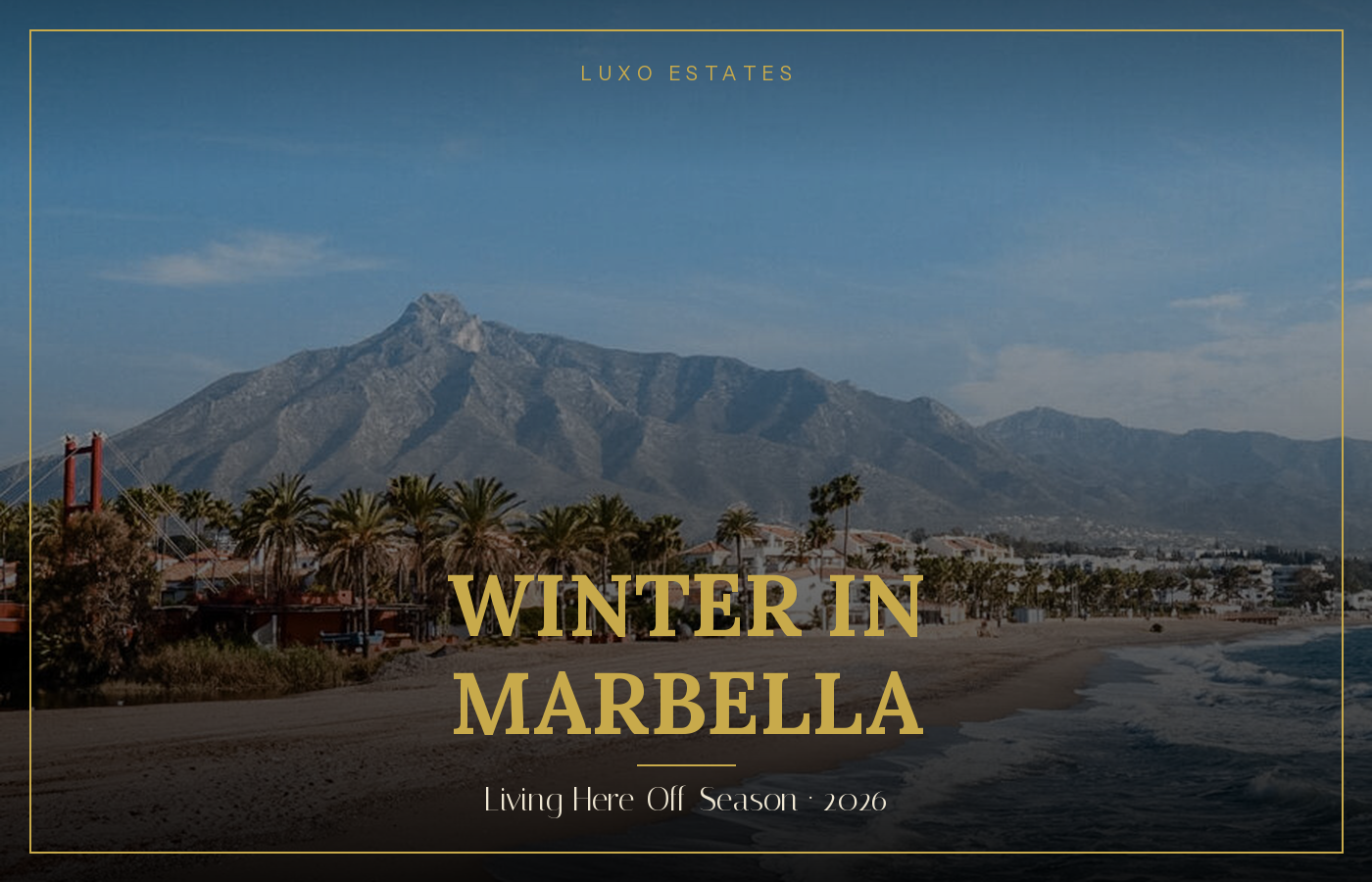
Winter in Marbella: What It’s Really Like to Live Here Off-Season (2026)
Winter in Marbella is the season residents quietly prefer and visitors rarely see. The beach clubs fall silent, the traffic thins, rents soften and the coast belongs to the people who live here. It is also the season when the postcard version of Marbella meets reality: the days are mild but not warm, rain comes in heavy bursts, and many homes have no proper heating. This guide describes what winter in Marbella is actually like, based on current sources, and says plainly where those sources disagree.
Quick Answer
Expect mild, sunny days of roughly 13 to 19°C, cool nights, a sea around 15°C and the year’s heaviest rain between November and January. The summer crowds and most beach clubs are gone, rents are easier to negotiate from October to April, and December brings a lively Christmas programme. The main surprise for newcomers is indoors: most homes lack heating, so winter evenings can feel colder than the thermometer suggests. Winter suits remote workers, retirees, golfers and walkers, and it suits people who want to try Marbella before they commit.
Where the sources disagree: winter daytime temperatures are quoted from about 12 to 19°C depending on the source, and one guide even quotes highs of 26°C, which we treat as an outlier. Claims about how many venues close also conflict: one guide says fewer than half shut for winter, another says many shops and restaurants close or open only at weekends. The honest answer is “it depends on the venue”, so check before you travel. Christmas details below describe the 2025 programme; 2026 dates were not yet published.

The Weather in Winter in Marbella
Marbella’s winters are mild by northern European standards and changeable by Mediterranean ones. A climate-data page puts daytime highs at about 13 to 14°C in January and February, a local guide quotes 12 to 15°C from December to February, another source says 16 to 19°C, and an expat guide gives an average of about 16°C. The truth sits somewhere between: pleasant in the sun, noticeably cool in the shade and after dark.
| Measure | What the sources say |
| Daytime highs, December–February | About 12–19°C (sources differ) |
| Sunshine | About 5–6 hours a day in winter |
| Rainfall | Wettest from November to January, averaging about 92–119 mm a month |
| Sea temperature | About 15°C in winter |
| Compared with the UK | Roughly 6–7°C warmer in winter than London |
The Sierra Blanca mountains behind the town shelter it from cold northerly winds, which is part of why Marbella has long been a winter-sun destination. “Over 300 days of sunshine a year” is a common claim, but winter sunshine is far shorter than summer’s, so plan your outdoor time around the middle of the day.
What Closes in Winter, and What Stays Open
This is the question newcomers ask first, and the answer is uneven. The Costa del Sol is a year-round destination for residents, but a seasonal one for parts of its tourism industry.
Beach clubs
A beach-club guide updated in March 2026 splits venues into two groups. Several clubs are described as seasonal, running from roughly April or May to September or October. Nikki Beach, for example, is listed as running from April to September, and its own events page lists a season-closing party on 11 October 2026. Other venues are described as operating all year, including the Marbella Club’s restaurant. We cannot verify each venue’s current winter hours, so check by phone or website before planning a lunch around one.
Restaurants and shops
Most of the town’s year-round restaurants stay open, and many offer indoor tables and heated terraces. Smaller seasonal businesses are the ones most likely to shorten their hours or close. One expat guide describes October to April as a period of reduced activity, with many shops and restaurants closing or operating weekends only, while a local winter guide says fewer than half of tourist venues shut. Both can be true in different neighbourhoods, which is why the Old Town, Nueva Andalucía and the Golden Mile feel different in January.
Attractions
Some sights close completely. The Museo Ralli, for example, shuts from 21 December to 14 February, so a winter visit to the Golden Mile’s quiet cultural highlights needs planning. See our guide to the Golden Mile’s secrets for what is open when.
Everyday shops and services
Shop hours follow the Spanish rhythm, typically open from about 10:00 to 14:00 and again from 17:00 until closing, according to an expat guide. Official business can move slowly, which is a point worth knowing before you plan an administrative errand in a short winter visit.
Christmas and Winter Events
December is the exception to the quiet. It was the Málaga airport’s strongest month in 2025, with 1.68 million passengers, and Marbella’s Christmas programme draws visitors as well as residents. The details below come from a December 2025 article, so treat them as a guide to the pattern, not a confirmed 2026 schedule.
- Christmas markets: a market at Puerto Banús with wooden cabins selling gourmet products and crafts, plus markets at the Alameda Park and Avenida del Mar.
- Lights and decorations: about 120 streets of the town were illuminated, and the Plaza de los Naranjos has decorations and carols.
- Traditional gatherings: zambombas (festive singalongs) and churro stalls along the Paseo de la Alameda.
- Hotel programmes: the five-star hotels run special brunches, galas and workshops.
- Three Kings: in January 2026 the central Marbella parade ran at 18:00 on 5 January along Ricardo Soriano, Ramón y Cajal and Severo Ochoa avenues, with separate parades in Las Chapas on 4 January and in San Pedro de Alcántara and Nueva Andalucía on 5 January. Dates for January 2027 should follow the same pattern but need to be confirmed locally.
Winter sales run from January through March, and the San Pedro de Alcántara fair falls towards the end of the year, according to a local winter guide.
What to Do in Winter in Marbella
The winter calendar favours the outdoors, because the heat is gone and the light is clear.
- Walk the coast. About 25 km of beachfront paths run along the coast, linking San Pedro de Alcántara, Puerto Banús and the Golden Mile.
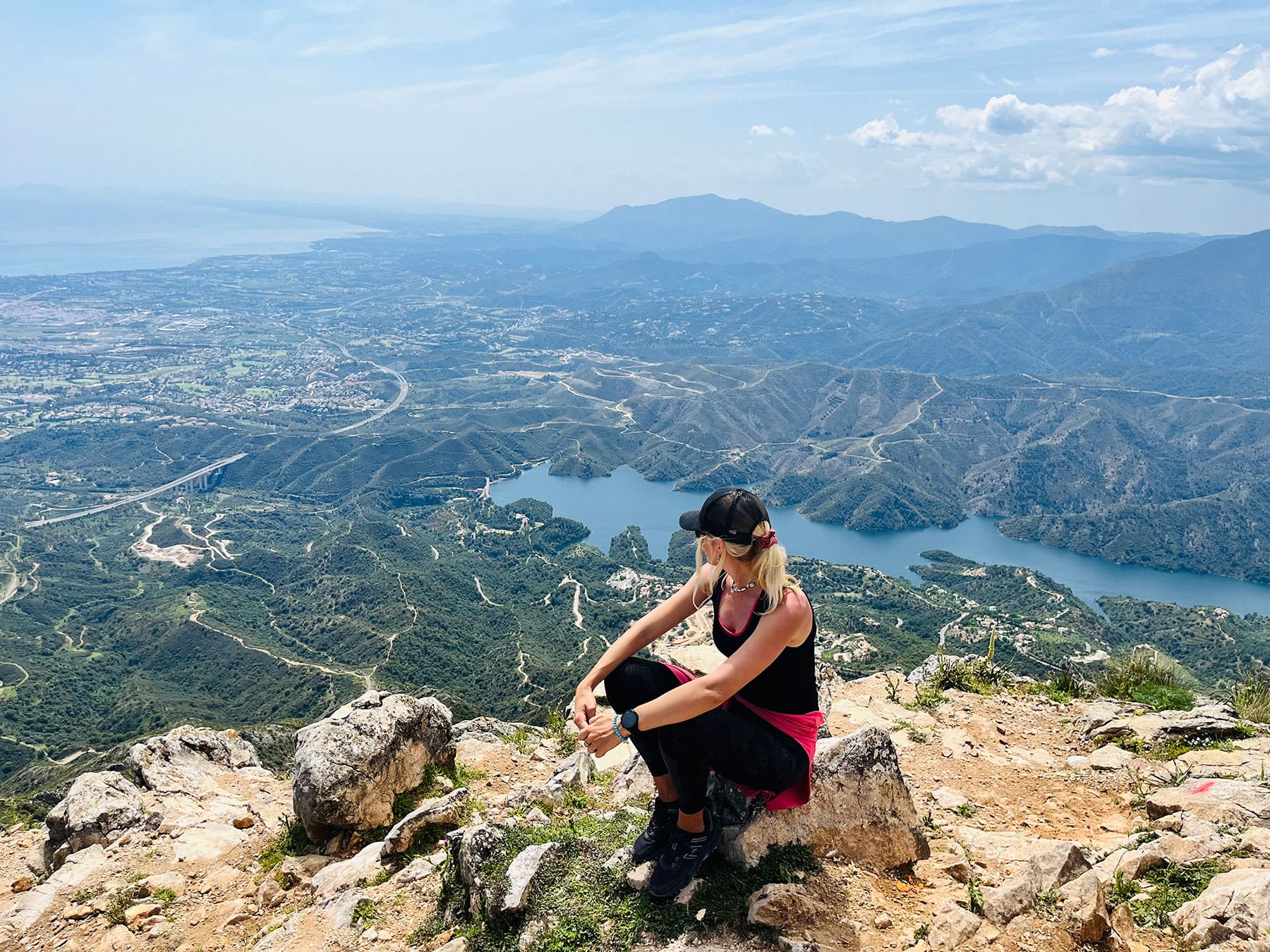
- Climb La Concha. The peak is 1,215 metres. Guides quote about three hours to the summit and one puts the round trip at around six hours. Winter is the sensible season to attempt it.
- Play golf. The Costa del Sol has dozens of courses, and winter tournaments are held on many of them.
- Visit the villages. Autumn and winter are good for the white villages; see our guide to the white villages near Marbella.
- Take a day trip. Málaga is about 40 minutes away, Ronda about an hour, and Gibraltar under an hour, according to a local guide.
- Eat out. Beachfront restaurants with heated terraces stay popular, and Cabopino and the Artola dunes have chiringuitos described as open year-round.
- Shop. Puerto Banús and the town’s department stores are quieter, and the winter sales begin in January.
If you are planning a visit rather than a stay, our perfect day in Marbella itinerary explains how to swap the beach club lunch for a long restaurant lunch in the cooler months.
Living in Marbella in Winter: The Practical Side
Heating and damp
This is the single most useful warning for newcomers. An expat guide states that most homes lack heating systems, which makes winter evenings uncomfortable despite the mild temperatures. Damp is the related problem, particularly in older coastal properties that sit empty over winter. Practical defences include opening windows during the warmest part of the day, using a hygrometer to monitor humidity, running a dehumidifier set to activate at around 70% humidity, and, for owners, improving windows and insulation or using anti-humidity paint on trouble spots. If you are renting, ask about heating and ventilation before you sign, not after.
Rents and availability
Winter is a tenant’s season. A 2026 long-term rental guide reports that many landlords with prime properties prefer to let short term from May to September at significantly higher rates, with summer premiums of 30 to 50%, while October to April offers better availability and more room to negotiate. It also reports that furnished properties usually command a 15 to 25% premium over unfurnished ones, and that most Marbella rentals are furnished.
| Area | One-bedroom rent per month (2026 guide) |
| Golden Mile | From about €2,000 to €3,500 |
| Nueva Andalucía | From about €1,100 to €1,800 |
| Old Town | From about €900 to €1,600 |
| San Pedro de Alcántara | From about €850 to €1,300 |
The same guide gives an average of about €1,600 a month for a standard 80 m² apartment in mid-2025. These are guide figures for long-term lets, not winter-specific quotes, and individual landlords vary. Details of long-term rental practice are in the Waypoint long-term rental guide. New residents should also obtain an NIE and register on the municipal census (empadronamiento) early, as this unlocks healthcare and school enrolment.
Day-to-day costs
An expat guide estimates monthly living costs, excluding rent, at about €800 for a single person and about €2,500 for a family of four, and describes the cost of living as roughly 43% below London but above comparable Spanish cities. Treat those as rough planning figures, since the guide’s property figure of about €4,969 per square metre dates from May 2024.
Getting around
Traffic is one of the main reasons residents love winter. The summer congestion on the A-7 and AP-7 eases, and our guide on how to get to Marbella explains the options. Local buses cost €1.18 per journey, paid to the driver.
Month by Month: What to Expect From October to March
“Winter” in Marbella is not one season but a sequence of five or six quite different months. The calendar below combines the dates and figures found in our sources, and it flags where something still needs confirming for the coming year.
October: the end of the summer machine
October is the transition month. Seasonal venues begin to wind down: Nikki Beach’s own events page lists a season-closing party on 11 October 2026, and several other beach clubs are described as running only until September or October. The weather is still warm enough for the beach on good days, the roads are noticeably calmer, and Ojén’s Romería de San Dionisio, the patron-saint celebration, takes place this month, as described in our guide to the white villages near Marbella. It is a good month to arrive if you want to test winter life without the cold.
November: rain and hiking
November marks the start of the wettest period, which runs to January and averages roughly 92 to 119 mm a month according to a climate page. Autumn foliage and cooler air make it a good month for hiking, and a local guide describes it as offering excellent hiking conditions. Hotels and restaurants are quiet, and prices soften. Rain tends to arrive in bursts, so plan outdoor days around the forecast and keep an indoor alternative ready.
December: the exception to the rule
December is the busy month. It was the Málaga airport’s best month of 2025, with 1.68 million passengers and a seasonal record of 12,657 operations. The town is lit up, the Christmas markets open and the five-star hotels run their festive programmes. Anyone planning to be here for the holidays should book flights, accommodation and restaurant tables early. The Museo Ralli closes from 21 December.
January: the quietest weeks
After the Three Kings parades on 4 and 5 January, the town settles into its quietest stretch. The winter sales begin and run through March, the daytime highs are at their lowest, and the evenings are at their coolest. For many residents this is the month when heating, or the lack of it, becomes the main topic of conversation. It is also the best month for rental negotiations and for quiet walks along an almost empty promenade.
February: the turning point
The Museo Ralli reopens on 14 February, the sea is at its coldest at around 15°C, and the light begins to lengthen. February is still wet and cool, but the first signs of spring appear on the hills, and winter-sun visitors from northern Europe begin to arrive for short breaks.
March: spring arrives
By March, local guides describe the season as spring, with Easter processions and blooming bougainvillea. Holy Week brings the first major surge of visitors and is a peak period for transfers and private-aviation slots, according to a 2026 handling guide. The exact Holy Week dates change every year, so check the calendar before booking.
Winter Versus Summer: The Numbers Side by Side
| Measure | Winter | Summer |
| Daytime highs | About 13–19°C (sources differ) | Up to about 29°C in July and August |
| Sunshine per day | About 5–6 hours | About 11 hours from June to September |
| Sea temperature | About 15°C | About 22°C in August |
| Rain | Wettest November–January, about 92–119 mm a month | Driest July–August, 2–3 rainy days a month |
| Rents | More availability and negotiating power | Premium of about 30–50% for prime locations |
| Traffic | Light, apart from December | Heavy, especially in July and August |
| Beach clubs | Many seasonal clubs closed | Full programme |
The table makes the trade-off clear. Winter gives up sunshine, warm water and nightlife, and gains space, price and calm. Whether that is a good trade depends entirely on what you want from the town.
A Winter Week in Marbella: A Sample Plan
If you want to know how a first winter week might feel, this plan is built from the activities and distances in our sources. It is deliberately slow, and it assumes mild weather with one wet day. Swap days around to suit the forecast.
- Day 1 — Arrive and walk. Settle in, then take the promenade at sunset. The beachfront paths run about 25 km along the coast, so a short stretch is enough on the first evening.
- Day 2 — The Old Town. Spend the morning in the Casco Antiguo and the Plaza de los Naranjos, where the cafés suit a winter coffee in the sun. Our perfect day in Marbella guide explains how to pace the town.
- Day 3 — La Concha. Climb the 1,215-metre peak on a clear day. Guides quote about three hours to the summit, and one puts the round trip at around six hours, so start early and carry layers.
- Day 4 — A rainy-day plan. Use the indoor options: shopping in Puerto Banús or the department stores, a long lunch, or a day trip to Málaga, which is about 40 minutes away. The Museo Ralli is a good indoor stop outside its winter closure, from 15 February to 20 December.
- Day 5 — The villages. Visit Ojén and Benahavís, the closest white villages, for a morning walk and a long lunch.
- Day 6 — Ronda or Gibraltar. Ronda is about an hour away and Gibraltar under an hour, according to a local guide, so either works as a day trip.
- Day 7 — Golf or a slow day. Play a round on one of the Costa del Sol’s courses, or do nothing at all, which is its own winter luxury.
The Rainy Days: How Residents Cope
Marbella’s rain is concentrated and short, not endless, but the wettest months still bring several grey days. Residents have a small set of habits for them.
- Use the museums. The Ralli Museum is free, and the Picasso Museum in nearby Málaga is a popular option, although opening days and winter hours should be confirmed.
- Do the errands. Bank, administration and shopping are better done in the rain, since shops follow the Spanish daily rhythm and stay open into the evening.
- Cook and gather indoors. Restaurants with indoor tables, fireplaces or heated terraces are the natural refuge, and many stay open day and night.
- Dry the house. After heavy rain, ventilate during the warm part of the day and run a dehumidifier to keep damp away.
Keeping Warm: Heating and Damp in More Detail
Because the lack of heating is the most common complaint, it is worth being specific. A mild climate does not mean a warm house: a Spanish coastal home with thin walls, tiled floors and no central heating can feel colder indoors than outside on a sunny afternoon, particularly in the evening. Humidity compounds the problem. The damp-prevention guidance we reviewed is consistent on a few points:
- Open windows during the warmest part of the day, when the air holds the least moisture, and close them when humidity rises.
- Use a hygrometer to track the humidity level and a dehumidifier that switches on automatically at around 70%.
- For owners, upgrade windows and insulation, and use anti-humidity paint on the corners and window edges where black mould tends to appear.
- Empty homes are the most vulnerable, so anyone leaving a property closed through winter should arrange regular airing and checks.
If you are renting, ask the landlord which heating is installed, which rooms face the sun, and whether the home has had damp issues. For buyers, the same questions matter, and so does the orientation of the home, since a south-facing property can feel like a different house in January.
What a Winter Month Costs: Worked Examples
Using the 2026 rent ranges and the expat-guide living costs quoted above, here is the arithmetic for a single person renting a one-bedroom home, with living costs of about €800 a month excluding rent. These are illustrations, not quotes, and individual landlords vary.
| Area | Rent (1 bed) | Plus living costs (~€800) |
| San Pedro de Alcántara | €850–€1,300 | About €1,650–€2,100 |
| Old Town | €900–€1,600 | About €1,700–€2,400 |
| Nueva Andalucía | €1,100–€1,800 | About €1,900–€2,600 |
| Golden Mile | €2,000–€3,500 | About €2,800–€4,300 |
For a family of four the same guide estimates about €2,500 a month for living costs, excluding rent, and larger homes cost more than the one-bedroom figures above. The practical message is that choosing the area matters more than anything else: the same lifestyle can cost about twice as much on the Golden Mile as in San Pedro. Winter negotiating power can narrow that gap, but only if you ask.
A Trial Winter: A Checklist for Would-Be Residents
Many people who end up buying here began by renting for a winter. If you are thinking of doing that, this checklist turns the season into a proper test.
- Rent for at least three months. Include January and February, the coolest and quietest months.
- Pick two different areas. Spend half the winter in the Golden Mile or Nueva Andalucía, and half in San Pedro or the Old Town if you can, to compare the rhythm.
- Test the home, not just the view. Ask about heating, check for damp on walls and ceilings, and visit at night.
- Get your paperwork started. An NIE and registration on the municipal census (empadronamiento) unlock healthcare and school enrolment, so do them early.
- Time your commute. If you will travel to Málaga airport, try the journey, which takes about 45 to 60 minutes by road.
- Try the services. Visit a clinic, a supermarket and a bank. Official business can move slowly.
- Spend a weekday evening in town. This tells you more about winter life than any weekend.
- Come back in July. A trial winter shows half the picture. Return in the summer to see the other half.
Who Winter in Marbella Suits, and Who It Doesn’t
| Suits you if… | May disappoint you if… |
| You want mild weather and want to escape a northern winter | You expect beach weather every day |
| You work remotely and value quiet roads | You want beach-club nightlife |
| You play golf or like walking and hiking | You dislike cool evenings indoors |
| You want to test life here before buying | You need every restaurant open every night |
| You want better rental terms | You are sensitive to damp and cold homes |
Why Winter Is the Best Time to View a Property
For anyone considering a purchase rather than a rental, winter has a hidden advantage: it shows you the home as it really is. In August every villa looks wonderful, because the sun, the pool and the holiday mood hide most defects. In January the same home has to earn its price. Several things become visible only in the cooler months.
- Warmth and orientation. You can see which rooms catch the winter sun and which stay cold all day, and judge whether you would be comfortable in the evening with no central heating.
- Damp. Empty or older coastal properties show their weak points in winter, in the form of black spots near windows and corners, a musty smell, or condensation. These are easy to miss in summer.
- Noise and traffic. Without summer crowds and events, you hear the real background level of the street and the road.
- The neighbourhood’s real life. Which shops, restaurants and services are open in January tells you what the area will be like for eleven months of the year.
- Negotiating room. With fewer buyers and less competition, there is generally more room to discuss terms, although each seller is different and we cannot quote a standard discount.
The sensible approach is to view in winter, return in summer, and compare. A home that works in both seasons is the one to buy.
Winter on the Plate
Marbella’s winter table is heartier than its summer one. Along the coast, restaurants with indoor dining rooms, fireplaces or heated terraces become the places to be, and beachfront seafood restaurants remain popular on sunny days. Inland, the traditional kitchens of the mountain villages come into their own. In Istán, for example, guides point to local dishes such as corn soup, fried rabbit, zahína (a honeyed flour dessert) and oil cakes, which are far more winter food than beach food. In Ojén the historic aguardiente, an anise liqueur, is the local drink to try. A winter day trip to a village for a long lunch is one of the most rewarding things to do in the cool months.
Booking behaviour changes too. Restaurants that are impossible to book in August are easier in January, but smaller places may close on certain weekdays, so always call ahead. For the town’s best-known restaurants, see our guide to the best restaurants in Marbella.
Golf and Outdoor Life in Winter
Golf is the Costa del Sol’s great year-round sport, and winter is when many players arrive. Local guides describe the coast as having dozens of courses, with winter tournaments held on many of them. The cooler air makes long rounds more comfortable, and tee times are generally easier to find than in the peak season, though availability varies by course.
The rest of the outdoor calendar is similarly generous. Walking along the roughly 25 km of seafront paths, climbing La Concha, cycling the town’s routes and riding horses are all reported as winter activities. The common thread is that the season rewards people who like to be outside in mild conditions rather than those who want to lie on a beach.
What to Pack for a Marbella Winter
- Layers. Mornings and evenings can feel chilly even when midday is pleasant, so bring a light jacket, a jumper and something waterproof.
- Proper footwear. Cobbled streets and wet pavements are slippery, and hiking in the hills needs sturdy shoes.
- Warm indoor clothing. If your accommodation has no heating, warm socks and a fleece make a real difference.
- Sun protection. Winter sun is gentler, but sunglasses and a hat are still sensible in clear weather.
- A small dehumidifier or heater if you are staying long. Many long-stay residents buy them locally, so they need not travel with you.
- An umbrella. November to January is the wettest period.
Common Mistakes
- Expecting summer weather. Winter days are mild but cool, with 5 to 6 hours of sun.
- Renting without checking heating. Many homes have none.
- Assuming every beach club is open. Several are seasonal, so confirm.
- Visiting the Museo Ralli between 21 December and 14 February. It is closed.
- Booking nothing in December. Christmas is busy at the airport and in hotels.
- Judging the town on one weekday. Reduced hours mean a quiet Tuesday can look very different from a Saturday.
Frequently Asked Questions
What is the weather like in Marbella in winter?
Mild and changeable: daytime highs of about 13 to 19°C depending on the source, around 5 to 6 hours of sun a day, a sea of about 15°C, and the heaviest rain from November to January.
Is Marbella open in winter?
Yes. Most year-round restaurants and shops stay open, but seasonal venues such as many beach clubs close or reduce their hours, so check before you go.
Do homes in Marbella have heating?
Often not. An expat guide says most homes lack heating systems, which makes winter evenings uncomfortable despite the mild weather. Ask about heating and damp before renting.
Is it cheaper to rent in Marbella in winter?
Generally yes. A 2026 rental guide says October to April offers better availability and negotiating power, while landlords charge 30 to 50% more in summer.
What happens in Marbella at Christmas?
Last year’s programme included Christmas markets at Puerto Banús, the Alameda Park and Avenida del Mar, illuminated streets, carols in the Plaza de los Naranjos and Three Kings parades on 4 and 5 January. Check the 2026 dates locally.
Can you swim in the sea in Marbella in winter?
The sea averages about 15°C in winter, compared with about 22°C in August. Some hardy locals swim, but most people find it too cold and prefer the promenade, golf or hiking.
How long does winter last in Marbella?
The cool, wet part runs roughly from November to February, with December the busy exception because of Christmas. Spring begins in March, which one local guide calls her favourite season, with Easter processions and blooming bougainvillea.
The Bigger Picture
Winter is when Marbella stops performing and starts living. The same roads that are gridlocked in August are quiet, the restaurants that matter to residents are full of residents, and the town shows you what an ordinary year here is like. That is exactly why so many people who end up buying a home began by renting one for a winter.
None of this means winter is perfect. The evenings can be cold indoors, some venues shut, and the sea is too cool for most people. But those are the costs of a season that gives you space, calm and a clearer view of the place. Used well, a winter here is the cheapest and most honest way to find out whether Marbella is a holiday you enjoy or a home you want.
If you are considering a longer stay, a local adviser can help you compare neighbourhoods and rental terms, and show you which homes are built for winter and which are built only for summer.
Thinking of spending a winter here?
LUXO Estates covers the properties, the people and the lifestyle shaping the Costa del Sol.
Related reading:
How to Get to Marbella
White Villages Near Marbella
Golden Mile Marbella Secrets
LUXO Estates Homepage