
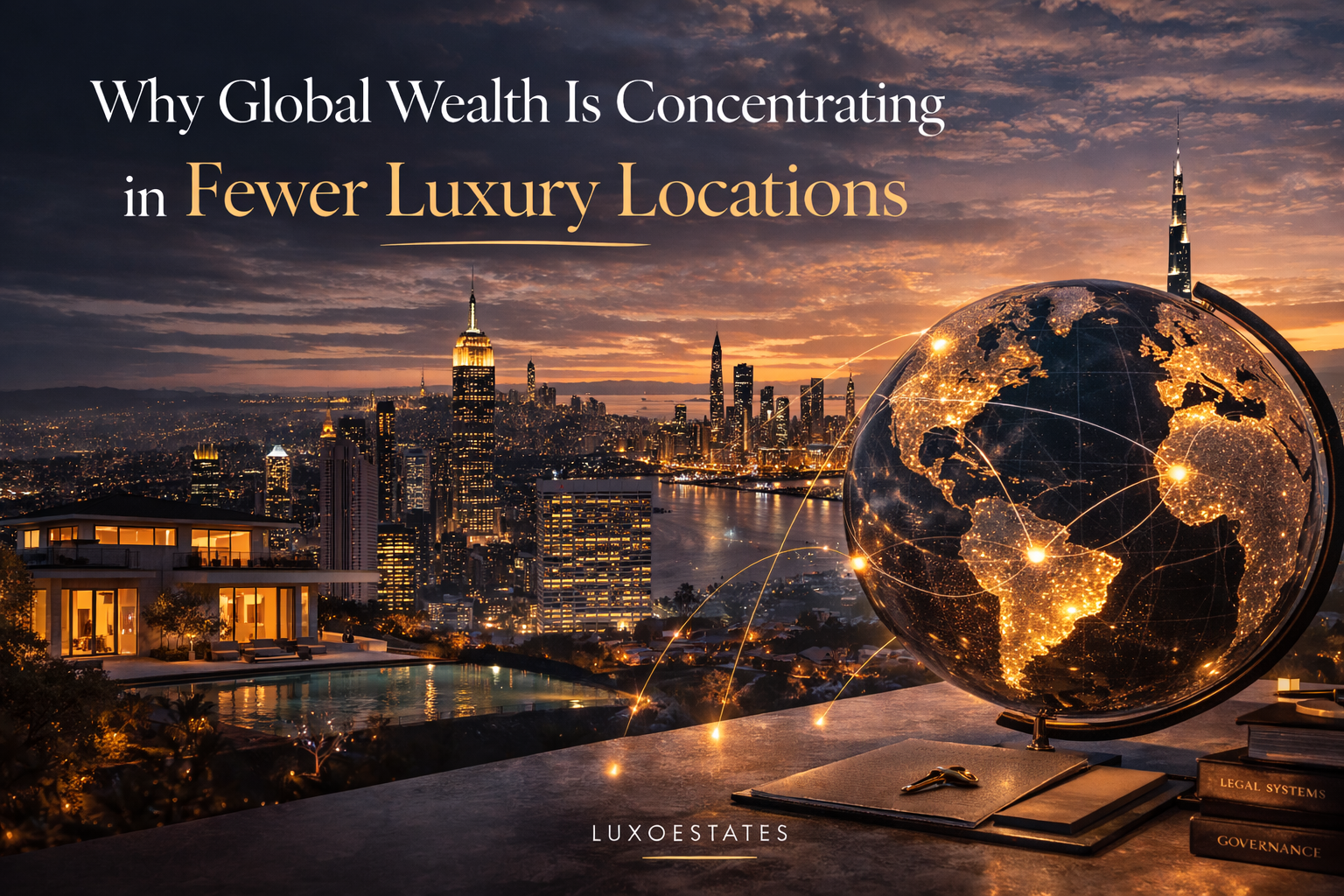
In recent years, the geography of global wealth has begun to shift in noticeable ways. While luxury real estate has traditionally existed across many desirable destinations, a growing share of high-net-worth capital is now concentrating in a relatively small number of prime locations. These markets attract international buyers not only for their lifestyle appeal, but also for the structural stability they offer in an increasingly complex global environment.
For affluent investors, real estate decisions extend far beyond architecture or scenic views. The choice of location increasingly reflects broader considerations such as political stability, economic resilience, and institutional reliability. Cities and regions that combine these qualities tend to attract sustained inflows of global capital, reinforcing their position as long-term safe havens for wealth preservation.
Scarcity plays a decisive role in this concentration. Many of the world’s most prestigious property markets operate within strict physical or regulatory constraints that limit new development. Historic urban centers, waterfront enclaves, and architecturally protected districts cannot easily expand their housing supply. As demand continues to grow while supply remains restricted, capital naturally gravitates toward these rare environments.
Global mobility has further accelerated this trend. Ultra-high-net-worth individuals increasingly live internationally, operating businesses and managing assets across multiple jurisdictions. For these globally mobile buyers, certain locations offer a combination of connectivity, financial infrastructure, and lifestyle advantages that make them particularly attractive. Prime cities with strong international networks naturally benefit from this global circulation of capital.
Institutional confidence also shapes where wealth concentrates. Buyers seeking to protect long-term assets often prefer jurisdictions with transparent legal systems, secure property rights, and consistent regulatory environments. These factors reduce uncertainty and strengthen investor confidence, making certain markets more appealing than others regardless of price levels.
Reputation and perception contribute as well. Over time, specific destinations develop global prestige that reinforces demand across generations of buyers. Once a market achieves this level of recognition, it often benefits from a self-reinforcing cycle: international demand supports pricing resilience, which in turn strengthens the perception of stability and exclusivity.
Infrastructure and quality of life further influence these decisions. Reliable transportation networks, world-class healthcare systems, high-quality education, and cultural vibrancy create environments where wealthy individuals can comfortably establish long-term residences. These lifestyle advantages often complement financial considerations, making certain locations consistently attractive.
Importantly, the concentration of global wealth in fewer luxury locations does not necessarily reflect speculation. Instead, it represents strategic allocation. Buyers increasingly view prime real estate as part of a diversified global portfolio, selecting jurisdictions that combine lifestyle value with long-term structural stability.
As global wealth continues to expand and mobility increases, this concentration dynamic may intensify. The world’s most resilient and prestigious property markets are likely to capture a growing share of international capital, reinforcing their status as enduring centers of luxury real estate demand.
Ultimately, the trend reflects a broader reality: in an interconnected world, wealth gravitates toward stability, scarcity, and confidence. Prime locations that offer these qualities will continue to attract global attention, shaping the future landscape of luxury property markets.