
Best Spanish Language Schools in Marbella 2026
Marbella’s international population — a mix of long-term expats, seasonal residents, and international students — has supported a genuine cluster of Spanish language schools, ranging from small boutique operators to branches of Spain’s largest language-teaching chains. This guide covers four verified, currently operating schools, each with a different profile in terms of accreditation, size, and teaching style, to help match the right one to a specific goal: conversational fluency, DELE certification, or simply getting by more comfortably day to day.
Quick Answer
SLC (Spanish Language Center), operating since 1999, is officially accredited by the Instituto Cervantes and is a recognised DELE exam centre. III Schools runs three locations across Marbella, Nueva Andalucía, and San Pedro de Alcántara with confirmed 2026 course dates. MISS is a smaller, centrally located school with strong past reviews, and Enforex is part of one of Spain’s largest language-school chains, present in Marbella since well before most competitors, though its more recent independent reviews are mixed.
🎓 The Schools
SLC – Spanish Language Center
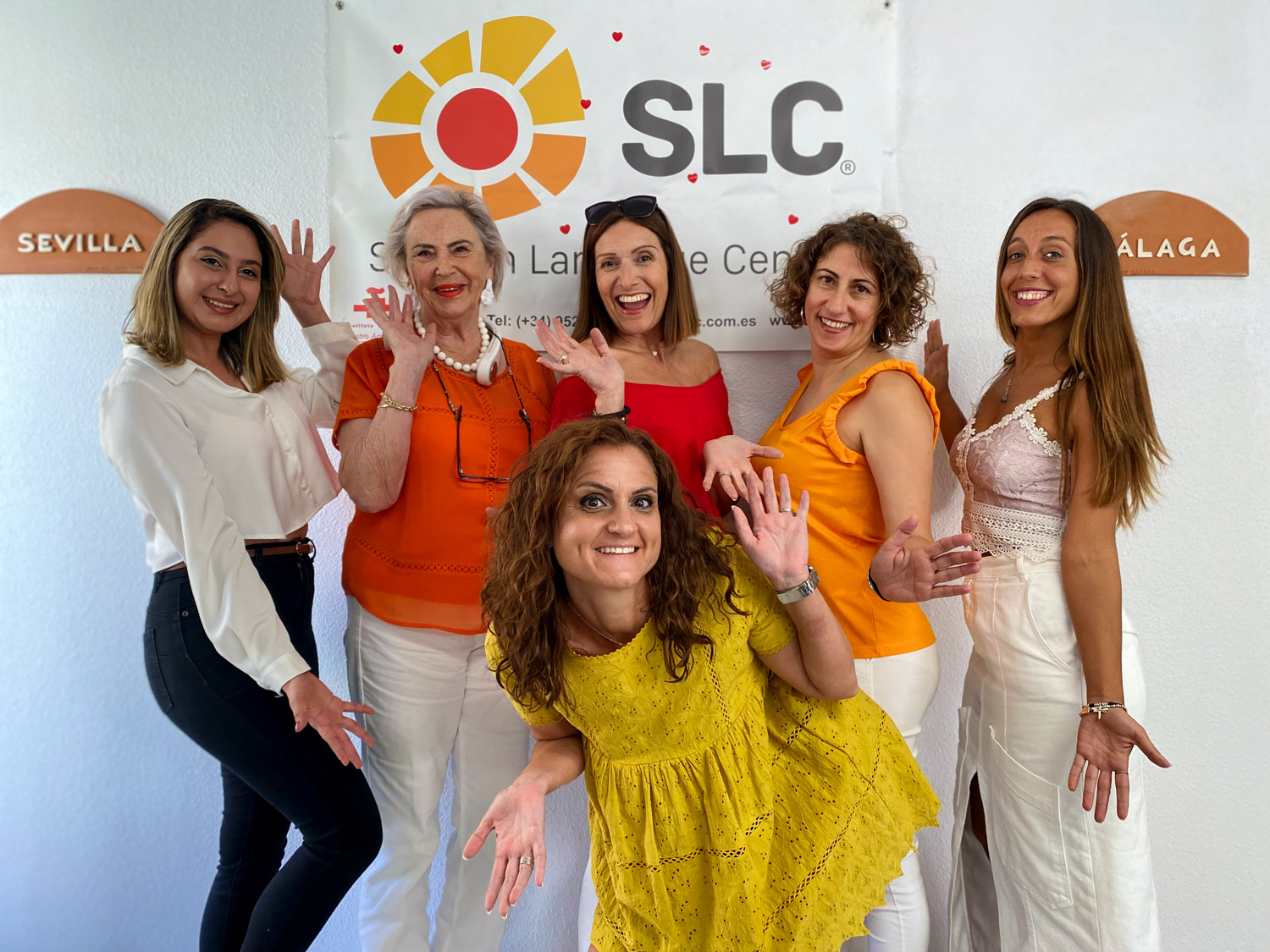
SLC has operated in Marbella since 1999, founded by the Internacional Au-Pairs & Language Abroad Group, and is officially accredited by the Instituto Cervantes — Spain’s own institution for promoting the Spanish language globally, and generally regarded as the strongest single accreditation a Spanish-language school can hold. SLC is also a recognised official centre for DELE, CCSE (the Spanish citizenship exam), and SIELE exam preparation and administration, meaning students can prepare for and sit certified exams at the same school rather than travelling elsewhere. Its course catalogue spans intensive and semi-intensive group classes, private lessons, virtual classrooms, and dedicated support for au pairs and academic-year students, reflecting its origins as part of a broader au pair placement organisation.
Address: Avd. Ricardo Soriano 36, Edf. María III, 3º, 29601 Marbella
Accreditation: Instituto Cervantes accredited; official DELE, CCSE and SIELE exam centre
Best for: Formal accreditation, official exam preparation and sitting, au pair/academic-year support
III Schools (Instituto Internacional de Idiomas)
III Schools operates three separate centres across the greater Marbella area — in Marbella itself, Nueva Andalucía, and San Pedro de Alcántara — giving it the widest physical footprint of the schools covered here. Its own site lists confirmed intensive-course start dates running through 2026, from January into August, a useful concrete signal of active, ongoing operation rather than a static marketing page. Pricing is transparently published: intensive courses from €545/month, private lessons at €38/hour, semi-private classes at €24/hour per person, and corporate language training for businesses at €60-75/hour, alongside DELE exam preparation and administration.
Locations: Marbella, Nueva Andalucía, San Pedro de Alcántara
Pricing: Intensive courses from €545/month; private lessons €38/hour
Best for: Widest choice of locations, transparent pricing, confirmed 2026 scheduling
MISS – Marbella International Spanish School
MISS is a smaller, centrally located school offering intensive and year-round Spanish courses, private and semi-private lessons, company training, and DELE and SIELE exam preparation, alongside English courses for the reverse direction. Its reviews are strongly positive — a perfect average across the reviews available — with past students specifically praising personalised attention and its convenient central location, though it’s worth noting plainly that the most recent independent review found for this guide dates to October 2023, so recent first-hand feedback is thinner than for some other schools on this list even as the school’s own website shows current, actively updated content into 2026.
Address: C/ Notario Luis Oliver 6, Edif. Liceo 3º A, 29602 Marbella
Courses: Intensive, year-round, private/semi-private, DELE & SIELE prep
Best for: Central location, personalised small-school attention; note reviews are somewhat dated
Enforex Marbella
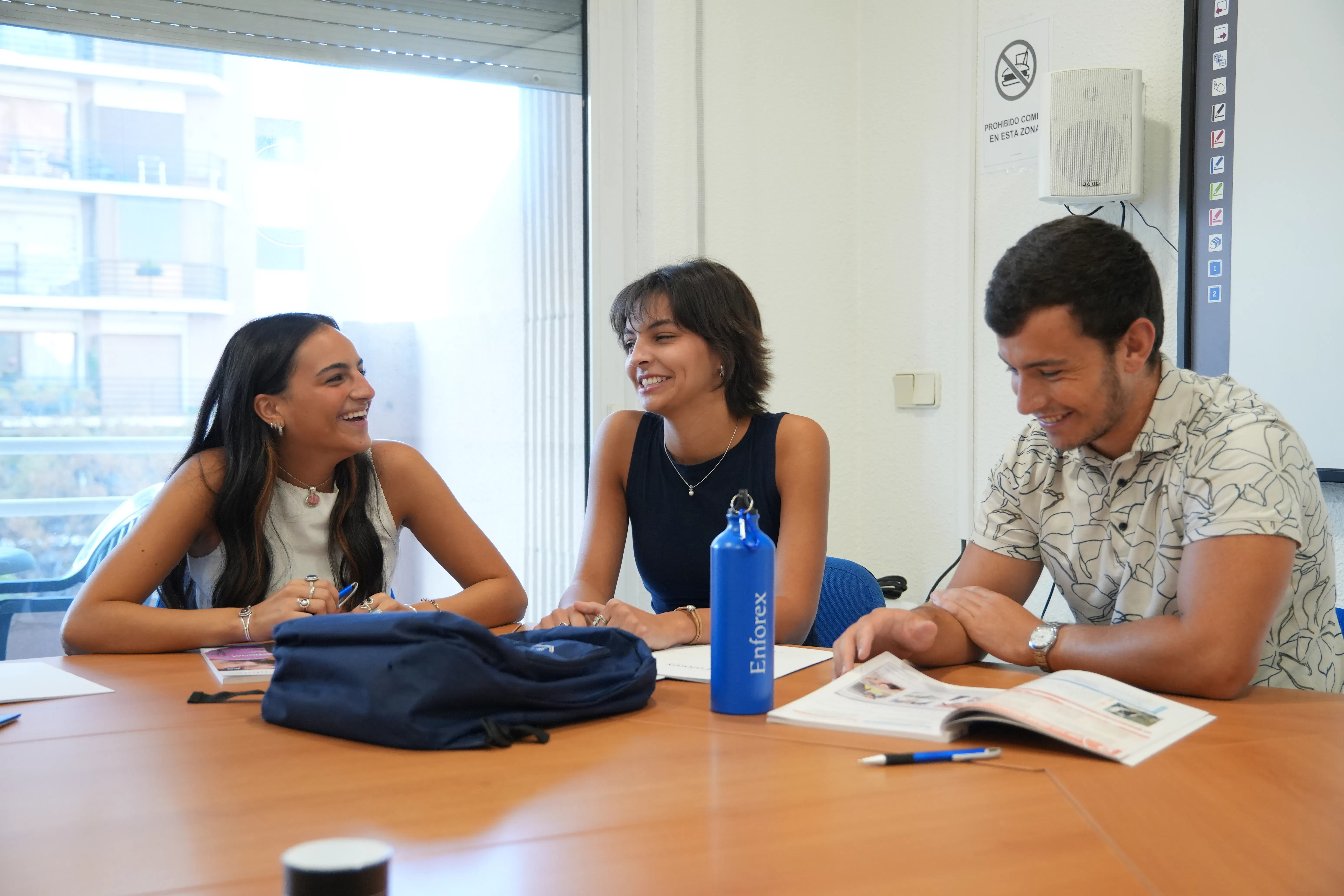
Enforex is part of one of Spain’s largest and longest-running language-school groups, operating continuously since 1989 with a genuine campus in Marbella itself, a five-minute walk from the beach. It offers the widest range of intensive course intensities of any school here (10 to 30 lessons per week), plus private, semi-private, and specialised business, tourism, and healthcare Spanish tracks, alongside DELE preparation. In the interest of the same transparency applied throughout this guide, it’s worth flagging that Enforex’s most recent independent TripAdvisor reviews are mixed — a 2.5/5 average across a small sample, including one August 2025 review describing frustration after being transferred to a different location than originally booked. That’s a genuine data point worth weighing against the group’s scale and long track record, not a reason to omit a well-established option outright.
Address: Avda. Ricardo Soriano 43, 29600 Marbella
Courses: 10-30 lessons/week intensive, private, business/tourism/healthcare Spanish, DELE prep
Best for: Scale and course variety from an established chain; check current reviews given mixed recent feedback
DELE, SIELE and CCSE: Which Exam Do You Actually Need?
The three certifications mentioned throughout this guide serve genuinely different purposes, and confusing them is a common and avoidable mistake. DELE (Diplomas de Español como Lengua Extranjera) is the official, permanently valid Spanish-language qualification issued by the Instituto Cervantes on behalf of Spain’s Ministry of Education, recognised internationally by universities and employers, and available across a range of levels from A1 (beginner) through C2 (mastery). SIELE (Servicio Internacional de Evaluación de la Lengua Española) is a newer, faster alternative, jointly developed by the Instituto Cervantes and several major universities, delivered on-screen with results typically available within weeks rather than the months a DELE certificate can take, though it’s generally regarded as slightly less universally recognised than DELE for certain formal purposes. CCSE (Conocimientos Constitucionales y Socioculturales de España) is different again — it’s not primarily a language exam but a test of constitutional and cultural knowledge required specifically for Spanish citizenship applications, alongside a genuine but more basic Spanish language requirement (the A2 DELE, typically). Anyone in Marbella pursuing Spanish nationality specifically needs the CCSE, not simply a general Spanish course, which is why SLC’s status as an official centre for all three exams is a genuinely practical advantage for residents with citizenship ambitions rather than a marketing distinction.
Group, Semi-Private, or Private Lessons?
All four schools profiled here offer some version of this same three-way choice, and picking the right format matters as much as picking the right school. Group intensive courses, generally the most affordable per-hour option, suit a self-motivated learner who benefits from the social dynamic of a classroom and doesn’t mind progressing at a pace set partly by classmates — III Schools’ published €545/month intensive rate and Enforex’s 10-30 lesson weekly bands both fall into this category. Semi-private lessons, shared between two to four students, strike a middle ground: more personalised attention than a full group class, at a meaningfully lower cost than fully private tuition, and a format III Schools prices distinctly at €24/hour per person. Private, one-to-one lessons are the most expensive per hour but allow a course to be built entirely around one person’s schedule, goals, and pace — genuinely valuable for a busy professional fitting lessons around work, or someone with a specific, narrow goal like preparing for a single upcoming exam or a particular business negotiation, an option III Schools prices at €38/hour and most of the other schools here offer in some form.
What to Expect to Pay
| School | Group/Intensive | Private Lessons |
| SLC | Priced on enquiry (intensive/semi-intensive available) | Priced on enquiry |
| III Schools | From €545/month; semi-private €24/hr per person | €38/hour |
| MISS | Priced on enquiry (intensive/year-round available) | Priced on enquiry |
| Enforex | 10-30 lessons/week, priced on enquiry | Priced on enquiry |
III Schools is notably the most transparent of the four about pricing directly on its own site, publishing specific monthly and hourly rates rather than requiring a direct enquiry — a genuinely useful data point for anyone trying to budget before making contact with any of these schools, though it’s always worth confirming current rates directly given how frequently language-school pricing is adjusted seasonally.
Spanish for Specific Purposes: Business, Healthcare, and Tourism
Beyond general conversational Spanish, several of these schools cater to more specialised professional needs. Enforex specifically advertises dedicated tracks in business Spanish, tourism-industry Spanish, and healthcare-sector Spanish — a genuinely useful distinction for, say, a hospitality professional working front-of-house in Marbella’s hotel industry versus someone in a general office role, since the vocabulary, formality register, and common scenarios practiced differ meaningfully between these tracks. Corporate language training, offered by III Schools at €60-75/hour, serves a related but distinct need: a company arranging group Spanish lessons for staff, generally scheduled around work hours and tailored to the specific industry’s terminology rather than a generic curriculum. Anyone choosing between schools with a specific professional goal in mind should ask directly about specialised-track availability and group size, since not every school markets this as explicitly as Enforex does even if a bespoke arrangement might still be possible on request.
Resident, Long-Term Expat, or Short Course Visitor?
The right school can depend as much on how long someone plans to stay in Marbella as on budget or learning style. A short-term visitor or seasonal resident taking a two-to-four-week intensive course benefits most from a school with flexible, frequently starting group classes and a social program alongside lessons — the kind of format Enforex and III Schools, with their frequent published start dates, are built around. A long-term resident working steadily toward fluency or a specific certification benefits more from a school offering genuinely flexible scheduling around work and family commitments, private or semi-private lessons, and a realistic multi-year relationship with one set of teachers — SLC’s virtual classroom option and broader academic-year support suit this profile particularly well. Someone specifically on the path to Spanish citizenship, which requires ten years of legal residency in most cases (shorter for some nationalities and circumstances) plus the CCSE exam and A2-level Spanish, should prioritise a school, like SLC, that can prepare and administer that specific exam rather than simply teaching general conversational Spanish.
Au Pair and Academic-Year Programs
SLC’s connection to the Internacional Au-Pairs & Language Abroad Group is worth exploring in more detail for a specific segment of learners: young people combining a period of childcare work in Spain with structured language study, or students spending a full academic year or semester abroad as part of a university program. These arrangements typically bundle language classes with accommodation placement, cultural orientation, and ongoing support beyond what a standalone language course provides — genuinely different infrastructure from a purely transactional course booking, and worth asking about directly for anyone considering an au pair placement or extended academic stay in the Marbella area rather than a shorter, purely tourist-oriented course.
Andalusian Spanish: What Learners Should Expect
Anyone learning Spanish specifically in Andalusia, Marbella included, should set realistic expectations about the regional accent and speech patterns they’ll actually encounter outside the classroom, which differ meaningfully from the more neutral “textbook” Spanish often taught internationally. Andalusian Spanish is known for dropping the final “s” sound in many words, softening or dropping intervocalic “d” sounds, and a generally faster, more rhythmic delivery than Castilian Spanish spoken in Madrid — differences that can genuinely disorient a learner who has only studied from standard textbook recordings before arriving. A good local school should address this directly rather than only teaching neutral, formal Spanish; ask any prospective school how much regional accent and colloquial vocabulary factor into its actual classroom teaching, since a purely grammar-focused, textbook-accented course can leave a student surprised by how differently people actually speak on the street outside class.
A First Class: What Actually Happens
A first session at any reputable school generally begins with a placement test — a mix of written grammar exercises and a short spoken conversation with a teacher — used to assign a new student to the appropriate level group rather than defaulting everyone to an absolute beginner class regardless of prior exposure to the language. For someone with some prior Spanish, whether from school years ago or casual practice, this step matters considerably: being placed too low leads to a frustratingly slow pace, while being placed too high can undermine confidence early on. A reasonable school should be willing to move a student between levels in the first week or two if the initial placement turns out to be a poor fit, and it’s worth asking directly about this flexibility policy before committing to a longer course.
A Buyer’s Checklist Before Enrolling
| Consider | Why |
| Do you need an official DELE/CCSE/SIELE certificate? | Only SLC and III Schools directly administer official exams; others prepare but don’t administer |
| Working toward Spanish citizenship specifically? | SLC’s CCSE administration is a genuinely relevant advantage |
| Group, semi-private, or private lessons? | III Schools publishes clear pricing for all three formats |
| Short course or long-term study plan? | Short-term suits Enforex/III Schools’ frequent start dates; long-term suits SLC’s flexible/virtual formats |
| Business, healthcare, or tourism-specific Spanish? | Enforex explicitly markets specialised professional tracks |
| Have you checked recent, dated reviews directly? | Worth confirming yourself given how much review recency varies across these four schools |
Combining a Spanish Course with Life in Marbella
All four schools are centrally located, within Marbella itself or its immediate surroundings, meaning a language course genuinely integrates into daily life rather than requiring a dedicated separate trip — a meaningfully different experience from studying a language purely through an app or occasional lessons back home. Several schools, based on their published offerings, build cultural and social activities around the language classes themselves — a practice broadly common across intensive language schools in tourist-heavy Spanish destinations, since real-world practice with new vocabulary reinforces classroom learning far more effectively than repetition alone. For a resident specifically, treating a language course as one part of a broader effort to genuinely integrate locally — through markets, neighbourhood cafés, and everyday interactions in Spanish rather than English — tends to accelerate progress considerably compared to classroom study alone.
Marbella’s Spanish Schools vs the Rest of Spain
Spain’s language-school industry is genuinely mature, with well-known hubs in Madrid, Barcelona, Salamanca, and Seville each carrying their own reputation — Salamanca in particular is often considered the country’s most prestigious destination for formal Spanish-language study, home to one of the oldest universities in Europe and a long academic tradition specifically built around teaching Spanish to foreigners. Marbella’s schools don’t attempt to compete directly on that same academic-prestige axis; instead, the town’s specific advantage is combining genuine language study with an established international, expat-friendly environment and a considerably warmer climate for most of the year, appealing particularly to a learner who wants lessons alongside an actual lifestyle change rather than a purely academic sabbatical. For someone deciding between destinations, Salamanca or a major city suits a more intensive, academically focused study period, while Marbella suits combining language learning with a genuine relocation or an extended, lifestyle-oriented stay.
Quick Guide
| School | Location | Standout | Best For |
| SLC | Central Marbella | Instituto Cervantes accredited, official DELE centre | Formal accreditation & exams |
| III Schools | Marbella, Nueva Andalucía, San Pedro | Confirmed 2026 dates, 3 locations | Choice of location, transparent pricing |
| MISS | Central Marbella | Strong past reviews, personalised | Small-school attention |
| Enforex | Central Marbella | Large established chain since 1989 | Course variety and scale |
Frequently Asked Questions
Which Spanish school in Marbella is officially accredited?
SLC (Spanish Language Center) is accredited by the Instituto Cervantes and is also an official DELE, CCSE, and SIELE exam centre, making it the most formally credentialed of the schools covered here.
Where can I take the DELE exam in Marbella?
SLC and III Schools both administer official DELE exams directly, and MISS and Enforex both offer DELE preparation courses.
Is there a Spanish school with multiple locations in the Marbella area?
Yes — III Schools operates three centres: in Marbella itself, Nueva Andalucía, and San Pedro de Alcántara.
Are all these schools’ reviews currently up to date?
Not equally. III Schools shows explicit confirmed course dates through 2026. MISS’s reviews, while strongly positive, are dated to 2023. Enforex’s most recent independent reviews are mixed rather than uniformly positive, which is disclosed here rather than omitted.
How long does it take to become conversational in Spanish?
Based on standard CEFR estimates, a focused intensive course can realistically bring a genuine beginner to a solid A2 or low B1 level — comfortable everyday conversation — within one to two months, though reaching professional or academic fluency (C1) typically takes many months of sustained study.
Do any of these schools offer online or hybrid lessons?
SLC explicitly offers a virtual classroom option alongside in-person courses, useful for residents who travel frequently or want to continue lessons remotely with the same teacher.
How Long Does It Actually Take?
Setting realistic expectations upfront prevents a lot of frustration partway through a course. The Common European Framework of Reference for Languages (CEFR), the standard against which DELE levels are set, generally estimates somewhere between 80 and 200 guided learning hours to move from one full level to the next (A1 to A2, A2 to B1, and so on), with the gap widening at higher levels as the material grows more nuanced. In practical terms, an intensive course of 20-25 lessons per week, like those III Schools and Enforex both offer, can realistically move a genuine beginner to a solid A2 or low B1 level within a focused one-to-two-month stay, while reaching a C1 level suitable for professional or academic use in Spanish typically requires many months of sustained study, whether concentrated or spread out through regular part-time lessons over a year or more. Anyone booking a short course specifically hoping to reach fluency in a couple of weeks should adjust that expectation accordingly — genuine conversational comfort, rather than technical fluency, is a more realistic short-course goal.
Online and Hybrid Learning Options
SLC’s virtual classroom offering, mentioned above, reflects a broader shift across language schools toward hybrid formats that combine in-person and remote learning — genuinely useful for a Marbella resident who travels frequently, or a seasonal visitor wanting to continue lessons with the same school and teacher after returning home rather than starting over elsewhere. A hybrid approach also suits a learner easing into commitment: trying a few remote sessions before committing to a full in-person intensive course removes some of the risk of an expensive multi-week booking with a school and teaching style that turns out to be a poor personal fit. Not every school covered here explicitly advertises a remote option, so it’s worth asking directly if this flexibility matters for a particular situation, particularly for anyone splitting time between Marbella and another country.
Learning Spanish as a Family
Several of the schools profiled here, particularly the larger chain operators, run programs aimed specifically at children and teenagers alongside standard adult courses, often including a broader summer-camp structure combining language lessons with sports, excursions, and supervised social activities rather than classroom-only instruction — Enforex in particular is known for this model at a group level across its wider Spanish network. For a family relocating to Marbella together, coordinating a children’s summer program with a parent’s own adult intensive course at the same school can simplify logistics considerably compared to enrolling with entirely separate providers, and it’s worth asking directly whether a school’s children’s and adult programs run on compatible schedules and locations before booking either separately.
Questions Worth Asking Before You Book
Beyond the checklist above, a short list of direct questions to any of these four schools — or any language school anywhere, for that matter — tends to surface useful information a glossy course description alone won’t: How many students are typically in a group class, and is that number capped or does it vary seasonally? Are teachers native Spanish speakers with formal teaching qualifications, and how long has the core teaching staff been with the school? What happens if a booked course needs to be postponed or cancelled — is there a genuine refund or rescheduling policy, or only store credit? And specifically for anyone pursuing DELE, SIELE, or CCSE certification, what is the school’s own pass rate on that particular exam, and can it be substantiated rather than simply claimed. A school confident in its own quality should answer these plainly rather than deflecting toward general marketing language, and any hesitation on a direct question like the cancellation policy is worth treating as a minor caution flag before paying for a multi-week course upfront.
The Bigger Picture
Marbella’s Spanish language school scene reflects the town’s dual identity as both an international expat hub and a genuine Spanish town — supporting everything from a large, decades-old chain school to a boutique accredited centre specialising in official exams. The right choice depends heavily on the goal: a resident chasing formal accreditation or citizenship-track certification should weigh SLC’s Instituto Cervantes status seriously, while someone simply wanting flexible, well-scheduled group classes has good reason to look at III Schools’ three-location footprint and clearly published 2026 dates.
Looking for more on expat life in Marbella?
LUXO Estates covers the properties, the people, and the lifestyle shaping the Costa del Sol.
Related reading:
Best Paddleboard & Kayak Rental in Marbella
LUXO Estates Homepage