
Marbella in Winter: The Truth Nobody Posts on Instagram
Instagram shows you Marbella in August: superyachts in Puerto Banús, packed beach clubs, golden bodies on white sun loungers, champagne at sunset. Nobody posts Marbella in January. And this is a problem — because if you are buying a property to live in year-round, the January version of Marbella matters infinitely more than the August version. You will spend 8 months per year in the non-summer version of Marbella. And the truth about Marbella in winter is more nuanced, more honest and — for the right buyer — more attractive than any summer photo could ever be.
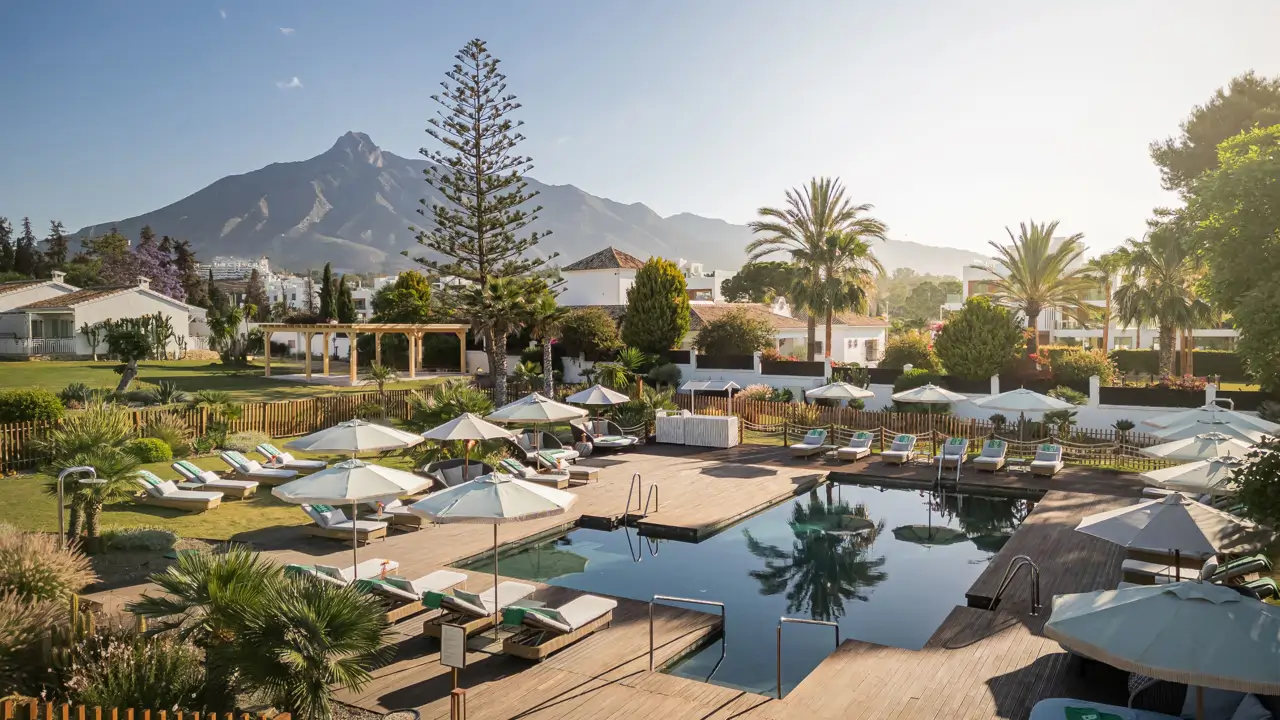
The truth is this: Marbella in winter is 15-18°C with sunshine on most days. It is outdoor dining in a jumper. It is empty beaches where you can walk for 30 minutes without seeing another person. It is golf at half the summer price. It is restaurants where you get the best table without a reservation. It is a community of year-round residents — Spanish families, retired Northern Europeans, digital nomads, international school families — who have chosen this specific version of Marbella precisely because the summer tourists have gone home and the real Marbella has revealed itself. But it is also quieter than you expected, emptier in some areas than feels comfortable, darker by 6:30 PM, and occasionally — perhaps 5 days per month — genuinely rainy in a way that nobody warned you about.
The Weather: Month by Month (The Honest Numbers)
| Month | High | Low | Rain days | Sunshine hrs/day | The reality |
|---|---|---|---|---|---|
| November | 20°C | 11°C | 5-6 | 6 | Still warm enough for lunch outside. Swimming for the brave. Stunning light |
| December | 18°C | 9°C | 5-6 | 5.5 | Christmas decorations, Old Town magical. Evenings cool but manageable with a jacket |
| January | 16°C | 6°C | 5 | 5.5 | The coldest month. Still sunny most days. Mornings chilly. Evenings require a coat. No swimming |
| February | 17°C | 7°C | 5-6 | 6 | Most unpredictable — can be glorious or rainy. Almond blossoms in the hills. Days getting longer |
| March | 19°C | 9°C | 4 | 7 | Spring arriving. Outdoor living returns fully. Wildflowers in the mountains. The best month nobody talks about |
The comparison that matters: while London averages 1.5 hours of sunshine per day in January at 7°C, and Stockholm gets 1 hour at -3°C, Marbella delivers 5.5 hours of sunshine at 16°C. It is not summer. But it is radically, measurably, life-changingly better than Northern European winter — and that difference is the reason people move here permanently rather than just holiday here in August.
Which Areas Feel Alive in Winter
This is the section that makes or breaks a purchase decision — because not all of Marbella is created equal in winter. Some areas thrive year-round with permanent residents, open restaurants and community life. Others feel like ghost towns from November to March. If you are buying a year-round home, the area you choose is as important as the property itself.
| Area | Winter vibe | Why it works |
|---|---|---|
| Marbella Old Town | Very alive | Spanish residents year-round, Plaza de los Naranjos, restaurants always open, Christmas decorations spectacular, market days |
| San Pedro de Alcántara | Very alive | Strong Spanish community, boulevard walking, Thursday market, cafés always full, local shops open year-round |
| Nueva Andalucía | Alive | Year-round families (school creates structure), golf continues, restaurants along Aloha area open. Some quieter pockets |
| Estepona Old Town | Very alive | Thriving Spanish town, not dependent on tourism. Promenade, restaurants, cultural events all winter. See our Estepona guide |
| Golden Mile (Puente Romano area) | Alive | Puente Romano operates year-round at high level. Nobu, Leña, Sea Grill all open. Paseo Marítimo walking. Hotel guests provide baseline activity |
Which Areas Feel Deserted in Winter
| Area | Winter vibe | Why it struggles |
|---|---|---|
| Hillside urbanisations (above Golden Mile) | Quiet to deserted | 80%+ holiday homes, no commercial infrastructure, empty villas with closed shutters, no community |
| Puerto Banús marina front | Quiet | 60-70% of marina restaurants close Oct-March. The superyachts leave. The buzz disappears. Residential areas behind are OK |
| Some Benahavís urbanisations | Quiet to deserted | Investor-heavy developments with low occupancy. Beautiful properties, no neighbours. Isolating |
| New-build developments (sold to investors) | Quiet to deserted | If 70%+ of units are holiday lets or investment holdings, winter occupancy can drop to 15-25%. Empty pools, silent corridors |
The pattern is clear: areas with strong year-round resident communities (Marbella Old Town, San Pedro, Estepona) feel alive in winter. Areas dominated by holiday homes, seasonal tourism or investment holdings (hillside urbanisations, marina-front, investor-heavy new-builds) feel empty. This is the single most important area-selection criterion for year-round buyers — and it is the criterion that almost nobody considers when they visit in August, when everywhere feels alive. See our buyer mistakes guide for why visiting in January is the most important advice in this entire campaign.
What Is Open and What Is Closed
- Restaurants: approximately 60-70% of restaurants in tourist areas close November-March (Puerto Banús marina, beach clubs, seasonal chiringuitos). Year-round restaurants in Marbella centre, San Pedro and Estepona remain open. Puente Romano restaurants operate year-round. See our restaurant guide
- Beach clubs: all seasonal beach clubs close October/November. Nikki Beach, Ocean Club, La Sala by the Sea — closed. Some reopen for Christmas/New Year briefly. Year-round beach restaurants (chiringuitos with permanent structures) remain open
- Golf: all 15+ courses remain open year-round. Winter is actually the best golf season — perfect temperatures (16-20°C), no heat exhaustion, lower green fees (30-50% discount). See our golf guide
- Schools: international and Spanish schools operate September-June. The school calendar creates the year-round family community that keeps Nueva Andalucía and San Pedro alive in winter. See our schools guide
- Supermarkets: all open year-round. Mercadona, Lidl, Aldi, Supersol, El Corte Inglés — no seasonal closures
- Healthcare: fully operational year-round. Hospital Costa del Sol, HC Marbella, Quirónsalud — no seasonal reduction. Actually quieter in winter = shorter wait times. See our healthcare guide
- Shopping: La Cañada shopping centre open year-round. Puerto Banús boutiques — approximately 30% close in deepest winter, the rest remain open
- Sports: padel courts, tennis clubs, gyms — all open year-round. See our padel guide
The Best Things About Marbella in Winter
- The light. Even on a 16°C January day, the quality of light in Marbella is extraordinary — clear, golden, Mediterranean light that makes everything look better than it does under grey Northern European skies. This is not poetic exaggeration. It is the reason photographers, artists and architects gravitate to the Costa del Sol — and it is the reason long-term residents describe winter mornings in Marbella as genuinely uplifting in a way that is difficult to communicate without experiencing it
- Empty beaches. Walking along Playa de Nagüeles or Cabopino dunes in January, entirely alone, with the Mediterranean flat-calm and La Concha snow-capped above, is one of the most beautiful experiences in Europe. No crowds. No music. No hawkers. Just you, the sea and the mountains
- Golf season. The golfing community considers winter the best season on the Costa del Sol. Perfect playing temperatures, lower green fees, available tee times and pristine course conditions (no summer drought stress on the grass). The 15+ courses are in their prime
- Restaurant availability. The restaurants that remain open in winter are the ones that survive on quality, not on tourist footfall. These are the establishments where locals eat, where the chef is present, and where you get the best table because the summer queues have evaporated
- Community. The year-round resident community — which is invisible in summer behind the tourist volume — becomes visible and accessible in winter. This is when you meet the neighbours, join the padel group, attend the school events and build the friendships that make Marbella feel like home rather than a resort
- Mountain hiking. The Sierra Blanca trails that are unbearable in 35°C summer heat become perfect in 16°C winter sunshine. La Concha, Refugio de Juanar, Río Verde waterfalls in Istán — all at their best. See our day trips guide
- Property prices. Winter is statistically the best time to negotiate on price — fewer competing buyers, sellers who want to close before year-end, and agents with more time to dedicate to your search. The property that had 5 viewers per week in August may have 1 in January — and that 1 can negotiate harder
The Worst Things About Marbella in Winter (The Honest Part)
- It is darker earlier than you expect. Sunset at 6:15 PM in December feels early. After months of 9:30 PM summer sunsets, the winter evening collapse catches residents off guard. Evenings indoors start at 6:30. This is not Northern Europe darkness — but it is not endless Mediterranean twilight either
- Rain, when it comes, is intense. Marbella averages only 5 rainy days per month in winter — but when it rains, it rains properly. Torrential Mediterranean downpours that flood roads, overwhelm drainage systems and transform dry riverbeds into rapids. These events last 24-48 hours and then the sun returns — but they are genuinely dramatic and the infrastructure is not always equal to them
- Some areas feel abandoned. If your dream property is in a hillside urbanisation where 80% of villas are holiday homes, January can feel isolating. No lights in neighbouring houses. No cars on the roads. An empty pool next door covered with a tarp. This feeling is real and it is the reason the “visit in January before buying” advice exists. See our biggest problem guide for the seasonal identity split analysis
- Beach clubs are closed. If your lifestyle depends on Nikki Beach, Ocean Club and the beach club circuit, you will spend 6 months per year without them. The year-round alternatives (chiringuitos, Puente Romano beach, hotel beach services) exist but are a fundamentally different experience
- Indoor heating is an afterthought. Many older properties — and even some newer ones — were designed for summer, not winter. Single-glazed windows, no central heating, marble floors that feel Arctic underfoot in January. If you are buying for year-round living, verify the heating system: aerothermal, underfloor heating and double glazing are not luxuries in winter Marbella — they are necessities
A Typical Winter Day in Marbella (January, Year-Round Resident)
A typical January Wednesday
8:00 AM — Wake up to sunshine through the bedroom window. 10°C outside but clear blue sky. Coffee on the terrace with a blanket — habitual for year-round residents
8:45 AM — School run. The roads are empty compared to September. 7-minute drive to Aloha College vs 15 in peak September
9:30 AM — Walk the Paseo Marítimo. Almost nobody else. The sea is flat. La Concha has a dusting of snow on the peak. You take a photo. Nobody believes it is January
11:00 AM — Coffee at La Lonja, Marbella Old Town. Outdoor table in the sun. 17°C. Jumper weather. A copy of Sur in English. Unhurried
12:30 PM — Padel with friends. 16°C is the perfect playing temperature. No heat exhaustion. Everyone’s game improves in winter
2:00 PM — Lunch at a chiringuito. Grilled sardines, salad, a glass of Verdejo. Outdoor table. The waiter knows your name because it is January and the regulars are the community
4:00 PM — School pick-up. Children play in the park until 5:30 PM. Still light. Still warm enough
6:15 PM — Sunset. This is where winter catches you — suddenly dark. Home for dinner. Underfloor heating on. A film. Early to bed because the rhythm is different here
The verdict: not a holiday. Not summer. But genuinely, measurably better than January in London, Munich, Stockholm or New York — and the reason year-round residents never go back
Winter Events and Cultural Calendar
- Christmas lights and decorations: Marbella Old Town, Puerto Banús and San Pedro illuminate from late November. Plaza de los Naranjos is spectacular
- Día de los Reyes (6 January): the biggest family celebration — parades in Marbella, Estepona and Fuengirola with floats, music and sweets
- Carnival (February): Marbella and Málaga host carnival celebrations. Costumes, music, street parades
- Semana Santa / Easter: the most culturally significant event on the Andalusian calendar. Processions through Marbella Old Town — deeply moving, regardless of faith
- Almond blossom season (February-March): the hills behind Marbella and towards Ojén burst into white and pink blossom — stunning walking and photography
- Art exhibitions, gallery openings, museum events: Málaga’s museum district (Picasso, Pompidou, Carmen Thyssen) is 45 minutes away and significantly less crowded in winter
Why Winter Is the Best Time to Buy Property in Marbella
Winter is statistically the optimal time to purchase property on the Costa del Sol — for three specific reasons. First, fewer competing buyers mean less price pressure: the viewing trip volume drops 40-60% between August and January, giving you more time, more attention from agents, and more negotiating leverage. Second, you see the property and the area in its least flattering season — if it works in January, it works all year. Third, sellers who have listed in autumn and not sold by January are psychologically more flexible on price: they have endured months of reduced viewings and are increasingly motivated to close. Our data consistently shows that properties purchased in December-February achieve 3-7% better negotiated prices than identical properties purchased in June-August. See our 30-day buyer checklist and our buying timeline guide.
LUXO Estates
See Marbella in January — Then Decide
The buyers who love Marbella most are the ones who saw it in winter first. At LUXO Estates, we encourage every client to visit in the quiet months — to walk the area, test the commute, check what is open, feel the community, and make a purchase decision based on the 8-month reality rather than the 4-month fantasy.