
Reddit’s Top 50 Questions About Moving to Marbella — Answered Honestly for 2026
Every week, the same questions appear on r/SpainExpats, r/AskEurope, r/digitalnomad and the dozens of Facebook groups dedicated to moving to Spain. “Is Marbella safe?” “Can I survive without speaking Spanish?” “What’s the real cost of living?” “Is the healthcare actually good?” “Where should I avoid?” “Can I work remotely on a tourist visa?” These are the Reddit questions about Marbella that real people ask — and they deserve to be answered honestly. The responses on forums are often contradictory, outdated, or biased by someone’s personal experience in 2019 that has no relevance to the market in 2026. This article has the top 50 Reddit questions about Marbella answered with honest, current, data-backed information — sourced from someone who lives here, works here, and helps people move here every week.
Money & Cost of Living — The Reddit Questions About Marbella Answered First
Q1: How much does it cost to live in Marbella per month?
The honest answer depends entirely on your lifestyle. A single person living modestly in San Pedro or East Marbella: €1,800-€2,500/month (rent, utilities, food, transport, insurance). A couple living comfortably in Nueva Andalucía or central Marbella: €3,500-€5,000/month. A family of four in a villa with pool, international school, dining out regularly: €8,000-€15,000/month. Marbella is not cheap by Spanish standards — it is 30-50% more expensive than Málaga city, Fuengirola or inland Andalusia. But it is significantly cheaper than London, Paris, Munich or any Scandinavian city for equivalent quality of life. The most common mistake is budgeting for Spanish prices and then living a Marbella lifestyle — they are different things. See our what €500K buys guide.
Q2: What does rent cost in Marbella?
Long-term rental (12-month contract, unfurnished or semi-furnished): 1-bed apartment in San Pedro or East Marbella: €900-€1,400/month. 2-bed apartment in Nueva Andalucía: €1,200-€2,000/month. 3-bed townhouse with garden: €1,800-€3,000/month. 4-bed villa with pool: €3,000-€6,000+/month. Rental prices have risen 15-25% since 2022 due to demand outstripping supply — finding a long-term rental in Marbella is genuinely difficult in 2026, especially in summer when owners switch to more profitable short-term holiday letting. Start your search 2-3 months before you need to move. See our renting vs buying guide.
Q3: Is Marbella more expensive than the rest of Spain?
Yes — significantly. Marbella’s cost of living is approximately 30-50% higher than the Spanish average and 20-30% higher than Málaga city. Groceries at Mercadona or Lidl are the same price everywhere in Spain, but restaurants, entertainment, property and services in Marbella carry a premium. The “tourist tax” is real: a coffee at a Puerto Banús café costs €4-€5; the same coffee 2 km away in San Pedro costs €1.80. The trick is living like a local (San Pedro, Mercadona, neighbourhood restaurants) while enjoying the luxury infrastructure (beach clubs, Starlite, fine dining) selectively. See our festivals guide for how to enjoy the luxury side affordably.
Q4: Do I need a car in Marbella?
Yes — practically speaking. Public transport (bus network, Cercanías train from Fuengirola to Málaga) exists but is limited within Marbella itself. The town sprawls 27 km along the coast, and most urbanisations, supermarkets, schools and workplaces are not walkable from each other. A car is not just convenient — it is close to essential for daily life. The exception: if you live in Marbella Old Town or central San Pedro, both are walkable for daily needs. Budget €200-€400/month for car costs (fuel, insurance, parking, ITV inspection). Second-hand cars start from €3,000-€8,000. Electric vehicles are growing but charging infrastructure outside the main towns is still limited.
Q5: How much do groceries cost?
A weekly grocery shop for two at Mercadona (Spain’s most popular supermarket, excellent quality/price): €60-€90. At Lidl or Aldi: €50-€80. At El Corte Inglés (premium): €100-€150. Fresh fruit and vegetables are excellent and cheap year-round — this is southern Spain, not Scandinavia. A kilo of oranges: €1-€2. A kilo of tomatoes: €1.50-€3. Olive oil (1L): €6-€10. A bottle of decent Spanish wine: €4-€8 (vs €12-€20 in Northern Europe). Eating out is where Marbella gets expensive — a casual lunch: €12-€18, a nice dinner for two: €60-€120, a beach club lunch: €80-€200+.
Q6: What’s the average salary in Marbella?
The average Spanish salary is approximately €26,000-€28,000/year gross. In Marbella, service-sector jobs (hospitality, retail, real estate) pay €18,000-€30,000. Professional roles (tech, finance, legal) pay €30,000-€60,000. Management/director level: €50,000-€100,000+. Real estate agents work on commission (€30,000-€150,000+ depending on performance). The reality: most expats in Marbella either work remotely for a non-Spanish employer (earning Northern European salaries while living on Spanish costs — the real advantage), run their own business, or are retired on pensions/savings. Finding a well-paid local job in Marbella is difficult. See our digital nomad guide.
Q7: Can I survive in Marbella on €2,000/month?
Survive, yes. Comfortably, it depends on your definition. €2,000/month covers a modest 1-bed apartment in San Pedro or East Marbella (€800-€1,000), utilities (€100-€150), groceries (€250-€350), transport (€150-€200), health insurance (€80-€150), and not much else. You will not be dining out regularly, joining a gym, or living the “Marbella lifestyle” you see on Instagram. At €2,000/month, you are living in Spain — not living in Marbella. The realistic comfort threshold is €2,500-€3,000 for a single person and €4,000-€5,000 for a couple.
Q8: How much are utilities?
A 2-bed apartment: electricity €80-€150/month (higher in summer with AC), water €30-€50, internet €30-€45 (Movistar, Orange, Vodafone — all offer fibre). A villa with pool: electricity €200-€500/month (AC + pool pump), water €80-€200 (garden irrigation), gas (if applicable) €50-€100 in winter. Community fees for apartments: €100-€350/month. Total utilities for a typical apartment: €150-€250/month. For a villa: €400-€800/month. See our pool cost guide.
Q9: Is tipping expected?
Not in the way it is in the US. Spain does not have a tipping culture. Rounding up the bill or leaving €1-€2 at a café is appreciated but not expected. At a nice restaurant, 5-10% is generous. Nobody will be offended if you do not tip. Taxi drivers: round up. Hairdressers: €2-€5. Hotel porters: €1-€2 per bag. Beach club and high-end venues may add service charge automatically — check the bill.
Q10: Should I open a Spanish bank account?
Yes — essential if you are living here. You need a Spanish bank account for: direct debits (electricity, water, internet, community fees), receiving rental income, paying taxes, and many administrative processes. The main banks: CaixaBank (largest), BBVA, Santander, Unicaja (local Málaga bank, often recommended for personal service). Online-only options: N26, Revolut (useful supplements but not a replacement for a Spanish bank for residents). You need your NIE number to open an account. The process takes 1-2 hours at the branch with your passport, NIE and proof of address. See our 30-day checklist.
Safety & Crime
Q11: Is Marbella safe?
Yes — Marbella is safe for residents and visitors. The “Costa del Crime” reputation dates from the 1980s-90s when Marbella attracted fugitives from UK justice. That era is over. Modern Marbella has a crime rate comparable to any mid-sized European city. Violent crime is low. Petty crime (car break-ins, pickpocketing in tourist areas, beach theft) exists but is not worse than Nice, Barcelona or any Mediterranean resort. You can walk safely at night in most areas. The areas with higher incident rates are concentrated around Puerto Banús nightlife (drug-related, late-night) and specific parts of the N-340 corridor. See our safety guide for crime data by area.
Q12: What about drug crime and organised crime?
Organised crime exists on the Costa del Sol — this is not a secret. Drug trafficking routes from North Africa pass through the region, and money laundering through property has been documented. But this world operates entirely separately from the everyday life of residents. Unless you actively seek out that world, you will never encounter it. The Guardia Civil and National Police are active in combating organised crime, and the judicial cleanup since the Gil era has transformed Marbella’s governance. For a resident, the risk is no higher than in London, Amsterdam or any other European city with drug trafficking routes.
Q13: Are there areas to avoid?
No area of Marbella is genuinely “dangerous” in the way that some cities have no-go zones. The areas with the highest petty-crime density are the Puerto Banús nightlife strip (2-5 AM, weekends, drug-related incidents), the N-340 corridor between San Pedro and Estepona (car break-ins at isolated car parks), and some budget tourist apartment complexes (opportunistic theft). During the day, every area of Marbella is safe. At night, standard urban precautions apply — the same ones you would take in any European city.
Q14: Should I worry about my property being broken into?
Property crime (burglary) exists, particularly in villas that are visibly empty for extended periods. The solution: alarm system (monitored, not self-monitored — €30-€60/month for Securitas Direct or similar), property management if you are absent (see our properties guide), and community/urbanisation security if available. Gated communities with 24/7 security (Sierra Blanca, La Zagaleta, El Madroñal) have virtually zero property crime. The risk is proportional to visibility and absence — a dark, empty villa in an unsecured urbanisation is more attractive to opportunists than a villa with lights on timers, an alarm sign, and a neighbour who checks regularly.
Q15: Is it safe for women / solo travellers / LGBTQ+?
Yes to all three. Spain is one of the most progressive countries in Europe on LGBTQ+ rights (same-sex marriage legal since 2005, strong anti-discrimination laws). Marbella’s international community is diverse and accepting. Solo female travellers and residents report feeling safe — the same common-sense precautions that apply anywhere in Europe apply here. Marbella’s Old Town, San Pedro, and the beachfront areas feel particularly safe for solo walking, even at night.
Healthcare
Q16: How does healthcare work for expats?
Spain has a dual public-private healthcare system. If you are registered as a resident and paying social security contributions (employed or self-employed), you are entitled to free public healthcare through the Sistema Nacional de Salud. If you are a non-lucrative visa holder or retiree, you typically need private health insurance. Private insurance (Sanitas, Adeslas, DKV, Asisa) costs €60-€200/month depending on age and coverage level. Most expats use private healthcare for routine care (shorter waits, English-speaking doctors) and fall back on the excellent public hospital system for emergencies and serious conditions. See our healthcare guide.
Q17: Are the hospitals good?
Excellent. Hospital Costa del Sol (public, 400 beds, recently extended) is one of the best regional hospitals in Andalusia. HC Marbella International Hospital (private) has a specialist Cancer Center and English-first service. Quirónsalud (private, national network) provides specialist cardiology, neurosurgery and orthopaedics. Clínica del Río in Marbella is well-regarded for general medicine. For complex cases, Málaga’s Hospital Regional and Hospital Clínico (30 minutes away) provide tertiary-level care. You are not “in the middle of nowhere” — you are 30 minutes from a city of 580,000 with full specialist hospital infrastructure.
Q18: Can I find English-speaking doctors?
Yes — easily. Marbella’s international population means many private doctors, dentists and specialists operate in English as a primary language. Some operate in 3-4 languages. The private clinics (HC Marbella, Centro Médico Aesthetic, many GP practices) actively market English-speaking services. Even in public hospitals, many doctors speak English — though it is less guaranteed. For specialist consultations, private clinics are the most reliable for English-language service.
Q19: What about dental care?
Dental care in Spain is predominantly private (public dental coverage is very limited — essentially emergency extractions only). The quality is excellent and the cost is 30-50% lower than the UK, Germany or Scandinavia. A routine cleaning: €50-€80. A filling: €60-€120. A crown: €300-€500. An implant: €800-€1,500. Many expats time dental work to coincide with their time in Spain — “dental tourism within your own life.” English-speaking dental practices are abundant in Marbella.
Q20: Do I need health insurance?
If you are applying for a non-lucrative visa or Digital Nomad Visa: yes, it is mandatory. Private health insurance with zero copay and full coverage is a legal requirement for most residence visas. Providers: Sanitas (€80-€150/month, widely recommended), Adeslas (€70-€130/month), DKV (€90-€200/month — good for pre-existing conditions). If you are employed and paying social security: public healthcare is free, but many expats add private insurance (€60-€100/month) for convenience.
Visas, Residency & Legal
Q21: What visa do I need to live in Marbella?
It depends on your nationality and situation. EU/EEA citizens: no visa required, register at the Oficina de Extranjería after 3 months (certificado de registro de ciudadano de la UE). Non-EU citizens: Non-Lucrative Visa (no work permitted, proof of income €28,800+/year single), Digital Nomad Visa (remote work for non-Spanish employer, income €28,800+/year), Work Visa (Spanish employer sponsors you), Student Visa, or Entrepreneur Visa. The Golden Visa (property purchase of €500K+) was abolished in April 2025 for new applications. See our visa guide.
Q22: What is the NIE and how do I get one?
The NIE (Número de Identidad de Extranjero) is your foreigner identification number — required for virtually everything: buying property, opening a bank account, paying taxes, signing a rental contract, connecting utilities. For EU citizens: apply at the local police station (Comisaría) with your passport and a reason (property purchase, employment, registration). For non-EU citizens: it is issued with your visa/residence permit. Processing: same-day to 2-3 weeks depending on the office. Bring: passport, completed EX-15 form, proof of reason (purchase contract, employment letter), Modelo 790 tax payment (€12). The process is simple but bureaucratic — arrive early, bring all documents, and consider using a gestor (administrative agent, €100-€200) to handle it for you.
Q23: Can I work remotely on a tourist visa?
Technically, no. A tourist visa (or visa-free entry for EU citizens) permits stays up to 90 days without working. “Working remotely” for a foreign employer while physically in Spain is a grey area that has been partially clarified by the Digital Nomad Visa introduced in 2023. If you plan to work remotely from Spain for more than 90 days, the Digital Nomad Visa is the legal route. If you are staying under 90 days and working remotely for a non-Spanish employer, the enforcement is minimal but the legal position is technically non-compliant. See our digital nomad guide.
Q24: What is the Beckham Law?
The Beckham Law (Régimen Especial de Tributación para Trabajadores Desplazados) allows newly arrived tax residents to pay a flat 24% income tax rate on Spanish-sourced income for 6 years — instead of Spain’s progressive IRPF rates that can reach 47%. It was originally designed for footballers (David Beckham being the most famous beneficiary) but is now available to anyone who: has not been a Spanish tax resident in the previous 5 years, is employed by a Spanish company or has a contract with a Spanish entity, and meets certain income thresholds. It is particularly beneficial for high earners relocating from higher-tax jurisdictions (UK, Scandinavia, Germany). Application: through your tax advisor, within 6 months of becoming tax resident. See our Beckham Law guide.
Q25: Do I need to become a tax resident?
If you spend more than 183 days per year in Spain, you are automatically a Spanish tax resident — regardless of whether you formally register. Spain also considers you tax resident if your “centre of vital interests” (family, main home, economic activity) is in Spain. Tax residency means you must declare worldwide income to AEAT (the Spanish tax authority). The 183-day rule is not a suggestion — it is monitored, and non-compliance can result in penalties. If you are splitting time between Spain and another country, consult a cross-border tax advisor before making assumptions. See our tax cheat sheet.
Q26: Is Spanish bureaucracy as bad as people say?
Yes. Spanish bureaucracy is slow, paper-based, frequently contradictory between offices, and frustrating for anyone accustomed to Northern European or American efficiency. Getting a cita previa (appointment) at government offices can take weeks. Documents are often required in triplicate, apostilled, translated by a sworn translator, and then questioned by the official who has never seen the foreign format before. The Andalusian administration is improving but remains behind Madrid and Barcelona in digitalisation. The solution: use a gestor (administrative agent, €100-€300 per procedure) for anything involving government paperwork. They know the system, the forms, the offices and the specific officials. Budget €200-€500/year for gestor services. It is the best money you will spend.
Q27: Do I need to register at the Padrón?
Yes. The Padrón (municipal register) is your registration with the local Town Hall confirming your address. It is required for: accessing public healthcare, enrolling children in school, voting in local elections (EU citizens), and many administrative processes. Registration: go to the Ayuntamiento (Town Hall) with your passport, NIE, rental contract or property deed, and a utility bill. Processing: same day. It is free and relatively painless — one of the easier bureaucratic tasks in Spain.
Q28: What happens to my UK pension/state benefits if I move?
UK state pension can be paid to you anywhere in the world, including Spain, and increases annually (triple lock applies). Private/workplace pensions: generally payable abroad, but check with your provider for any restrictions. UK benefits (Universal Credit, Housing Benefit, etc.): generally stop when you leave the UK. Healthcare: post-Brexit, you need either an S1 form (if you receive a UK state pension) or private health insurance — the EHIC/GHIC card is for temporary visits, not residency. Tax: your pension income is typically taxable in Spain (not the UK) once you are a Spanish tax resident. The UK-Spain Double Taxation Treaty prevents double taxation. Consult a cross-border tax advisor.
Daily Life & Culture
Q29: Do I need to speak Spanish?
You can get by without Spanish — but your life will be significantly better with it. In Marbella specifically, English is widely spoken in shops, restaurants, real estate, healthcare and most services. You could live for years in Nueva Andalucía or the Golden Mile without speaking a word of Spanish. But “getting by” is not the same as “living fully.” Without Spanish, you cannot: navigate bureaucracy without a gestor, read official documents or contracts, communicate with tradespeople (plumbers, electricians, builders), build friendships with Spanish neighbours, or access the genuine Spanish cultural life that makes Marbella more than a resort. Learn at least basic conversational Spanish — it transforms your experience. See our Spanish neighbours guide.
Q30: What’s the weather really like?
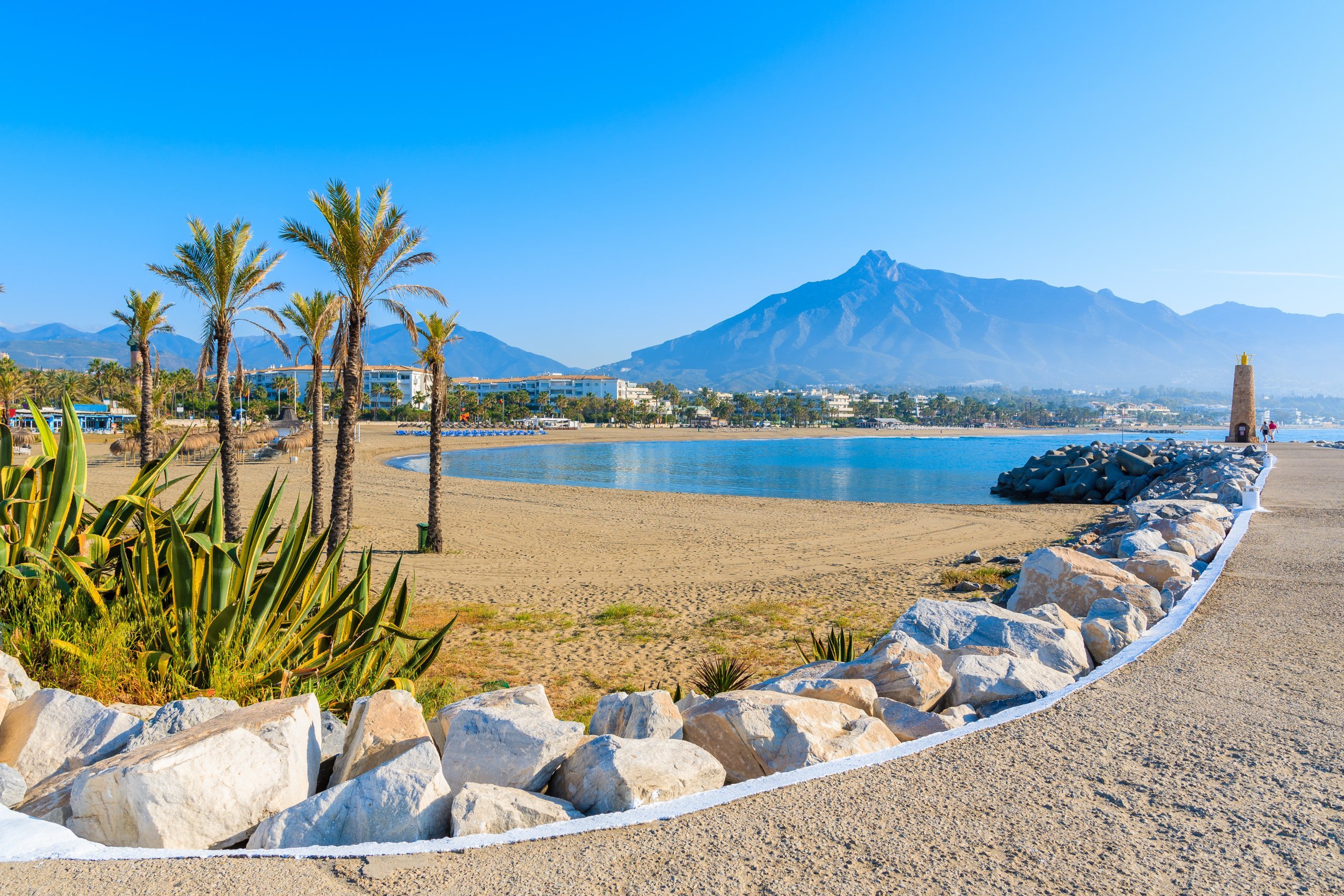
Marbella’s microclimate (protected by La Concha mountain) is genuinely exceptional: 320 days of sunshine per year, average temperature 18°C annually, summer highs 30-35°C (occasionally 40°C in August heat waves), winter lows 8-14°C (almost never below 5°C). Rain: concentrated in October-November and February-March, with genuinely dry summers (June-September: virtually zero rain). Winter is mild but not tropical — you will need a jacket in the evening from November to March, and indoor heating is necessary (despite what the brochures suggest). The “it’s always sunny” narrative is 90% true — but the 10% when it rains, it rains hard (Mediterranean downpours). See our winter guide.
Q31: Is Marbella boring in winter?
This is the question that separates people who will love Marbella from people who will leave after 2 years. In winter, the tourist infrastructure shuts down — beach clubs close, 30-40% of restaurants reduce hours or close entirely, and many urbanisations feel empty (70% of properties are holiday homes). If your entire social life depends on beach clubs and tourist infrastructure, January will feel lonely. But if you build a year-round community (school parents, sports clubs, local friendships, work connections), winter is actually Marbella’s best-kept secret: uncrowded restaurants, peaceful beaches (still 16°C and sunny), hiking season, and the genuine Spanish cultural calendar (Christmas markets, Día de Reyes, Carnaval). The key: live in a year-round area (San Pedro, Old Town, central Nueva Andalucía), not in a seasonal urbanisation. See our winter truth article.
Q32: What’s the social scene like?
Marbella’s social scene is genuinely excellent — if you are proactive. The international community (152 nationalities) means you can find people from your country, profession and interest group. Padel clubs are the fastest-growing social infrastructure (see our padel guide). Running clubs, hiking groups, book clubs, wine tasting groups, charity committees, school parent networks, co-working spaces, networking events (InterNations, business breakfasts) and sports clubs provide structured social opportunities. The challenge: Marbella’s transient population means friendships can feel shallow — people come for 2 years and leave. Building deep, lasting friendships requires investing in year-round communities, not seasonal social circuits. See our solo living guide.
Q33: Can I find work in Marbella?
Jobs exist but competition is high and salaries are low by Northern European standards. The main employment sectors: hospitality (hotels, restaurants, beach clubs — seasonal, €1,200-€2,000/month), real estate (commission-based, highly variable), construction (growing sector, skilled trades in demand), international schools (teachers, admin), healthcare (nurses, physiotherapists in demand), and professional services (lawyers, accountants, financial advisors serving the expat community). Remote work for a non-Spanish employer is by far the most financially attractive option — earning a UK, German or US salary while living on Spanish costs. The Digital Nomad Visa formalises this arrangement. See our digital nomad guide.
Q34: How is the driving?
Spanish driving is more aggressive than Northern European driving but safer than Italian or Greek. The AP-7 motorway (toll-free since 2020) runs the length of the coast and is excellent. The N-340 (old coastal road through towns) is congested, poorly maintained in parts, and challenging for new arrivals. Roundabouts: the right-of-way rules differ from the UK (give way to traffic already on the roundabout). Parking: genuinely difficult in central Marbella, Old Town and San Pedro — consider a property with a garage. Speed cameras: widespread on the AP-7 and in towns. Fines arrive 3-6 months later. UK licence holders: you can drive on your UK licence for 6 months after becoming resident, then must exchange for a Spanish licence. EU licence holders: valid indefinitely but should be registered with the DGT.
Q35: How are the schools?
Marbella has 15+ international schools offering British (Aloha College, Swans, Laude San Pedro), American (American School of Marbella), IB (Aloha College, International School Estepona), German (Deutsche Schule), Swedish, Finnish and French curricula. Fees: €5,000-€15,000/year depending on school and year group. The public Spanish schools are free and some are excellent — but teaching is entirely in Spanish (plus some Andalusian dialect challenges). For families arriving with non-Spanish-speaking children, an international school is the practical choice for the first 1-2 years, with the option to transition to a Spanish school later if desired. See our schools guide and our moving with kids guide.
Q36: Are there good gyms?
Yes — excellent range. Budget chains: Basic-Fit (€20-€30/month). Mid-range: Virgin Active, Holmes Place (€60-€100/month). Luxury/boutique: Pure Gym, various CrossFit boxes (€80-€150/month). Outdoor fitness: boot camps on the beach, padel clubs, running groups, cycling clubs, yoga studios. Most villa urbanisations have community gyms (included in community fees). The outdoor lifestyle means many people exercise outside year-round — running, cycling, hiking and beach sports replace the gym for 6+ months of the year.
Q37: What about pets — can I bring my dog?
Yes. Dogs are common and welcomed in Marbella. Requirements for bringing a pet from the EU: EU pet passport, microchip, rabies vaccination. From the UK (post-Brexit): microchip, rabies vaccination, AHC (Animal Health Certificate) from your vet (within 10 days of travel), and tapeworm treatment. From outside Europe: rabies titre blood test (3-month waiting period). Marbella has dedicated dog beaches (limited but they exist), abundant green spaces, dog-friendly restaurants (outdoor terraces), excellent vets (many English-speaking), and a year-round outdoor climate that dogs love. See our pets guide.
Q38: Is the internet fast enough to work remotely?
Yes — fibre broadband is available in most urban areas of Marbella, offering speeds of 300-1,000 Mbps through providers like Movistar, Orange, Vodafone and MásMóvil. Cost: €30-€50/month for fibre. Mobile data: 4G/5G coverage is excellent in urban areas, adequate in urbanisations, and patchy in rural hillside areas. For remote workers, the internet infrastructure is not a concern in Marbella — it is on par with or better than most Northern European cities. Co-working spaces are available in Marbella centre, San Pedro, and Nueva Andalucía for those who want a professional workspace outside the home.
Areas & Where to Live
Q39: What’s the best area to live in Marbella?
There is no single “best area” — it depends entirely on your profile. Families with school-age children: Nueva Andalucía (near international schools, golf, year-round community). Young professionals / singles: Marbella Old Town or San Pedro (walkable, nightlife, social). Retirees seeking peace: Estepona (quieter, more Spanish, 20% cheaper), East Marbella (Elviria, Las Chapas — suburban, beach access). Luxury buyers: Sierra Blanca (gated, views, 5 min to beach), La Zagaleta (ultra-private estate). Budget-conscious: San Pedro (best value walkable town), Fuengirola (20 min from Marbella, significantly cheaper).
Q40: Is Nueva Andalucía a good area?
Yes — it is the most popular residential area for international families in Marbella. Located behind Puerto Banús in “Golf Valley” (Las Brisas, Aloha, Los Naranjos golf courses). Diverse: apartments €300K-€800K, townhouses €400K-€1M, villas €1M-€15M. Strong year-round community, international schools nearby, Centro Plaza for daily shopping, restaurants, and 5-10 minutes to the beach. The downside: parts of Nueva Andalucía are hilly (not walkable), some urbanisations are seasonal (holiday-let dominated), and traffic on the main access roads can be heavy in summer.
Q41: Is San Pedro worth considering?
Absolutely — San Pedro is Marbella’s best-kept secret for value and quality of life. A genuine Spanish town with a pedestrianised centre (Plaza de la Iglesia), daily market, local restaurants, schools, healthcare facilities and a new seafront boulevard — all walkable. Properties are 15-25% cheaper than central Marbella or Nueva Andalucía for equivalent specification. The community is mixed Spanish and international, which creates a more authentic, year-round atmosphere than purely expat areas. San Pedro is technically part of Marbella municipality but feels like its own town. For families, young professionals and anyone who values walkability and community over resort-style living, it is the best value proposition on the western Costa del Sol.
Q42: What about Estepona?
Estepona has transformed from a quiet fishing town into one of the most attractive residential options on the Costa del Sol — while retaining its Spanish identity. The Old Town has been beautifully renovated (flower-pot streets, murals, pedestrianised areas), the new seafront promenade is excellent, and prices are 20-30% below Marbella for equivalent quality. The downside: fewer international schools (International School Estepona is the main option), fewer restaurants and nightlife options than Marbella, and it is 20-30 minutes from Marbella centre (40 minutes in summer traffic). For retirees, remote workers and families who prioritise authenticity over luxury infrastructure, Estepona is excellent. See our Estepona area guide.
Q43: Should I avoid Puerto Banús?
For living — yes, most residents avoid it. For visiting — no, it is worth experiencing. Puerto Banús is Marbella’s luxury shopping and nightlife hub: superyachts, designer boutiques, expensive restaurants and late-night clubs. As a place to visit for an evening, it is entertaining and visually spectacular. As a place to live, it is noisy (especially in summer), overpriced for what you get, dominated by short-term tourists and seasonal businesses, and lacks the community feel that makes year-round living enjoyable. The apartments around Puerto Banús are predominantly holiday lets and investment properties — not year-round homes.
Q44: How far is Málaga airport?
Málaga AGP airport is 45 minutes from Marbella centre by the AP-7 motorway (55 km), 35 minutes from Estepona, 30 minutes from Fuengirola. Direct airport bus: €8-€12, approximately 1 hour. Taxi: €60-€80. Private transfer: €50-€70 (pre-booked). The airport has 200+ international routes, making it one of the best-connected airports in southern Europe. Direct flights to London (multiple daily), all major European capitals, New York (seasonal), Dubai, Riyadh and most Scandinavian cities.
Q45: Is there a train to Marbella?
No — there is no train to Marbella. The Cercanías commuter train runs from Málaga to Fuengirola (stopping at the airport, Torremolinos, Benalmádena and Fuengirola). From Fuengirola, you need a bus or car to reach Marbella (25 minutes). A Marbella rail connection has been discussed for 20+ years but is not under construction. The primary transport: car (AP-7 motorway), inter-city bus (ALSA/Avanzabus, frequent services to Málaga), and taxi/Cabify/Uber.
Buying Property
Q46: Is now a good time to buy in Marbella?
Prices have risen 40-60% in prime areas since 2020. The question is whether you believe they will continue to rise (structural arguments: UHNW migration, supply constraints, branded residences) or stabilise/correct (arguments: affordability stretched, construction costs elevated, interest rates). The honest answer: Marbella’s luxury market is driven by international cash buyers, not mortgage-dependent domestic buyers — making it less sensitive to interest rate changes. Prime prices rose 8.1% in 2025 and the structural drivers remain intact. But nobody can guarantee future returns. Buy because you want to live here and will enjoy the property — not because you expect 15% annual appreciation to continue indefinitely. See our billionaires guide and our appreciation ranking.
Q47: What are the buying costs on top of the price?
For resale properties in Andalusia: ITP (Transfer Tax) 7%, notary fees €2,000-€4,000, Land Registry €1,500-€3,000, lawyer 1-1.5%. Total: approximately 10-11% on top of the purchase price. For new-build: IVA (VAT) 10% + AJD (Stamp Duty) 1.2%, plus notary, registry and lawyer. Total: approximately 13-14%. On a €1M property: budget €100K-€140K in buying costs. See our tax cheat sheet and our hidden fees guide.
Q48: Can foreigners buy property in Spain?
Yes — there are no restrictions on foreign property ownership in Spain. Any nationality can buy residential property. You need an NIE number (foreigner identification number) and a Spanish bank account to complete the purchase. The process: find the property, agree the price, sign a reserva (reservation agreement, typically €6,000-€10,000 deposit), your lawyer conducts due diligence (2-4 weeks), sign the contrato de arras (preliminary contract, 10% deposit), and complete at the notary (escritura pública). Total timeline: 4-8 weeks from agreed price to completion. See our 30-day checklist and our buying timeline.
Q49: Can I get a mortgage as a foreigner?
Yes — Spanish banks lend to non-residents, typically offering 60-70% LTV (vs 80% for residents) at current rates of 3-4.5% (variable) or 3.5-5% (fixed). Requirements: proof of income, employment contract or accounts for self-employed, credit history, and the property must be valued (tasación) by the bank’s appointed valuer. Minimum income requirements vary by bank but generally you need to demonstrate that the mortgage payment does not exceed 30-35% of your net income. The process takes 3-6 weeks from application to approval. Non-EU buyers may find it slightly harder (fewer banks willing to lend) but it is not impossible. See our mortgage guide.
Q50: What is the biggest mistake buyers make?
Not visiting in winter. The property you love at sunset in August may feel very different in January — empty urbanisation, closed restaurants, 70% of neighbours absent. The second biggest mistake: not using an independent lawyer. The seller’s agent is not working for you (see our confessions article), and the seller’s lawyer is definitely not working for you. Your lawyer — independent, chosen by you, paid by you — is the only person in the transaction whose sole loyalty is to your interest. Never skip this. Never use the agent’s “recommended” lawyer unless you have independently verified their independence. See our buyer mistakes guide.
LUXO Estates
Have a Question Reddit Can’t Answer? Ask Us
We live here. We work here. We help people move here every week. If you have a question about Marbella that Reddit, Facebook groups and travel blogs cannot answer — or keep answering differently — contact us for honest, current, experienced advice.