Healthcare in Marbella for Expats 2026: Hospitals, Clinics, Insurance, Costs and Everything You Need to Know
Healthcare Marbella expats can access is among the best in southern Europe — and significantly better than most people expect before they arrive. Spain’s public healthcare system is ranked among the top 10 in the world by the WHO, life expectancy is 84 years (three years above the OECD average), and Marbella specifically benefits from a concentration of high-quality private hospitals, English-speaking doctors and specialist clinics that has developed to serve its large international population. Approximately 30-35% of Marbella’s 147,000+ residents are foreign nationals, and this critical mass of expats has created a healthcare ecosystem where English is spoken as a matter of course in private facilities, multilingual staff are standard, and the quality of care — from GP consultations to complex surgery — is genuinely world-class.

This guide covers everything a relocating family, retiree or investor needs to know about Marbella’s healthcare infrastructure: the public vs private system and how to access both, every major hospital with specialities and language capabilities, the GP and specialist clinic landscape, dental care, pharmacy access, private insurance options with real costs, how British retirees access free healthcare via the S1 form, what happens in an emergency, and the practical details that make the difference between a stressful experience and a smooth one. Because healthcare is not just a lifestyle consideration — for many buyers, particularly retirees and families with young children, it is the deciding factor in whether Marbella works as a permanent home.
Public vs Private: How Spain’s Healthcare System Works
Spain operates a dual healthcare system: a universal public system (Servicio Andaluz de Salud / SAS in Andalusia) funded through social security contributions and taxation, and a parallel private system funded through insurance or direct payment. Both are excellent. The public system provides free emergency care, GP services, hospital treatment, specialist referrals and heavily subsidised prescriptions to anyone enrolled — including employed residents, self-employed workers, retirees with S1 forms from EU countries, and anyone who pays the voluntary convenio especial contribution. The private system offers faster access to specialists, shorter waiting times, English-speaking staff, private rooms and more predictable scheduling — at a cost of €60-€250/month in insurance premiums depending on age and coverage level.
Most experienced Marbella expats use both systems simultaneously: the public system for emergencies (Hospital Costa del Sol’s 24/7 urgencias is fast, well-equipped and free), ongoing chronic care management and prescriptions, and the private system for specialist consultations where communication clarity matters, elective procedures where speed is important, and preventive health screenings. This dual approach maximises the strengths of both systems while minimising the weaknesses of each.
| Factor | Public (SAS) | Private |
|---|---|---|
| Cost | Free (if enrolled) | €60-€250/month insurance or pay per visit |
| Emergency wait | Triage-based — genuine emergencies seen immediately | Shorter waits overall but limited emergency capability |
| Specialist wait | Weeks to months for non-urgent referrals | Days — often same week |
| Language | Primarily Spanish (some English available, volunteer translators at Hospital Costa del Sol) | English-speaking staff standard, particularly HC Marbella |
| GP access | Assigned centro de salud based on address | Choose your own doctor |
| Facilities | Functional, clean, well-equipped (major extension 2025) | Modern, private rooms, hotel-like amenities |
Hospital Costa del Sol — The Public Reference Hospital
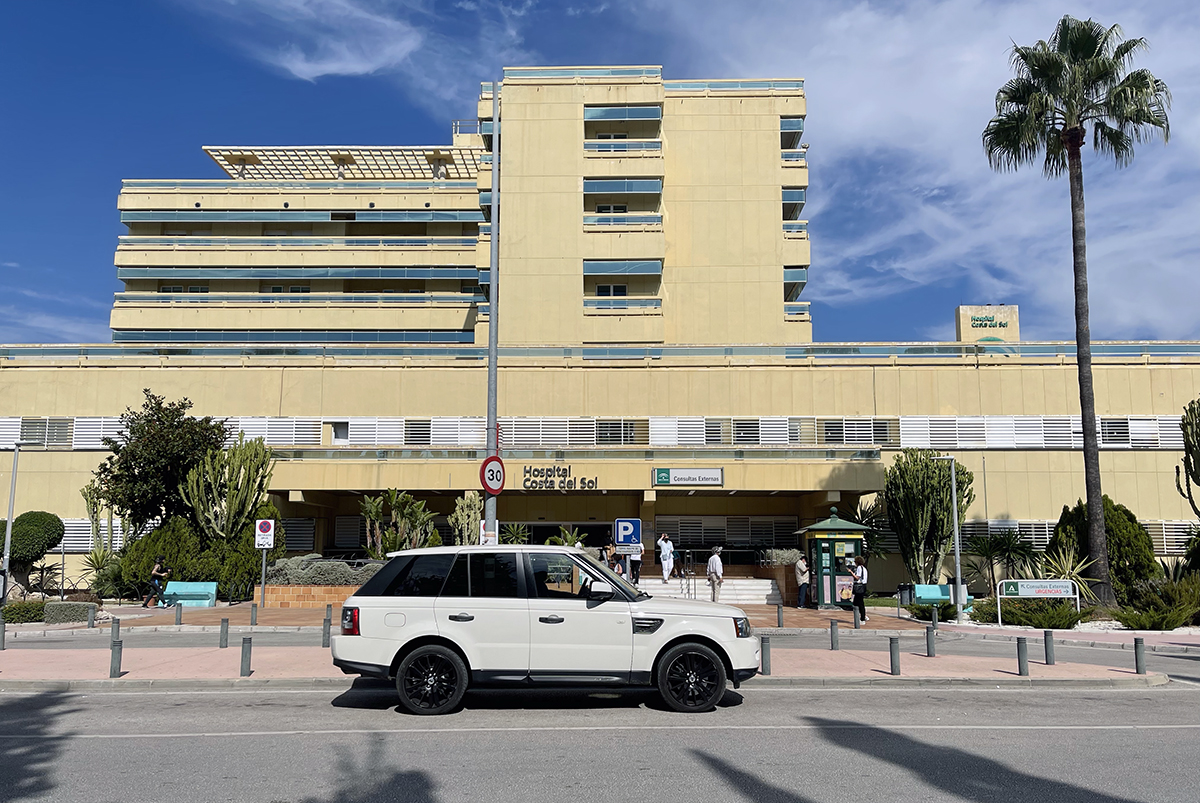
Hospital Costa del Sol (also known as Hospital Universitario Costa del Sol) is the main public hospital serving the western Costa del Sol, located on the A-7 at km 187, approximately 7 kilometres east of Marbella centre. With 400 beds and a major new extension completed in March 2025, it is one of the best-equipped public hospitals in Andalusia. The hospital provides 24/7 emergency services (urgencias) with full trauma, cardiac and stroke capabilities, all major surgical specialities, maternity and neonatal care, oncology, radiology with MRI and CT, and outpatient specialist clinics. As approximately 15% of patients do not speak Spanish, the hospital provides volunteer interpreter services and has English-speaking doctors in most departments.
The emergency department deserves particular mention: expats who have used Hospital Costa del Sol’s urgencias consistently report that genuine emergencies — chest pain, fractures, serious injuries, suspected stroke — are triaged and treated rapidly, often faster than private alternatives that lack the same emergency infrastructure. For non-urgent conditions presenting at urgencias, wait times can extend to several hours, particularly in summer when the population doubles. The hospital serves residents from Estepona to Fuengirola and is the primary receiving hospital for ambulances across the western Costa del Sol. Programme the hospital address and urgencias phone number into your phone on day one of living in Marbella. For the nearest public hospital to Estepona residents, the Hospital de Alta Resolución de Estepona opened recently, providing A&E, diagnostics, day surgery and specialist outpatient clinics — significantly improving access in the western part of the coast. See our Estepona guide for more.
Private Hospitals in Marbella and Surrounding Area
| Hospital | Location | Specialities | English |
|---|---|---|---|
| HC Marbella | Near Puerto Banús | Oncology (HC Cancer Center), cardiology, neurosurgery, orthopaedics, aesthetics. Part of HC Hospitales group | Excellent — most English-first private hospital on the coast, virtually all staff bilingual |
| Quirónsalud Marbella | Av. Severo Ochoa, central Marbella | Full service — cardiology, oncology, traumatology, paediatrics, maternity, diagnostics. Spain’s largest private hospital group (50+ hospitals) | Very good — international patient unit with English coordinators |
| Vithas Xanit International | Benalmádena (30 min east) | Cardiovascular surgery, bariatric surgery, sports medicine, check-up programmes. International accreditation | Very good — international patient department, English coordinators |
| Hospiten Estepona | Estepona | 24/7 emergency, general surgery, orthopaedics, diagnostics. Predominantly expat patient base | Good — English-comfortable staff due to expat patient base |
| Hospital Recoletas Marbella | Marbella (opened 2025) | New facility with state-of-the-art technology, general services | Good — modern facility catering to international patients |
| Cenyt Hospital | San Pedro de Alcántara | Formerly Centro Médico San Pedro — GP services, minor procedures, diagnostics. Smaller, personal, popular with local expat community | Excellent — roster of English-speaking doctors specifically for expats |
HC Marbella is the standout choice for expats who prioritise English-language communication. Its HC Cancer Center is one of Spain’s leading oncology facilities, and its cardiology and neurosurgery departments attract patients from across Europe. For general private healthcare — GP referrals, diagnostics, specialist consultations — Quirónsalud Marbella offers the broadest range of services in a central location. Its membership of the Quirónsalud group (Spain’s largest private healthcare company) provides access to specialist networks and advanced diagnostics across 50+ hospitals nationally, which can be valuable for complex cases requiring multi-disciplinary teams.
For families living in Nueva Andalucía, San Pedro or Estepona, Cenyt Hospital in San Pedro and Hospiten Estepona provide excellent local private healthcare without the need to travel into central Marbella. For residents of Golden Mile and Sierra Blanca, Quirónsalud Marbella is the closest major private hospital. For those in Puerto Banús, HC Marbella is virtually on the doorstep. See our neighbourhood guide for the full area breakdown.
GPs, Clinics and English-Speaking Doctors
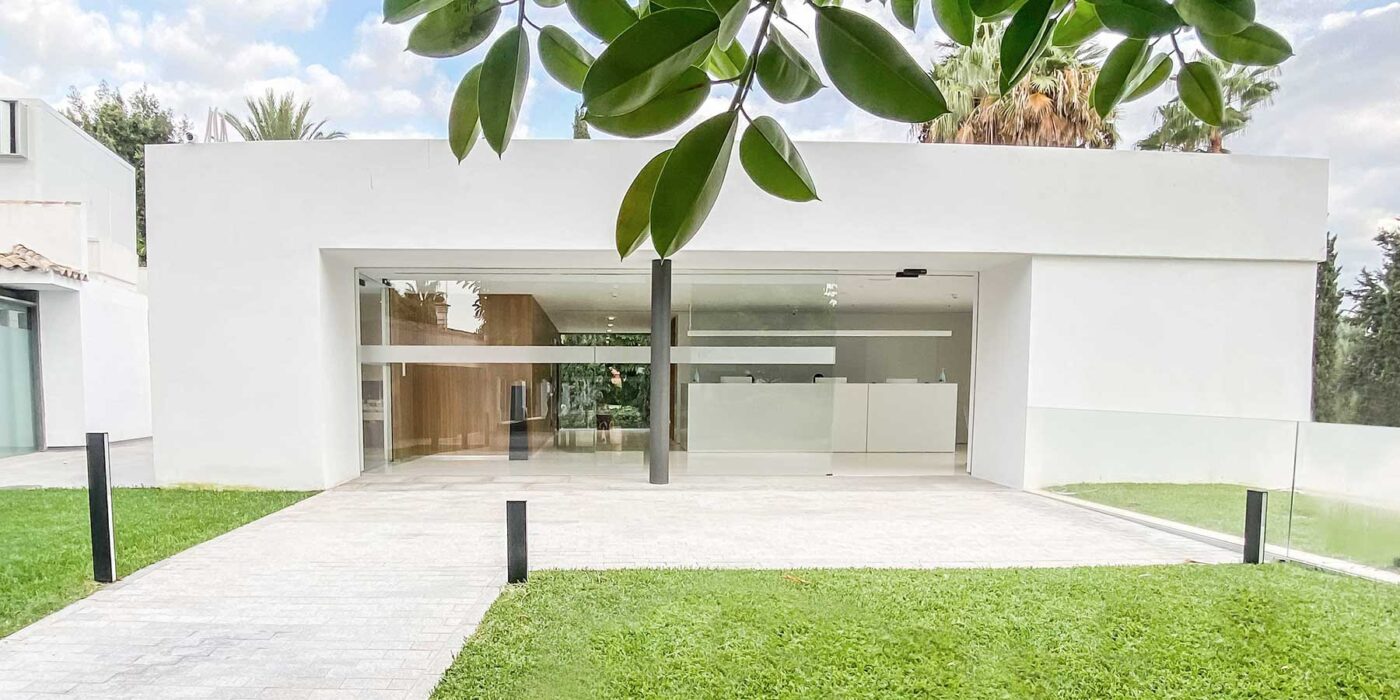
In the public system, you are assigned a GP (médico de familia) at your local centro de salud (health centre) based on your registered address. Marbella has multiple centros de salud across the municipality, including centres in San Pedro, Las Albarizas, Leganitos and Marbella centre. Appointments are booked through the ClicSalud+ app or by phone — the system is efficient once you are registered. English availability varies by centre and by individual doctor. For a more consistent English-language GP experience, many expats register with a private GP practice alongside the public system.
Private GP consultations in Marbella typically cost €50-€80 per visit without insurance, or are covered by private health insurance with a small copay (€0-€15 per visit depending on your policy). Several private clinics specifically serve the expat community with English, German, Scandinavian and Russian-speaking doctors. The clinics around Puerto Banús cater heavily to tourists and expats — convenient but typically 20-30% more expensive than equivalent clinics in central Marbella or San Pedro. For ongoing healthcare relationships, a GP in San Pedro or central Marbella is usually better value and more community-oriented than a tourist-zone clinic.
Specialist Clinics
Marbella’s specialist clinic landscape is extensive, reflecting the demand from a wealthy international population that expects rapid access to high-quality specialist care. Key specialities with strong local representation include dermatology (high demand in a sunny climate), ophthalmology, physiotherapy and sports medicine (driven by the golf, tennis and padel communities — see our padel guide), aesthetic medicine and cosmetic surgery (a significant industry in Marbella with multiple internationally recognised clinics), mental health and psychology (growing demand, particularly among relocating families), and paediatrics.
Private specialist consultations typically cost €80-€150 per visit. With insurance, most specialist visits incur a copay of €0-€30. Waiting times for private specialist appointments are typically 1-7 days — dramatically shorter than the public system’s weeks-to-months timeline for non-urgent referrals. This speed of access is the primary reason most expats maintain private insurance even when they are entitled to public healthcare.
Dental Care in Marbella
Marbella is — somewhat surprisingly — a destination for dental tourism from Northern Europe, which means the standard of dental care is exceptionally high and the competition keeps prices competitive despite the luxury market context. Dental care in Spain is not covered by the public healthcare system (except for children under 6 and emergency extractions), so all dental treatment is either private pay or covered by private dental insurance (which is available as a standalone policy or as an add-on to medical insurance, typically €15-€40/month).
Expect to pay approximately: routine check-up and cleaning €60-€100, simple filling €60-€120, dental crown €400-€600, dental implant €800-€1,500, orthodontics (Invisalign) €3,000-€5,000. These prices are typically 40-60% lower than equivalent treatment in the UK, Germany or Scandinavia, at equal or better quality — which is why Marbella attracts dental patients from across Europe.
For families, paediatric dentistry is well-represented with multiple clinics offering child-friendly environments and English-speaking dentists who specialise in treating children. The Spanish public system covers dental check-ups and basic treatments for children under 6 through the PADI programme (Plan de Atención Dental Infantil), and some autonomous communities extend this to age 15. In Andalusia, the programme covers children aged 6-15 with annual check-ups, fluoride treatments, sealants and basic restorative work at no cost. This is an often-overlooked benefit that saves families significant dental costs during the school years.
A practical recommendation: schedule dental appointments for the first week after moving to Marbella. Establishing a dental relationship before you need emergency treatment means you have a known, trusted provider when something goes wrong at 10 PM on a Saturday. The Colegio de Dentistas de Málaga (Málaga College of Dentists) maintains a directory of registered practitioners that your private insurance company can also cross-reference with their network providers for direct billing rather than reimbursement claims.
Pharmacies (Farmacias)
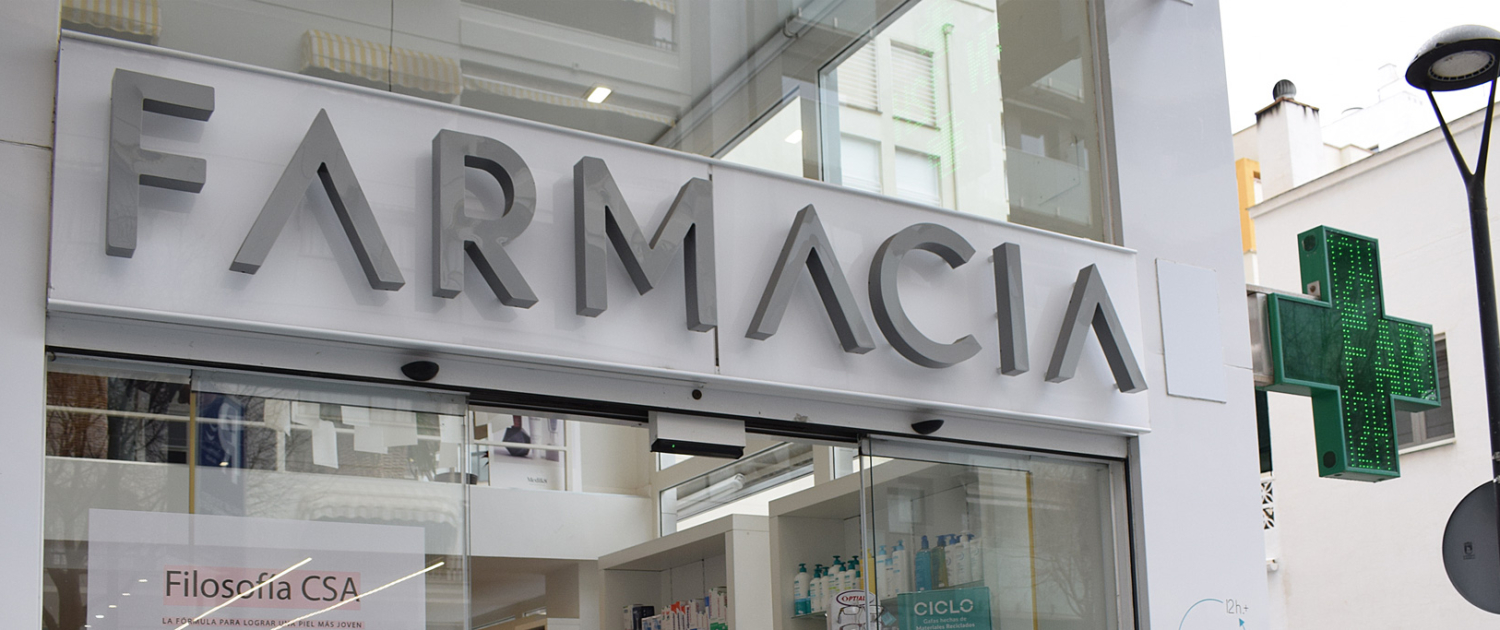
Spain’s pharmacy network is one of the best in Europe — pharmacies are ubiquitous (green cross signs), regulated, well-stocked and staffed by qualified pharmacists who can provide basic medical advice, dispense many medications without prescription (or with a Spanish private prescription) and direct you to appropriate medical services. Marbella has pharmacies across all residential areas, and at least one farmacia de guardia (duty pharmacy) is open 24/7 every night on a rota basis. You can find the nearest duty pharmacy through the pharmacy rota displayed in every pharmacy window or via the Farmaguard app. Prescription medications for public healthcare patients are heavily subsidised — pensioners pay a maximum of €4.24 per item. Private patients pay full price but can claim reimbursement through their insurance.
Private Health Insurance: Costs, Providers and What to Choose
| Age bracket | Monthly premium (approx) | What it covers |
|---|---|---|
| 30-40 years | €60-€100/month | GP, specialist, hospital, surgery, diagnostics, some dental |
| 40-55 years | €80-€150/month | Full cover including chronic conditions, check-up programmes |
| 55-65 years | €120-€200/month | Comprehensive including increased diagnostic screening |
| 65-75 years | €150-€250/month | Full cover — some providers have age limits, check pre-existing condition exclusions carefully |
| Children (0-18) | €30-€60/month | Paediatric GP, specialist, hospital, vaccinations |
Major Spanish private health insurance providers operating in the Marbella area include Sanitas (part of Bupa), Adeslas (part of SegurCaixa), DKV (part of Munich Re), Asisa, Mapfre and AXA. For expats specifically, Sanitas and Adeslas are the most commonly chosen because they offer the broadest networks of English-speaking doctors and the most seamless integration with private hospitals like HC Marbella and Quirónsalud. International health insurance policies (from providers like Cigna, Allianz, Bupa International) also work in Marbella but may involve reimbursement claims rather than direct billing, which adds administrative overhead.
Recommended Partner
Solid Iberia — Insurance for International Residents
Navigating Spanish health insurance as a foreign buyer can be overwhelming — different providers, coverage levels, residency visa requirements, pre-existing condition rules and copay structures. Solid Iberia specialises in helping international residents on the Costa del Sol find the right insurance — health, home, car, life — with multilingual advisors who understand expat needs, visa compliance requirements and the nuances of the Spanish system. They compare across all major providers to find the policy that fits your situation, not just the cheapest quote.
A critical note for residency applicants: if you are applying for a Non-Lucrative Visa, Digital Nomad Visa or any other residency permit, you must demonstrate private health insurance coverage without copays as part of the application. This means your policy must cover the full range of medical services without requiring out-of-pocket copayments at the point of care. Not all policies meet this requirement — confirm with your insurance provider before submitting your visa application. See our digital nomad visa guide for more.
How to Access Public Healthcare as an Expat
- EU citizens working in Spain: automatically enrolled through social security contributions. You receive a TSI (Tarjeta Sanitaria Individual) — your public healthcare card. Register at your local centro de salud with your NIE and social security number
- EU retirees with S1 form: the S1 (formerly E121) form from your home country’s health authority entitles you to full public healthcare in Spain, funded by your home country. Register the S1 at your local INSS office, then register at your centro de salud. See the retirees section below for more detail
- Self-employed (autónomo): your monthly autónomo contributions (minimum ~€230/month in 2026) include public healthcare enrollment for you and your dependents
- Convenio especial: if you are not employed, not retired with an S1, and not otherwise entitled to public healthcare, you can voluntarily enroll by paying a monthly contribution of approximately €60/month (under 65) or €157/month (65+). This gives you full access to the public system including GP, specialists, hospital and prescriptions
- Non-Lucrative Visa holders: private insurance is required for the visa application. You can additionally apply for convenio especial after 1 year of registered residency, giving you public healthcare access alongside your private policy
Emergencies: What to Do
In any medical emergency in Marbella, dial 112 — Spain’s national emergency number, staffed with multilingual operators including English, German and French. Ambulances are dispatched from the EPES (Empresa Pública de Emergencias Sanitarias) coordination centre and will take you to the nearest appropriate hospital — which for the Marbella area is typically Hospital Costa del Sol. For cardiac emergencies, the hospital is a designated CODIGO INFARTO centre with direct catheter lab access. For stroke, it operates a CODIGO ICTUS protocol with rapid neurological assessment.
If you can transport yourself, drive directly to the urgencias (emergency) entrance of Hospital Costa del Sol (A-7, km 187, open 24/7) or the nearest private hospital emergency department. HC Marbella and Quirónsalud Marbella both have emergency services, though their capacity for major trauma is more limited than the public hospital. For children’s emergencies, Hospital Costa del Sol has a dedicated paediatric emergency area. Save these addresses in your phone’s map app before you need them.
Healthcare for Children and Families
Marbella is an excellent environment for children’s healthcare. The public system provides free vaccinations following the Andalusian vaccination calendar (which is comprehensive and up-to-date with European standards), regular paediatric check-ups at your centro de salud, and full hospital care at Hospital Costa del Sol’s paediatric department. Private paediatricians are available at all major private hospitals, with English-speaking paediatric specialists at HC Marbella, Quirónsalud and Cenyt Hospital. For families with children at international schools, many schools have relationships with specific private clinics that can provide medical certificates, sports physicals and school-required documentation in English.
For families considering Marbella as a permanent home, healthcare is consistently rated as one of the strongest practical advantages — combining the reassurance of a top-tier public hospital (free for enrolled residents) with rapid private access for non-urgent paediatric needs, in a climate that is genuinely beneficial for children with respiratory conditions, allergies or vitamin D deficiency. See our expat relocation guide and our safety guide for the broader family picture.
Healthcare for Retirees: S1 Form, Pension Access and What You Need to Know
For British retirees, the S1 form (previously E121) remains the primary mechanism for accessing free Spanish public healthcare, despite Brexit. The UK government continues to issue S1 forms to state pensioners relocating to Spain, which entitles the holder (and their dependent spouse/partner) to the same public healthcare as a Spanish national — GP consultations, specialist referrals, hospital treatment, prescriptions and emergency care, all free at the point of use. The S1 must be applied for from the NHS Business Services Authority before or shortly after your move, then registered at your local INSS office in Spain, and finally presented at your centro de salud to complete your TSI enrollment.
Important: the S1 covers public healthcare only — not private hospitals, not dental care, and not prescriptions beyond the subsidised public pharmacy scheme. Most British retirees in Marbella therefore maintain a private insurance policy alongside their S1-funded public access, using public for emergencies and ongoing care, and private for English-language consultations and faster specialist access. The cost of a combined approach (S1 for public + €150-€250/month for private) is still significantly lower than equivalent healthcare costs in the UK or USA — and the quality is excellent. For the complete tax and financial picture for retirees, see our retirement guide and our Beckham Law guide.
Marbella vs Other Destinations: Healthcare Compared
| Destination | Public healthcare | Private insurance cost | English availability |
|---|---|---|---|
| Marbella | Excellent (WHO top 10) | €60-€250/month | Very good (private), moderate (public) |
| Dubai | Limited for expats | €200-€600/month | Excellent |
| French Riviera | Excellent | €100-€300/month (mutuelle) | Limited — French primary |
| Algarve | Good but stretched | €50-€150/month | Good (Portuguese speak English well) |
| Mallorca | Excellent (same Spanish system) | €60-€200/month | Good, especially Palma |
Marbella’s healthcare advantage over most competing destinations is the combination of a world-class public hospital (free for enrolled residents), multiple English-first private hospitals, affordable private insurance costs relative to quality, and a deep pool of multilingual medical professionals who have chosen to practice on the Costa del Sol because of the same lifestyle that attracts buyers. See our Marbella vs Dubai guide for the full lifestyle comparison.
15 Practical Healthcare Tips for Marbella Residents
- Register at your centro de salud within the first week of moving. Bring your NIE, empadronamiento (municipal registration), S1 form or social security number. This is your gateway to free public healthcare and cannot be done retroactively for past medical events
- Get private insurance before you need it. Pre-existing conditions declared during enrollment are covered. Conditions discovered after enrollment without prior declaration may be excluded. Enrol early, disclose everything, and your coverage is comprehensive from day one
- Save 112, Hospital Costa del Sol urgencias, and your nearest private hospital in your phone contacts. In an emergency, you do not want to be searching for numbers
- Download the ClicSalud+ app. This is Andalusia’s public healthcare app — book appointments, view test results, access your medical history, request prescriptions. It is the gateway to the public system and surprisingly well-designed
- Find your farmacia de guardia. Download the Farmaguard app or check the rota displayed in every pharmacy window. Knowing which pharmacy is open at 3 AM on a Sunday can save you an unnecessary hospital visit
- Learn basic medical Spanish. Even with English-speaking doctors, basic medical vocabulary (dolor = pain, fiebre = fever, alergia = allergy, receta = prescription, urgencias = emergency) helps in public healthcare settings where English may be limited
- Keep a copy of your medical history in English and Spanish. If you have chronic conditions, allergies or take regular medication, have a bilingual summary prepared. Your private GP or your insurance company can help translate
- Bring sufficient medication from your home country for the first 3 months. While most medications are available in Spain (often under different brand names), the transition to a Spanish prescription system takes time. Some medications available over-the-counter in the UK require a prescription in Spain, and vice versa
- Register with a private dentist early. Dental care is not covered by public healthcare. Find a dentist you like, schedule a check-up, and establish the relationship before you need emergency dental work
- Use the public system for emergencies and the private system for planned care. This is the standard dual approach that most experienced expats adopt — it maximises quality while minimising cost
- Check your insurance covers repatriation. Some policies include medical repatriation to your home country for complex treatments. Others do not. If you have a serious condition that might require specialist treatment available in London, Munich or Stockholm but not Marbella, repatriation coverage matters
- Summer healthcare tip: Hospital Costa del Sol gets significantly busier in summer when the population doubles. For non-urgent specialist appointments, schedule in spring or autumn for shorter wait times
- Mental health services are available. The public system provides psychology and psychiatry referrals (with waiting times). Private psychologists and psychiatrists — many English-speaking — are available in Marbella at €80-€120 per session. The adjustment to life abroad can be challenging, and professional support is available and normalised
- For children, follow the Andalusian vaccination calendar. Your paediatrician (public or private) will guide you through the required vaccinations. Bring your child’s vaccination record from your home country to ensure continuity
- If you are over 50, schedule an annual health check-up. Private hospitals offer comprehensive check-up packages (blood work, cardiac screening, cancer markers, imaging) at €200-€500 — significantly cheaper than equivalent screening in the UK or USA, and a prudent investment in early detection
Live Where Healthcare Is World-Class
Marbella’s healthcare infrastructure is one of the strongest practical arguments for choosing the Costa del Sol as your permanent home. At LUXO Estates, we help buyers find properties near the medical facilities that matter most to their family — whether that is walking distance from Quirónsalud for retirees, close to HC Marbella for families who want English-first paediatrics, or in San Pedro near Cenyt Hospital for community-oriented primary care.
Golden Mile → |
Nueva Andalucía → |
Estepona → |
All properties → |
Contact us →