

Day Trip to Nerja and the Caves From Marbella 2026: The Complete Guide
Nerja sits at the opposite end of the Costa del Sol from Marbella, but the drive is genuinely manageable as a single day out — a dramatic cliffside town, one of Europe’s most impressive prehistoric cave systems, and the whitewashed village of Frigiliana all within easy reach of each other. A day trip to Nerja and the caves from Marbella is one of the most rewarding excursions this stretch of coast offers, combining natural history dating back 42,000 years with genuinely beautiful Andalusian scenery. This guide covers exactly how to plan it, verified for current travel times and pricing, with the honest detail about timing and logistics that turns a good idea into a smoothly executed day out.
This guide goes beyond simple directions. It covers exactly what to expect inside the caves themselves, how to time a combined visit with Nerja town and Frigiliana, honest pricing across every stage of the day, a suggested hour-by-hour itinerary, and the practical details — parking, queuing, what to wear — that make the genuine difference between a rushed, frustrating trip and a properly enjoyable one.
Why Nerja Genuinely Earns the Drive From Marbella
Marbella’s own considerable charms — covered throughout LUXO’s other guides to the town’s beaches, restaurants and lifestyle — can make venturing further afield feel unnecessary for residents and longer-staying visitors. But Nerja offers something genuinely different from anything within Marbella itself: a dramatically different geological and historical character, built around a cave system predating recorded history by tens of thousands of years, paired with a coastal town whose more relaxed, less polished atmosphere provides a genuine change of pace from Marbella’s own more upscale identity.
This contrast is precisely why Nerja and the surrounding area have built such a strong, independent tourism reputation of their own, distinct from simply being “the next town along the coast.” For residents specifically who’ve settled into Marbella’s own rhythms and are looking for a genuinely different day out without an overly long journey, Nerja represents one of the most rewarding options within realistic day-trip range.
|
Quick Answer Nerja is roughly 90 minutes to two hours from Marbella by car via the A-7, with no direct bus connection — driving or an organised tour are genuinely the two realistic options. The Nerja Caves, discovered by local boys in 1959 and dating back to Neanderthal times, cost around €15-€21 depending on the package, and pairing the visit with the whitewashed village of Frigiliana and Nerja’s own Balcón de Europa viewpoint makes for a genuinely full and rewarding day. |
|
Did You Know? The Nerja Caves were discovered entirely by accident in 1959, when a group of local boys chasing bats through a small opening stumbled onto a cave system stretching nearly 5 kilometres, containing evidence of human habitation dating back roughly 42,000 years. |
Getting There: Driving, Bus or Organised Tour
Nerja sits roughly 90 kilometres east of Marbella, and the drive along the A-7 motorway typically takes between 90 minutes and two hours depending on traffic and your exact starting point along the coast. This is the single most straightforward way to make the trip, and driving yourself offers the genuine flexibility to set your own pace between the caves, Nerja town and Frigiliana rather than working around a tour bus schedule.
Public transport is considerably less convenient specifically for this route — there’s no direct bus connecting Marbella to Nerja, meaning a journey by bus requires transferring through Málaga’s bus station, adding real time and complexity to what’s a straightforward drive by car. For anyone without a car or specifically preferring not to drive, an organised day tour — several operators run combined Nerja, Frigiliana and cave-visit itineraries lasting 7.5 to 9 hours with hotel pickup included — removes this logistical complexity entirely, handling transport, timing and skip-the-line cave entry as a single, coordinated package.
For anyone specifically weighing driving versus an organised tour, the decision generally comes down to how much you value flexibility versus genuine hands-off convenience. Driving yourself means total control over timing and the ability to linger somewhere that particularly catches your interest, but also means navigating parking, managing the return drive after a full day out, and handling ticket logistics yourself. An organised tour trades that flexibility for a genuinely stress-free day where transport, timing and entry are all handled on your behalf — a trade-off worth considering honestly based on your own specific preferences rather than assuming one option is objectively superior.

🕳️ The Nerja Caves: What to Actually Expect
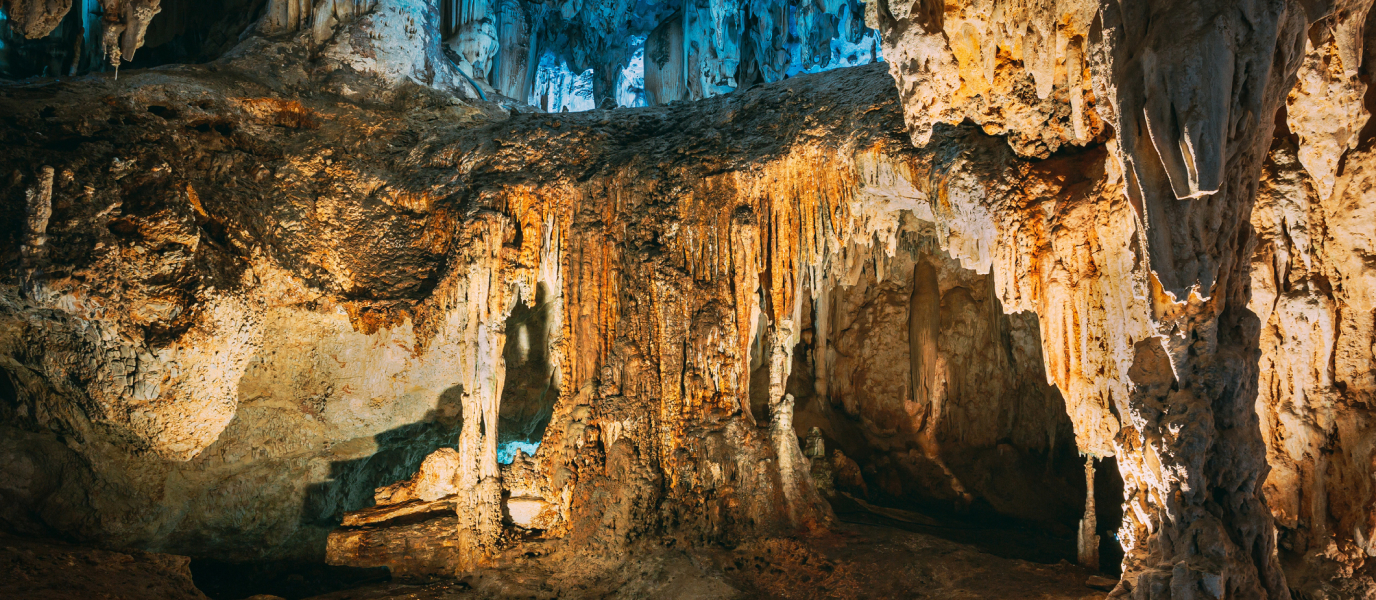
The Cueva de Nerja, sometimes called the “Natural Cathedral of the Costa del Sol,” is a genuinely vast underground cave system stretching nearly 5 kilometres in total length, though only one of the larger chambers is currently open to visitors given the instability of some of the deeper caverns. Discovered by accident in 1959 when local boys chasing bats found a small opening leading into the system, the caves contain evidence of human habitation dating back approximately 42,000 years, alongside genuinely spectacular natural rock formations built up over millennia.
The caves are located about 3 kilometres from Nerja town itself — not within easy walking distance, though a small tourist train connects the two if you’re arriving without a car specifically for this leg. Entry typically includes access to the main show cave, a small on-site museum, and in some ticket packages a virtual reality experience explaining how the caves formed geologically over tens of thousands of years. Reviewers consistently describe the sheer scale of the caverns as genuinely surprising, with plenty of stairs to navigate but a spectacular payoff at the top, and the site includes botanical gardens and a children’s play area alongside the cave visit itself.
The cave system’s specific archaeological significance deserves particular mention beyond its natural beauty — the human remains and cave paintings discovered within rank among the most important prehistoric finds in Western Europe, with some researchers suggesting certain markings may represent among the oldest known examples of symbolic art created by Neanderthals specifically, predating similar finds elsewhere by a considerable margin. For anyone with even a passing interest in prehistory, this genuine scientific significance adds a layer of depth to the visit well beyond simply admiring impressive rock formations.
💡 Insider tip: Arriving earlier in the day, particularly before school group visits typically arrive, genuinely reduces queuing time at the ticket counter — one visitor specifically describes catching a 10am tourist train and finding friendly staff with no queues at that hour, compared to considerably busier conditions later in the day.

🌊 Nerja Town: The Balcón de Europa and Beyond
Nerja’s own Balcón de Europa — a dramatic clifftop promenade jutting out over the Mediterranean — is the town’s genuine centrepiece and one of the most photographed viewpoints on this stretch of the Costa del Sol, earning consistently glowing reviews for its panoramic coastal views, lively atmosphere and frequent live music from buskers along the walkway. Reviewers specifically describe the surrounding promenade as lined with cafés and restaurants, making it a natural spot to pause for lunch or a coffee while taking in the view.
Below the Balcón, Nerja’s own beaches offer a genuinely pleasant place to cool off if your visit falls during warmer months, and the town’s compact centre rewards a leisurely wander beyond the viewpoint itself — small squares, whitewashed streets and a genuinely relaxed pace distinct from Marbella’s own more polished, upscale character. For anyone specifically pairing the caves with time in the town itself, budgeting at least an hour or two purely for Nerja beyond the cave visit avoids rushing what’s a genuinely worthwhile stop in its own right.
The sheer scale of the Balcón de Europa’s own review base — over 32,000 reviews at a 4.7-star average — reflects genuinely how central this single viewpoint is to the town’s identity and visitor experience. Reviewers specifically describe the crystal-clear water visible from the clifftop, parrots chirping in the surrounding palm trees, and a Spanish classical guitarist providing an impromptu soundtrack during one visit — the kind of unplanned, atmospheric detail that makes a place memorable well beyond simply ticking off a famous viewpoint from a list.
🏘️ Frigiliana: The Perfect Pairing
Frigiliana, a whitewashed mountain village roughly 15 minutes from Nerja, is specifically why so many organised day tours bundle the caves, Nerja town and Frigiliana together into a single itinerary — the three genuinely complement each other, offering underground natural wonder, coastal town atmosphere and traditional Andalusian village charm within a compact, easily connected area. The village’s steep, narrow, flower-lined streets and traditional white architecture have earned it a reputation as one of Spain’s most beautiful villages, and wandering its lanes at a relaxed pace is precisely the kind of experience that rewards unhurried time rather than a rushed, box-ticking visit.
Puerta de Frigiliana and Puerto Blanquillo, two specific restaurants in the village, both earn strong, detailed reviews specifically praising spectacular views alongside genuinely good, generously portioned Andalusian food — reviewers at Puerto Blanquillo specifically highlight exceptional service and standout dishes like garlic prawns and lamb cutlets, while Puerta de Frigiliana draws praise for its chorizo, cecina and croquetas alongside a genuinely beautiful setting. Either makes a strong choice for a relaxed, scenic lunch stop as part of a combined Nerja-Frigiliana day.
Beyond dining, Frigiliana’s specific charm lies in details easy to miss on a rushed visit — small ceramic plaques throughout the village narrate the story of the Morisco rebellion in both Spanish and English, and the elevated position throughout much of the village produces genuinely spectacular views back down toward Nerja and the Mediterranean beyond. For photographers specifically, the contrast between the brilliant white walls, colourful flower pots and deep blue sky produces some of the most consistently rewarding, easy compositions found anywhere on this stretch of coast, worth allowing genuine time to explore rather than rushing through en route to lunch.
Suggested Day Itinerary
| Time | Activity | Notes |
|---|---|---|
| 8:00-9:30 | Drive from Marbella to the Nerja Caves | Arrive early to avoid school group crowds |
| 9:30-11:00 | Visit the Nerja Caves | Include the virtual reality experience if available |
| 11:00-11:30 | Drive or transfer to Nerja town | Roughly 10 minutes from the caves |
| 11:30-13:00 | Explore Nerja and the Balcón de Europa | Coffee, photos, a wander through the old town |
| 13:00-13:30 | Drive to Frigiliana | Roughly 15 minutes from Nerja |
| 13:30-15:30 | Explore Frigiliana and lunch | Puerta de Frigiliana or Puerto Blanquillo, both highly rated |
| 15:30-17:30 | Drive back to Marbella | Allow extra time for potential coastal traffic |
🤯 Things That Surprise First-Time Visitors
| Things that genuinely catch newcomers off guard
1. There’s no direct bus from Marbella to Nerja. Public transport requires a transfer through Málaga, making driving or an organised tour considerably more practical. 2. The caves involve real stairs and walking. The show cave includes genuine steps and uneven underground terrain — comfortable shoes matter more than many visitors expect. 3. The caves themselves are 3km from Nerja town, not walkable. A tourist train or short drive connects the two — factor this into your timing. 4. Frigiliana is genuinely worth the extra 15 minutes. Many visitors focus purely on the caves and Nerja town, missing one of the most naturally beautiful villages in the entire region. |
What to Expect: Costs for a Nerja Day Trip
| Item | Approximate Price | Notes |
|---|---|---|
| Nerja Caves entry (standard) | €15-€21 | Varies by package, VR experience and museum access |
| Tourist train (caves to town, return) | Approx. €6 | Optional, useful without a car for the final stretch |
| Fuel (round trip from Marbella) | Approx. €15-€25 | Depends on vehicle and current fuel prices |
| Organised day tour (per person) | Varies by operator | Typically includes caves, Nerja and Frigiliana, 7.5-9 hours |
| Lunch in Frigiliana or Nerja | €15-€35 per person | Varies by restaurant and set menu vs. à la carte |
Practical Tips for the Day
Booking cave tickets online in advance, rather than assuming walk-up availability, is worth doing, particularly during peak summer months and school holiday periods when the site draws considerably higher visitor numbers. Bringing a light layer is genuinely useful too — the caves maintain a consistently cool temperature year-round, a welcome contrast to Marbella’s summer heat but a genuine adjustment if you’re dressed for a hot day outside.
For anyone driving themselves, free parking is available directly at the cave site, removing one potential logistics headache, though arriving with some flexibility in your schedule for the return coastal drive is sensible given how traffic along this stretch can vary, particularly during peak season weekends. Bringing swimwear is worth considering too, specifically for anyone planning to combine the cultural stops with a swim at one of Nerja’s beaches before the drive back.
Footwear deserves specific mention given the genuine walking involved across the full day — the caves themselves include real stairs and uneven underground terrain, Nerja’s own streets involve some genuine incline near the Balcón de Europa, and Frigiliana’s steep, cobbled lanes are considerably more comfortable in proper walking shoes than anything more formal or open-toed. Given how much of this day trip’s genuine appeal lies in unhurried walking and exploring rather than sitting in a single location, comfortable footwear matters more here than for many of Marbella’s own more sedentary lifestyle experiences.
The Broader History Behind La Axarquía
Nerja and Frigiliana both sit within La Axarquía, a distinct comarca (county) of Málaga province with its own genuinely rich layered history stretching from prehistoric cave dwellers through Roman settlement to a particularly significant period of Moorish rule, whose architectural and cultural influence remains visible throughout the region’s whitewashed villages today. Frigiliana specifically was the site of a significant historical battle during the Morisco rebellion of the 16th century, when the descendants of the region’s Muslim population made a final stand against Christian forces — a history the village’s own tiled ceramic panels throughout its streets specifically commemorate for visitors willing to look closely.
This layered history — prehistoric, Roman, Moorish, and the more recent 20th-century tourism development that transformed the coast — gives the Nerja and Frigiliana area a genuinely different character from Marbella’s own more recently constructed luxury identity, built predominantly from the 1950s onward. For visitors and residents specifically interested in the region’s deeper historical roots rather than purely its contemporary luxury lifestyle offering, this day trip offers a genuinely valuable counterpoint to Marbella’s own more modern story.
Other Excursions Worth Combining or Comparing
For anyone specifically building out a broader itinerary of Costa del Sol day trips beyond this single guide, understanding how Nerja compares to other popular excursions from Marbella helps prioritise which trips to actually make time for. Ronda, the dramatic clifftop town famous for its 18th-century bridge spanning a deep gorge, offers a genuinely different kind of dramatic scenery — mountainous rather than coastal — and sits roughly an hour from Marbella, making it a genuinely comparable day-trip distance to Nerja but with an entirely different character worth experiencing separately rather than assuming one substitutes for the other.
Gibraltar, covered in LUXO’s other guides to day trips from Marbella, offers yet another distinct flavour — British sovereignty, the famous Barbary macaques, and considerably different retail and dining options given its duty-free status. Rather than viewing Nerja, Ronda and Gibraltar as competing options where only one deserves a visit, this guide’s research suggests treating each as a genuinely worthwhile, distinct day trip in its own right, ideally spread across separate visits rather than attempting to combine multiple full-day excursions into a single, exhausting itinerary.
Frequently Asked Questions About Visiting Nerja From Marbella
How far is Nerja from Marbella?
Nerja is roughly 90 kilometres from Marbella, with the drive via the A-7 typically taking 90 minutes to two hours depending on traffic.
Is there a direct bus from Marbella to Nerja?
No. Public transport requires a transfer through Málaga’s bus station, making driving or an organised tour more practical for a day trip.
How much does it cost to visit the Nerja Caves?
Entry typically costs €15-€21 depending on the specific package, including museum access and in some cases a virtual reality experience.
Can I visit Frigiliana on the same day as the Nerja Caves?
Yes, and it’s genuinely recommended. Frigiliana is roughly 15 minutes from Nerja, and most organised day tours combine both destinations.
When were the Nerja Caves discovered?
In 1959, when local boys chasing bats found a small opening leading into the cave system, which contains evidence of human habitation dating back roughly 42,000 years.
Do I need to book Nerja Caves tickets in advance?
It’s recommended, particularly during peak summer and school holiday periods, to avoid longer queues at the ticket counter.
What is Frigiliana known for historically?
Frigiliana was the site of a significant battle during the 16th-century Morisco rebellion, a history commemorated through ceramic panels found throughout the village’s streets.
How does Nerja compare to Ronda as a day trip from Marbella?
Both are roughly comparable in distance, but offer genuinely different scenery — Ronda’s dramatic mountain gorge versus Nerja’s coastal caves and whitewashed villages.
Should I bring a jacket to the Nerja Caves even in summer?
Yes. The caves maintain a consistently cool temperature year-round, a genuine contrast to Marbella’s summer heat.
The Bigger Picture
A day trip to Nerja from Marbella genuinely rewards the roughly two-hour drive each way — a natural wonder tens of thousands of years in the making, a dramatic coastal town centred on one of Andalusia’s most photographed viewpoints, and a whitewashed mountain village that feels genuinely distinct from Marbella’s own more polished character. For residents and visitors who’ve already explored Marbella’s own considerable charms, Nerja and Frigiliana together offer exactly the kind of full-day change of scenery that makes the Costa del Sol worth exploring well beyond its most famous stretch of coast.
|
LUXO Marbella as Your Base for Exploring the Coast From Nerja to Ronda, LUXO Estates knows which Marbella properties put the whole of the Costa del Sol within easy reach for a day trip. |
Related: Why Expats Never Leave Marbella · Nueva Andalucía Area Guide · LUXO Estates Marbella Properties