
Moving to Marbella: The Complete Expat Guide 2026
Last updated: July 2026. Compiled by the LUXO Estates team using data from official Spanish government sources, local gestoría offices, international school admissions teams, and expat community data across the Costa del Sol.
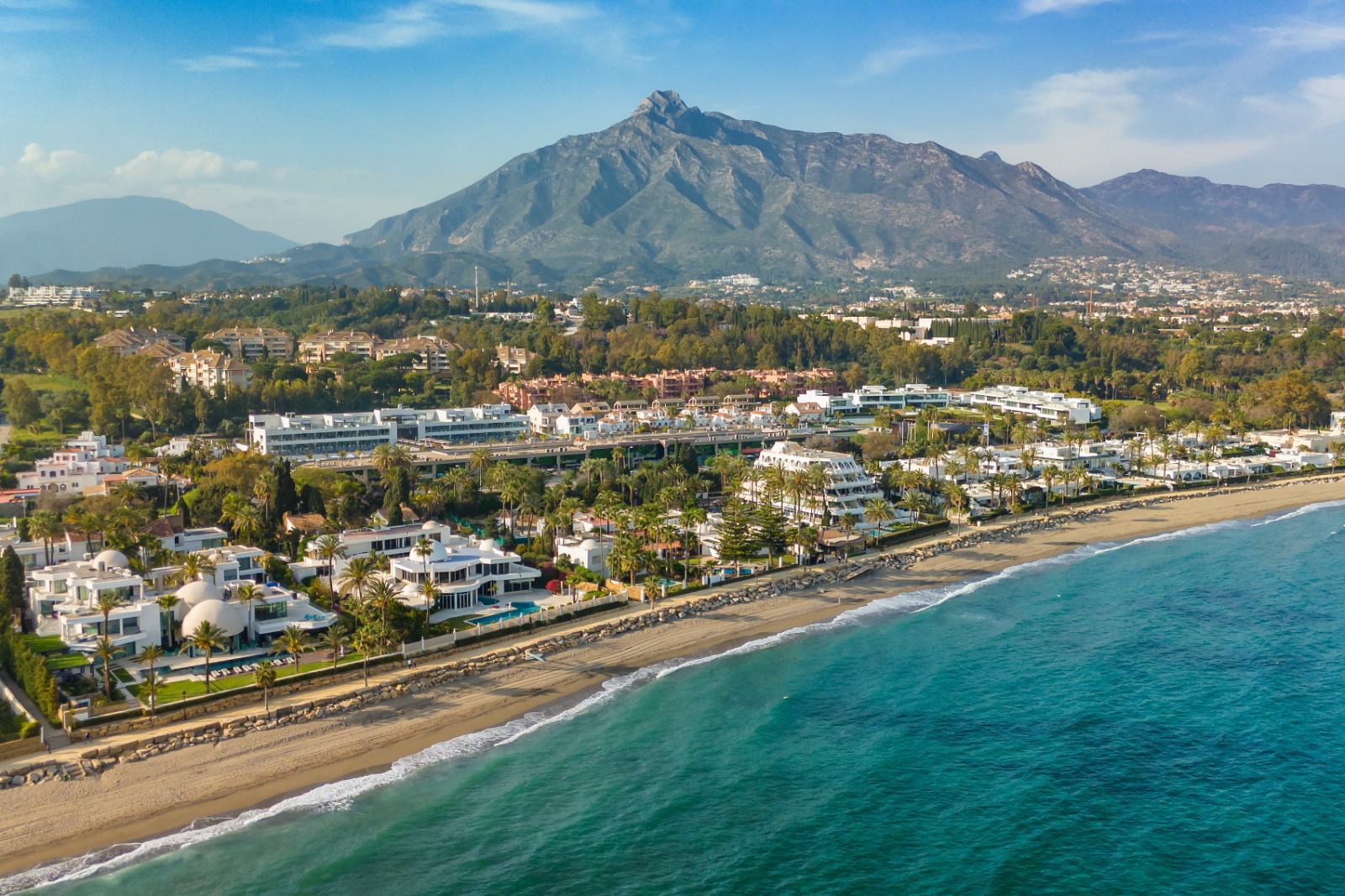
Marbella is the most internationally established address on the Costa del Sol — and arguably the most complete soft landing in Europe for anyone leaving London, Stockholm, Amsterdam or Dubai for a better quality of life. With over 140 nationalities already living here, world-class private healthcare, a concentration of international schools unmatched anywhere in Andalusia, over 320 days of sunshine per year and 27 kilometres of coastline, and a property market that has delivered consistent capital growth for a decade, the question for most would-be movers is no longer whether to come to Marbella — it is how to do it correctly.
This guide covers everything: the legal steps, the cost of living by lifestyle tier, the best areas for each type of buyer or renter, schooling options, healthcare, taxes, daily life, cultural integration and the most common mistakes that first-time movers make. No fluff, no marketing copy — just the practical information you need to make a confident decision and hit the ground running.
Why Expats Choose Marbella
Marbella is not a typical Spanish town that happened to become popular with foreigners. It was built, from the ground up, around the needs of an international resident community — which is precisely why it works so well as a relocation destination. The infrastructure that most expatriate destinations take decades to develop already exists here in mature form: English-speaking private hospitals, British and American curriculum schools, multilingual law firms, international banks, digital nomad coworking spaces, five-star golf clubs and a social calendar that runs year-round.
The climate seals the deal. Marbella has a Mediterranean climate with an average annual temperature of 17.3°C. The warmest month is August at 24.7°C, while January — the coldest and rainiest month — averages just 11.2°C. In practice, this means you can eat outdoors comfortably for nine months of the year, golf twelve months of the year, and swim in the sea from May to November. Summers are hot and dry, making the beaches the perfect place to be, while winters are mild enough for outdoor activities all year round.
Then there is the lifestyle infrastructure that money cannot replicate overnight. What makes Marbella’s expat community genuinely distinctive is that it spans all ages — something that does not happen in other coastal towns where the expat population tends to be older. Entrepreneurs sit alongside retirees, young families mix with digital nomads, and residents from over 140 countries create a genuinely cosmopolitan atmosphere rather than a tourist bubble.
Finally, there is the value proposition compared to peer luxury destinations. Even after a decade of strong price appreciation, prime Marbella remains significantly cheaper per square metre than Monaco, the French Riviera or comparable addresses in London — a gap that sophisticated international buyers have been actively closing for years, which is precisely why the market has delivered such consistent returns. For the full price data, see our Marbella property prices by neighbourhood guide.
Honest Pros and Cons of Living in Marbella
| Pros | Cons |
|---|---|
| 320+ days of sunshine per year | Spanish bureaucracy is genuinely slow and complex |
| World-class private healthcare with English-speaking doctors | Spanish public healthcare has long waiting times |
| Exceptional concentration of international schools | International school fees are a significant monthly expense |
| Lower cost of everyday living vs. London, Paris, Dubai | Prime areas carry a major cost-of-living premium vs. Spanish average |
| Safe, family-friendly environment | Can feel quiet in winter, particularly outside the Golden Mile and Old Town |
| Strong capital appreciation over the past decade | Property prices have risen sharply — entry-level has moved up |
| 140+ nationalities — easy to find your community | Easy to live entirely in an English-speaking bubble, limiting real integration |
| Excellent international connectivity via Málaga Airport (45 min) | Car almost essential outside the Old Town and Centro |
| Year-round outdoor lifestyle: golf, padel, beach, hiking | Summer crowds and traffic on the coastal road (CN-340) can be intense |
| Wealth tax largely abolished in Andalusia | Post-Brexit visa requirements for UK nationals add complexity and cost |
Visas and Residency: Your Options in 2026
If you plan to live in Spain for over three months, you must apply for a Spanish residency certificate — required for both EU and non-EU citizens, and it comes with both rights and tax obligations. The option that suits you depends entirely on your nationality, income source and intended lifestyle in Marbella.
| Nationality | Option | Key Requirements | Processing Time |
|---|---|---|---|
| EU / EEA citizens | EU Citizen Registration (Certificado de Registro) | Proof of income or employment, healthcare coverage, NIE, address registration | Relatively straightforward; appointment at Foreigners’ Office required |
| UK nationals (post-Brexit) | Non-Lucrative Visa | Proof of passive income (€2,400+/month for single applicant), private health insurance, clean criminal record, no intention to work in Spain | 3-4 months via Spanish consulate in home country — must apply before arriving |
| UK / Non-EU nationals | Digital Nomad Visa | Remote work contract with employer outside Spain, income above Spanish average (~€2,646/month), health insurance | 4-6 weeks once documents are complete |
| Non-EU nationals | Entrepreneur Visa | Viable business plan approved by a Spanish government body, capital demonstration, health insurance | Variable — typically 2-3 months |
| Non-EU high net worth | Investment Visa (non-real estate routes only, from April 2025) | €1M+ investment in Spanish companies/funds, or €2M in Spanish public debt | 20 working days once documentation is complete |
Important note for UK buyers: post-Brexit, UK citizens are entitled to 90 days of visa-free stay in Spain within any 180-day period. To live here long-term, a specific visa applied for at a Spanish consulate in the UK is required before arriving — you cannot switch to a long-stay visa once you are already in Spain on a tourist entry. The Non-Lucrative Visa remains the most popular route for British retirees and semi-retired buyers who plan to spend the majority of their time in Marbella.
It is also worth noting that Spain’s property-linked Golden Visa was closed to new applicants in April 2025. Existing Golden Visa holders can renew under the previous rules. For alternatives, see our dedicated guide on residency options for investors after the Golden Visa closure.
Getting Your NIE: The First Legal Step
Before doing anything of legal or financial significance in Spain — buying property, opening a bank account, signing a lease, registering a car — you need a NIE (Número de Identificación de Extranjero), Spain’s foreign identification number. Think of it as your Spanish tax ID. Without it, you are effectively blocked from every administrative process in the country.
Getting an NIE appointment directly at the National Police in Marbella can take months. The practical workaround used by most experienced expats and relocation advisors: hire a gestoría to apply on your behalf in a neighbouring town such as Estepona or Fuengirola, where wait times at the Foreigners’ Office are typically far shorter.
| What You Need for the NIE | Detail |
|---|---|
| Form EX-15 | Completed and signed by the applicant |
| Valid passport + photocopy | All pages of the passport |
| Proof of reason for application | Purchase contract, work contract, lease agreement or statement of intent |
| Tax fee payment (Modelo 790, Código 012) | Currently around €10-12, paid at a Spanish bank before the appointment |
| Appointment or gestoría representation | At the National Police Foreigners’ Office or via a gestoría applying on your behalf |
A key tip: start the NIE process as early as possible — ideally several months before you expect to need it. If you are buying a property, your lawyer will likely need your NIE before you can sign any legally binding purchase documents. A gestoría fee for handling the NIE application typically runs €100-€200, which is almost always worth it for the time saved.
If you plan to live in Marbella long-term, you may also need a TIE (Tarjeta de Identidad de Extranjero) — a physical residency card — depending on your visa type. Your NIE number stays the same, but the TIE is the card that proves your right to reside.
Empadronamiento: Registering with the Town Hall
Empadronamiento is the process of registering your address with the local Ayuntamiento (town hall). It sounds administrative and easy to overlook, but skipping it creates a cascade of problems down the line. The padrón is what gives you access to public schools, IBI tax discounts, the public healthcare system, residency card renewals and eligibility for a wide range of local services.
The process is straightforward: bring your passport, NIE and proof of address (a lease contract or utility bill in your name) to the local Ayuntamiento office in Marbella. It is free, usually completed the same day, and gives you an official certificate of registration that you will be asked for repeatedly by Spanish institutions. Do it within the first few weeks of arriving — it unlocks everything else.
Opening a Spanish Bank Account
Spanish banks apply strict Know Your Customer (KYC) regulations to new foreign account holders, particularly those arriving with significant funds from abroad. Being declined for an account because of insufficient source-of-funds documentation is surprisingly common among newly arrived expats. Prepare your file in advance.
Popular banks among Marbella expats include Santander, Sabadell, CaixaBank and Bankinter. For high-net-worth buyers and investors, private banking relationships with Banco Santander Private Banking, Banca March or international institutions such as Julius Baer are available locally in Marbella. Non-residents can open a non-resident account with just a passport and proof of address, though non-resident accounts typically carry higher fees and fewer services. Once you establish residency, converting to a resident account is straightforward.
As a practical tip: bring a comprehensive documentation pack to your first bank appointment, including passport, NIE, proof of address in Spain, proof of address in your home country, recent bank statements from your home bank (typically 3-6 months), and any documents explaining the source of funds you intend to deposit. The more you bring, the less likely you are to be asked to return.
Cost of Living in Marbella 2026
While Marbella has a reputation for luxury, everyday living costs are often considerably lower than buyers expect — particularly compared to London, Paris, Amsterdam or Dubai. Grocery prices are reasonable, especially when shopping at local markets and Spanish supermarkets. Fresh produce, seafood and locally sourced products are widely available and affordable. Most residents find it easy to balance everyday dining with occasional fine dining without significantly increasing monthly spending.
Where costs escalate quickly is in housing — both to rent and to own in prime areas — and in international school fees. Everything else, from healthcare to dining to utilities, tends to sit well below what most Northern European or North American expats are used to paying.
| Expense Category | Estimated Monthly Cost | Notes |
|---|---|---|
| Rent — 2-bed apartment, non-prime area | €1,200 – €1,800 | San Pedro, Elviria, Marbella Centre |
| Rent — 2-bed apartment, prime area | €2,500 – €4,500 | Golden Mile, Puerto Banús |
| Rent — 4-bed villa with pool | €4,000 – €10,000+ | Nueva Andalucía, Sierra Blanca |
| Groceries (couple) | €400 – €700 | Lower at Mercadona and local markets; higher at international stores |
| Dining out (couple, 3-4x/week) | €400 – €800 | Huge range — from €12 tapas lunch to €200+ fine dining |
| Utilities (electricity, water, internet) | €150 – €350 | Significantly higher in summer due to A/C usage |
| Private health insurance (per adult) | €80 – €150 | Sanitas, DKV and Adeslas most common among expats |
| International school fees (per child) | €500 – €1,200/month | €5,000 – €15,000 per year, depending on school and age |
| Car (fuel, insurance, ITV, maintenance) | €250 – €450 | Almost essential outside the Old Town |
| Golf membership (annual, amortised) | €200 – €600 | Wide range from municipal courses to La Zagaleta’s private club |
| Gym membership | €30 – €150 | Wide range from budget chains to hotel private gyms |
| Padel court rental | €8 – €20 per session | Marbella has one of the highest padel court densities in Europe |
| Housekeeper (3x/week) | €400 – €700 | Standard for most villa owners; widely available |
| Pool and garden maintenance | €200 – €500/month | Essential for villa owners; usually contracted as a package |
Daily life is easygoing, friendly, and full of convenience. Supermarkets include Mercadona, Carrefour, Lidl and Aldi, with international stores such as Iceland Overseas and Scandinavian shops serving the expat community. Street markets operate weekly across all towns.
Budget Tiers: What Different Monthly Budgets Look Like
| Monthly Budget | What It Gets You | Typical Profile |
|---|---|---|
| €2,000 – €3,000 | Comfortable but modest lifestyle. Apartment in San Pedro or Elviria, local dining 2-3x per week, Mercadona for groceries, public transport supplement. No golf memberships or beach clubs. Possible for a single person; tight for a couple. | Early retirees, remote workers on entry-level income, couples without children in a non-prime area |
| €3,000 – €5,000 | Good quality of life. Apartment in Marbella Centre or Nueva Andalucía, private health insurance, one child in international school, dining out 3-4x per week, car. Occasional beach club visit in summer. | Families, professionals, comfortable retirees who came from medium-cost cities |
| €5,000 – €8,000 | Premium lifestyle. Larger apartment or villa in Nueva Andalucía or Golden Mile area, multiple children in school, golf or beach club membership, regular fine dining, private car plus taxis, household cleaner 2-3x per week. | Senior executives, successful entrepreneurs, affluent UK or Scandinavian families |
| €8,000 – €15,000 | Luxury lifestyle. Villa on the Golden Mile or Sierra Blanca, full household staff (housekeeper, gardener, pool maintenance), all children in premium schools, membership at a private club, regular fine dining, golf, boat mooring. | High-net-worth families, senior business figures, established second-home residents |
| €15,000+ | Ultra-luxury lifestyle. La Zagaleta or beachfront Golden Mile villa, private chef, multiple staff, private club at La Zagaleta or Real Club de Golf Las Brisas, regular jet or helicopter use, superyacht mooring. | Ultra-high-net-worth individuals; the resident buyer profile of Sierra Blanca and La Zagaleta |
The most important principle here — and the one most first-time movers get wrong — is to ring-fence your lifestyle budget before you define your property search. Stretching your capital to buy a more expensive property in a more prestigious postcode and then finding you cannot sustain the lifestyle that postcode demands is the most common financial mistake among newly arrived expats on the Costa del Sol.
Best Areas to Live in Marbella for Expats
Choosing the right neighbourhood is arguably the single most important decision you will make when moving to Marbella. The price difference between areas is enormous, but more importantly, the daily experience of living in each area is fundamentally different — and no amount of beautiful interior design makes up for being in the wrong postcode for your lifestyle.
| Area | Character | Best For | Price Range/m² | Browse |
|---|---|---|---|---|
| Golden Mile | Marbella’s most prestigious address. Luxury hotels, beachfront villas, manicured boulevards, five-star lifestyle at your door. | Prestige, lifestyle, capital appreciation, access to the best hotels and beach clubs | €6,329 – €24,000+ | View listings → |
| Puerto Banús | Marina lifestyle. Designer boutiques, superyachts, nightlife, the highest concentration of luxury short-term rental demand on the coast. | Marina lifestyle, nightlife, strong rental yield, international crowd | €5,500 – €12,000 | View listings → |
| Nueva Andalucía | Residential Golf Valley. Quiet streets, 5 minutes to Puerto Banús, best schools nearby. The most popular area for British expat families. | Families, golf, value vs. Golden Mile, international school proximity | €3,200 – €5,578 | View listings → |
| Sierra Blanca / Nagüeles | Hillside gated communities above the Golden Mile. Panoramic Mediterranean views, absolute privacy, high security. | Privacy, panoramic views, exclusivity, ultra-luxury | €9,000 – €12,000+ | View listings → |
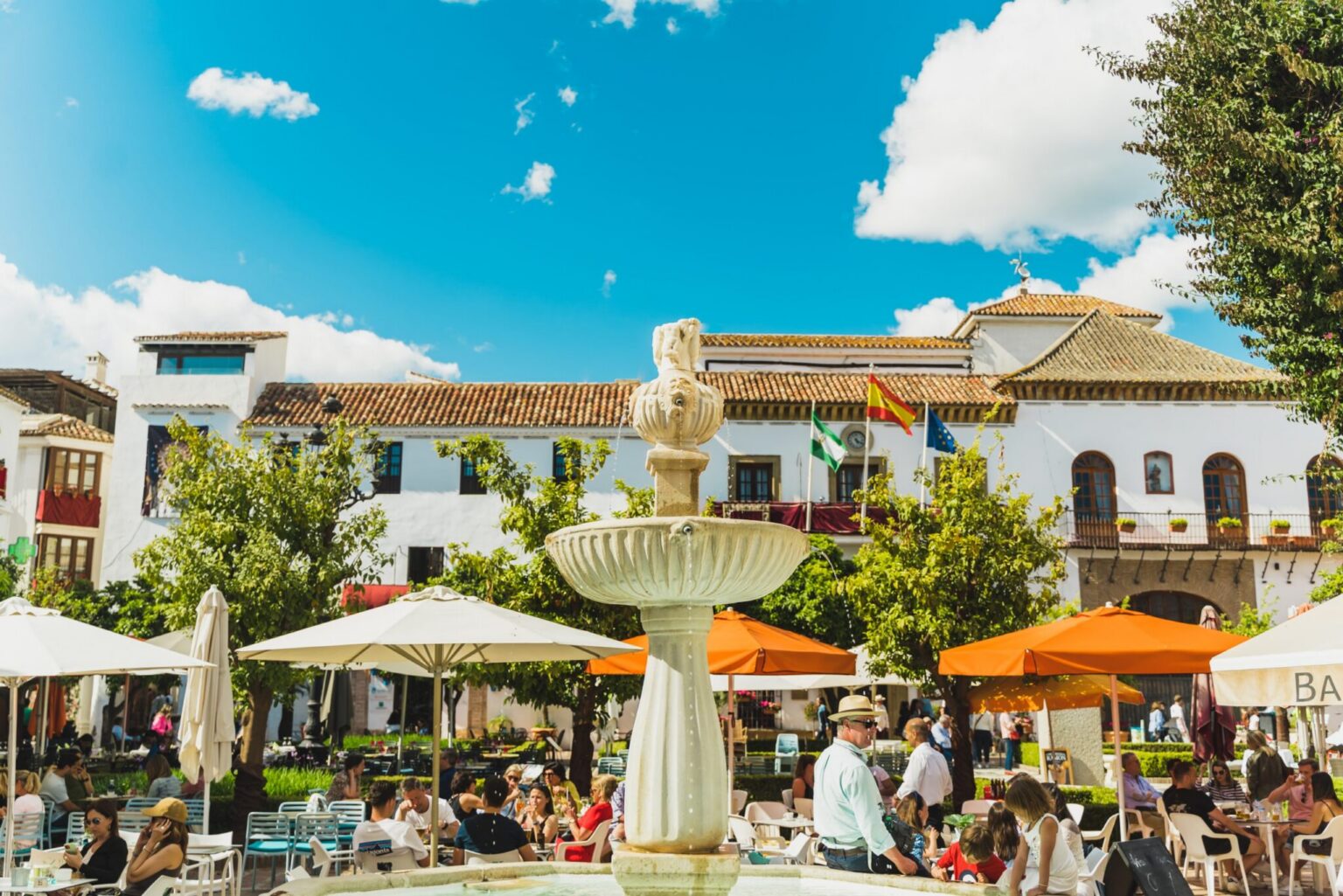
| Marbella Old Town | Cobbled streets, orange trees, whitewashed buildings, authentic Andalusian character. Walkable, year-round activity. | Culture, walkability, character, boutique investment, year-round rental | €3,000 – €5,000 | View listings → |
| San Pedro de Alcántara | Transformed in recent years. Now a genuine lifestyle destination with a redesigned promenade, strong local community and fast-improving amenities. | Value within the municipality, local Spanish feel, emerging growth | €2,800 – €5,246 | View listings → |
| East Marbella (Elviria, Las Chapas, Los Monteros) | Pine forests meeting the sea. Wide beaches, strong school provision, quieter than the centre. The fastest-growing price zone in 2025-2026. | Families, nature, beaches, fastest appreciation (+14-22% YoY), value | €2,500 – €4,500 | View listings → |
| La Zagaleta / El Madroñal (Benahavís) | Europe’s most exclusive private estate. 230 plots, two golf courses, helipad, 24h security. Median villa price €10-11M. | Ultra-privacy, trophy assets, the benchmark for European ultra-prime residential | Villa median €10-11M | View listings → |
| Estepona / New Golden Mile | The fastest-growing municipality on the Costa del Sol in terms of new development. More accessible prices, strong new-build pipeline. | New build, value, emerging capital growth, families who want more space for less | €2,800 – €4,200 | View listings → |
For a full data-driven breakdown with year-on-year price growth by area, read our Marbella Price per m² by Neighbourhood guide.
Should You Buy or Rent First?
This is the question most new arrivals get wrong in both directions. The answer depends entirely on how well you already know Marbella and how certain you are about which neighbourhood suits your day-to-day life — not your holiday life.
The general consensus among experienced expats and local relocation advisors: rent for at least six to twelve months before committing to a purchase. Not because the market is risky — it is not, and the data consistently supports buying over the medium term — but because the neighbourhood you fall in love with during a two-week August holiday will feel meaningfully different in November, when your children’s school run is real, the coastal road is half as busy, the restaurants you loved are closed for their annual break and you understand which areas are genuinely quiet versus which just felt quiet in peak season.
That said, if you have spent substantial time in Marbella across different seasons, have a clear sense of which neighbourhood suits your lifestyle, and the financial case for buying over renting in that area is strong (as it has been consistently for a decade), there is no reason to delay. The 10-year Golden Mile appreciation analysis gives you the long-term data, and our holiday rental ROI guide covers the income-generation case in detail.
International Schools in Marbella
For families moving to Marbella, the school decision is often the single biggest driver of neighbourhood choice. Marbella has a concentration of international schools that is genuinely exceptional for a city of its size, offering British, American, International Baccalaureate and German curricula across a range of fee levels.
Fees generally range from €500 to €1,200 per month per child, with additional enrolment, uniform and transport costs on top. Apply to your shortlisted schools six to twelve months before your planned start date — most require an entrance assessment, recent school reports and, in many cases, confirmation of a property purchase or long-term rental in the area.
| School | Curriculum | Location | Annual Fees (approx.) | Notes |
|---|---|---|---|---|
| Aloha College | British National Curriculum + IB | Nueva Andalucía | €7,000 – €12,000 | Most popular with British expat families; strong sports programme |
| Swans International School | British National Curriculum | Sierra Blanca / San Pedro | €8,000 – €13,000 | Two campuses; strong pastoral care and small class sizes |
| Atalaya International School | Spanish + International Baccalaureate | Estepona | €6,000 – €10,000 | Strong for families who want bilingual Spanish integration |
| English International College (EIC) | British National Curriculum | Nueva Andalucía | €7,500 – €11,000 | Long established; strong GCSE and A-Level results |
| The British School of Marbella | British National Curriculum | Marbella Centre | €5,000 – €9,000 | More accessible fees; central location |
| Casa Del Mar Montessori School | Montessori | Marbella | €6,000 – €9,000 | Best option for Montessori approach; strong early years |
Enrolling children in an international school teaching the British curriculum means they obtain British qualifications — which is significantly better than having to convert Spanish qualifications if the family later returns to the UK or pursues higher education there. For a detailed comparison of every school and how the school choice affects your neighbourhood decision, see our guide on International Schools in Marbella 2026.

Healthcare: Public vs. Private
Marbella’s private healthcare infrastructure is one of the most compelling reasons for expats to choose it over other parts of Spain. Most expats who can afford it opt for private health insurance from day one — providers like Sanitas, DKV and Adeslas are most widely used. Waiting times in the public system can be very long for non-emergency appointments, whereas Marbella’s private clinics typically offer same-day or next-day access with English, French, German and other language services as standard.
| Public Healthcare | Private Healthcare | |
|---|---|---|
| How to access | Via empadronamiento + social security registration, or EHIC card (EU citizens) | Private health insurance — €80-€150 per adult per month |
| Waiting times | Long for specialist and non-emergency appointments | Same-day or next-day in the vast majority of cases |
| Language | Primarily Spanish | English, French, German and other languages widely available |
| Key public hospitals | Hospital Costa del Sol (Marbella), Hospital Comarcal de la Axarquía | — |
| Key private hospitals/clinics | — | Clínica La Luz, Hospital Ochoa, HM Hospitales Marbella, Quirónsalud |
| Cost | Free for registered residents; prescription co-payments apply | Monthly premium; some treatments have additional co-payments |
| Recommendation for expats | Register for access; use for emergencies | Strongly recommended — required for most Non-EU visa applications |
Tax Obligations for Residents and Non-Residents
Getting your tax status right from day one is one of the most important decisions you will make when moving to Marbella. Spain applies the 183-day rule: if you spend 183 days or more in Spain in a calendar year, you are considered a Spanish tax resident and must declare your worldwide income to the Spanish tax authority (Hacienda), regardless of where it is earned.
| Status | Tax Treatment |
|---|---|
| Spanish tax resident (183+ days/year in Spain) | IRPF — progressive rates on worldwide income (19% up to €12,450; 45%-47% above €300,000). Wealth tax largely abolished in Andalusia. Must declare all foreign assets above €50,000 (Modelo 720). |
| Non-resident, EU/EEA citizen | IRNR at 19% on Spanish-source income, with expenses deductible. Imputed rental income tax on owned property (1.1-2% of cadastral value per year, applied to vacant periods). |
| Non-resident, non-EU (incl. UK nationals post-Brexit) | IRNR at 24% on gross Spanish-source income — no expense deductions allowed. Imputed income tax on owned property during vacant periods. |
Key points to discuss with a qualified Spanish tax adviser before arriving: the Beckham Law (régimen de impatriados), which allows qualifying newly arrived tax residents to pay a flat 24% on Spanish-source income for up to five years instead of progressive IRPF rates; the treatment of pension income from foreign sources; and the interaction between your home country’s tax treaty with Spain (particularly relevant for UK nationals). Wealth tax is largely abolished in Andalusia for residents, which is a significant advantage over other Spanish regions.
For investors who will also be generating holiday rental income from a Spanish property, our holiday rental ROI and tax guide covers the numbers by residency status in detail.
Driving Licences and Cars
A car is almost essential for daily life in Marbella outside of the Old Town and immediate town centre. The coastal road (CN-340) connects all the main residential areas and is well maintained, but public transport between zones is infrequent. Ride services (Uber, Bolt) and taxis are widely available but become expensive as a primary transport solution for a family.
EU driving licences are valid in Spain indefinitely and do not need to be exchanged. UK licences are valid for six months after obtaining Spanish residency, after which they must be exchanged at the DGT (Dirección General de Tráfico) office. This requires your NIE, a valid Spanish medical exam (carried out at an approved centro médico — widely available in Marbella for around €30-€50), your existing licence and supporting documents. Non-EU licences from countries with no bilateral agreement with Spain must be exchanged more promptly.
When buying a used car in Spain, always run a DGT check first to verify there are no outstanding fines, loans or ownership disputes registered against the vehicle — a gestoría can do this for a small fee. The ITV (equivalent to the MOT) is required every two years for vehicles under four years old, every two years from four to ten years old, and annually for vehicles over ten years old.
Daily Life in Marbella: What to Actually Expect
One of the most common realisations that new arrivals have in their first year is how different Marbella feels in winter versus summer. Summer Marbella — May to October — is a cosmopolitan, buzzing, sun-filled playground. Winter Marbella — November to March — is quieter, more local, more authentically Andalusian, and in many ways far more pleasant for permanent residents. Restaurants are easier to book, traffic disappears, beaches are empty and the 11-13°C winter days are still warm enough to eat outdoors at lunch.
Spanish culture operates on an unhurried, Mediterranean rhythm that may differ sharply from what most Northern European arrivals are used to. Shops may close for a siesta in the afternoon, dining out typically happens later in the evening — dinner at 9pm or 10pm is perfectly normal — and bureaucratic processes move at a pace that will try most people’s patience initially. Understanding and genuinely accepting this cultural shift, rather than fighting it, is what separates expats who thrive from those who remain permanently frustrated.
Practical daily life tips that most guides do not tell you:
- Semana Santa (Holy Week) in April shuts down most government offices and many businesses for a full week. Do not plan important bureaucratic tasks around this period.
- August is peak chaos on the coastal road — the CN-340 between Marbella and Puerto Banús becomes genuinely gridlocked in the evenings. Most long-term residents learn the back routes through the urbanisations.
- Community fees and IBI notices arrive by post and can easily be missed by new arrivals. Set up direct debits for both as soon as your Spanish bank account is active.
- The pharmacy (farmacia) network is exceptional. Pharmacists in Spain are extensively trained and can advise and prescribe a significant range of treatments directly, without a GP appointment. Pharmacies offer great service and 24-hour coverage in each town.
- Pet ownership is well catered for. Marbella is very pet-friendly, with vets, dog beaches and walking trails widely available. Many beach clubs and restaurants have dedicated pet areas or welcome well-behaved dogs.
Digital Nomads and Remote Workers
Marbella has emerged as one of the most attractive digital nomad bases in southern Europe. The combination of fast fibre internet, excellent weather, a large English-speaking community, and a genuine lifestyle infrastructure — rather than the budget backpacker scene of many nomad hubs — makes it particularly well-suited to professionals who work remotely but are accustomed to a premium quality of life.
The Digital Nomad Visa, introduced in Spain in January 2023 and now well-established in its application processes, allows remote workers to live in Spain while working for employers or clients based outside Spain. Key eligibility conditions include a remote work contract (or self-employment contract with non-Spanish clients), income above Spain’s average annual salary (approximately €2,646 per month at 2026 levels), private health insurance covering Spain, and a clean criminal record.
For self-employed arrivals, registering as autónomo involves an initial social security fee of around €80 per month under the flat-rate scheme for new self-employed workers (rising after the initial period), quarterly IVA (VAT) returns and annual income declarations. A gestoría is almost essential from day one — they typically charge €80-€150 per month to handle all quarterly and annual filings, which is money very well spent.
Marbella has become a magnet for digital nomads and remote workers, with coworking spaces including Our Space and The Pool offering reliable infrastructure. The city’s relaxed pace, sunny climate and abundance of cafés make it easy to balance productivity with a genuinely high quality of daily life.
Expat Community and Social Life
One of Marbella’s most underrated assets is its expat community infrastructure. Unlike many retirement-heavy coastal destinations, Marbella’s international community genuinely spans all ages — retirees, young families, entrepreneurs in their thirties and forties, and digital nomads in their twenties all coexist in the same social fabric.
There is a strong sense of community across the Marbella area. Social clubs, Rotary, Toastmasters and international business networking groups operate year-round. Online communities, particularly Facebook groups, are extremely active and are typically the fastest way to get practical questions answered by residents with direct local experience.
Key ways to build a social network quickly after arriving:
- Golf clubs — particularly in Nueva Andalucía — are arguably the most effective social infrastructure in Marbella. A golf membership almost automatically comes with a ready-made social network of international residents.
- Padel clubs have exploded in popularity and offer an accessible, sociable sport that integrates local and international residents more naturally than golf tends to.
- International school parent communities are another powerful network, particularly for families. The parent groups at Aloha College and EIC are active and well organised.
- Beach clubs (Nikki Beach, Ocean Club, Trocadero) function as much as community venues for long-term residents as they do as tourist attractions, particularly at the start and end of the season.
- Facebook groups such as “Expats in Marbella” and area-specific groups are genuinely useful for practical questions, recommendations and meeting people.
Language: Do You Need Spanish?
The honest answer is no — not to function comfortably in day-to-day Marbella life. English is the dominant language among the expat community, is widely spoken in private healthcare, real estate, legal and financial services, and is the working language of all the international schools. You can build a fulfilling life in Marbella without ever learning to speak Spanish fluently.
The equally honest follow-up: learning at least intermediate Spanish will meaningfully improve your experience in almost every dimension. When you engage with locals in their native language, doors open to new friendships, more authentic interactions, and a stronger sense of integration into the community you actually live in rather than the international bubble that overlays it. Spanish language schools, private tutors and community conversation groups are all widely available across Marbella, ranging from intensive immersion courses to casual weekly group classes.
The Andalusian dialect is notoriously fast and drops syllables in ways that even fluent Castilian Spanish speakers find challenging initially. Do not be discouraged if you find Marbella’s Spanish harder to understand than what you learned at school or online — it genuinely is, and even intermediate Spanish students sometimes struggle in the first few months.
Day Trips and Getting Around Andalusia
One of the underrated advantages of Marbella as a base is its central position within one of Spain’s most varied and beautiful regions. Within easy driving distance lie destinations that most Northern Europeans would travel specifically to visit:
| Destination | Driving Time | Why Go |
|---|---|---|
| Ronda | ~1 hour | Dramatic gorge city, one of the most spectacular in Spain, excellent restaurants |
| Málaga city | ~45 minutes | World-class Picasso Museum, thriving food scene, Pompidou Centre, international airport |
| Gibraltar | ~1 hour 15 minutes | Useful for UK nationals for document apostilles, English shopping, financial services |
| Seville | ~2 hours 15 minutes | One of Europe’s most beautiful cities; the Alcázar, cathedral, flamenco, tapas culture at its finest |
| Granada | ~1 hour 45 minutes | The Alhambra — essential for any resident who has not been |
| Cádiz | ~2 hours | Seafood, Atlantic coast, one of Europe’s oldest cities |
| Córdoba | ~2 hours 30 minutes | The Mezquita, Roman bridge, exceptional food scene |
Málaga Airport is 40-50 minutes from central Marbella and offers direct connections to most major European cities year-round, with particularly strong frequency on routes to London (Gatwick, Stansted, Heathrow), Amsterdam, Stockholm, Oslo and Copenhagen — the main feeder markets for Marbella’s expat community.
The 8 Biggest Mistakes Expats Make When Moving to Marbella
- Buying in “holiday mode”. Spending time in Marbella as a visitor is entirely different from living here full-time. Many buyers commit to a postcode based on two weeks in August without mapping out their daily routine, school run or winter commute. Rent for a full year across different seasons before buying if you have not already done so.
- Underestimating the NIE timeline. Getting an NIE appointment in Marbella itself can take months. Start this process as early as possible — ideally before you exchange contracts on a property. Use a gestoría and apply in Estepona or Fuengirola to reduce wait times.
- Arriving without complete banking documentation. Spanish banks’ KYC requirements for new foreign account holders are strict. Arriving without a comprehensive source-of-funds file will result in delays or outright refusal. Prepare this in advance at home.
- Choosing the neighbourhood before the school. If you have school-age children, shortlist schools first, confirm availability and then choose the neighbourhood around them. Several of the best international schools are in or near Nueva Andalucía — which is a key reason why that area commands a premium for families.
- Stretching the property budget at the expense of lifestyle. Buying at the absolute top of your budget in a prestigious postcode, then discovering your monthly costs are unsustainable, is the most common financial mistake. Define your lifestyle budget first; let the remainder define your property search.
- Assuming bureaucracy is efficient. It is not. Even straightforward processes — NIE, empadronamiento, driving licence exchange, tax registration — take longer than expected and often involve multiple visits to different offices with different documentation requirements. Build significant buffer time into any process that has a legal or financial deadline attached to it.
- Living entirely in the English-speaking bubble. It is entirely possible — and many expats do it — but it limits the depth of your experience and means you are always dependent on intermediaries for anything that requires Spanish. Even basic functional Spanish opens significantly more of Marbella’s real social fabric.
- Ignoring the annual tax declaration requirement. Even as a non-resident property owner who generates no rental income, you are required to file an annual imputed income declaration (IRNR) covering the periods your property sat vacant. This is frequently missed by first-year non-resident owners and creates back-tax and penalty exposure.
When Is the Best Time to Move to Marbella?
| Season | Pros for Moving | Cons for Moving |
|---|---|---|
| Spring (April-June) | Warm and bright, schools still in session making it easy to enrol children mid-year, rental market active but not peak, ideal weather for setting up and exploring | Easter (Semana Santa) closes offices for a week; some landlords prefer summer changeovers |
| Summer (July-August) | Schools on break, good for settling in if children are involved before September term, weather at its best | Peak prices for short-term rentals, hardest to find long-term rental deals, traffic and crowds, offices and businesses may run reduced hours |
| Autumn (September-October) | Best overall balance — schools start, rental market softens, weather still excellent (23-27°C), long-term rental supply increases as holiday lets end | Slight weather transition from October; some beach clubs close for the season |
| Winter (November-March) | Lowest rental prices, quietest roads, most authentic local experience, excellent for due diligence on whether you enjoy Marbella year-round | Some restaurants and shops close for annual break in January-February; social scene quieter |
The single best timing for a relocation if you have school-age children: arrive in July or August to find your long-term rental and complete the administrative groundwork (NIE, bank account, empadronamiento), with children starting school at the beginning of September. This mirrors the natural academic calendar and gives you the summer to settle in before life gets fully structured around the school routine.
Complete Pre-Move Checklist
| Task | When | Done? |
|---|---|---|
| Research visa category for your nationality and intended lifestyle | 9-12 months before move | ☐ |
| Begin visa application at Spanish consulate (non-EU nationals) | 6-9 months before move | ☐ |
| Apply for NIE via gestoría in Estepona or Fuengirola | 6+ months before move | ☐ |
| Shortlist and apply to international schools | 6-12 months before move | ☐ |
| Arrange private health insurance covering Spain | Before visa application deadline | ☐ |
| Prepare comprehensive source-of-funds file for Spanish bank | 2-3 months before move | ☐ |
| Research and shortlist neighbourhoods (visit in different seasons if possible) | Ongoing pre-move | ☐ |
| Arrange short-term or medium-term rental for first 6-12 months | 1-2 months before arrival | ☐ |
| Open Spanish bank account (resident or non-resident) | On arrival or before if possible | ☐ |
| Register empadronamiento at local Ayuntamiento | Within first 30 days of arrival | ☐ |
| Appoint Spanish tax adviser and gestoría | Immediately on arrival | ☐ |
| Set up utilities: electricity (Endesa), water, internet (Movistar, Orange, Vodafone), mobile | On taking possession of property | ☐ |
| Register with a local private GP clinic | First 2 weeks | ☐ |
| Exchange driving licence if non-EU (book DGT appointment) | Within 6 months of residency | ☐ |
| Set up IBI and community fee direct debits | Immediately on property ownership | ☐ |
| Begin long-term property search with LUXO Estates once settled | After 3-12 months of renting | ☐ |
Frequently Asked Questions
Can I live in Marbella as a British citizen after Brexit?
Yes. UK nationals can stay in Spain visa-free for up to 90 days within any 180-day period. To live here long-term, you need a specific residency visa — most commonly the Non-Lucrative Visa for retirees or those with passive income, or the Digital Nomad Visa for remote workers. Both must be applied for at a Spanish consulate in the UK before arriving in Spain.
How long does the NIE process take in Marbella?
Getting an NIE appointment directly at the National Police in Marbella can take three to six months or longer. The practical solution used by most experienced expats and legal advisors is to hire a gestoría and apply in a neighbouring town such as Estepona or Fuengirola, where wait times are typically significantly shorter.
Is Marbella safe for families?
Yes — Marbella is considered very safe by European standards. It has a relaxed atmosphere, active police presence in tourist and residential areas during summer, and is consistently rated as one of the safest destinations in southern Spain. It is generally safe to walk alone at night, and daytime safety is high across all the main expat residential areas.
What is the minimum income to live comfortably in Marbella?
A minimum of €2,500 per month for a single person or couple without children in a non-prime area such as San Pedro or Elviria. A family with one child in an international school and a car should budget a minimum of €4,000-€5,000 per month. For the Golden Mile or similar, add a significant housing premium on top of those figures.
Can I buy property in Marbella without being a resident?
Yes. Spanish law allows non-residents to purchase property freely. The main requirements are obtaining an NIE and completing the standard notarised legal process (purchase contract, notary deed, registration). Legal representation from a qualified Spanish property lawyer is strongly recommended, particularly for non-Spanish buyers unfamiliar with the documentation.
Where is the best area in Marbella for expat families?
Nueva Andalucía is the most popular choice for British expat families primarily because of its proximity to Aloha College and English International College, its quiet residential streets, golf access and 5-minute proximity to Puerto Banús. East Marbella (Elviria and Las Chapas) is an increasingly popular alternative for families who want larger plots, pine forest setting and direct beach proximity at lower price points. See our full neighbourhood price guide for a complete comparison.
Do I need to speak Spanish to live in Marbella?
Not to function comfortably — English is widely spoken across expat communities, private healthcare, real estate, legal services and the international school system. However, learning at least functional Spanish will meaningfully enrich your daily experience, make bureaucratic processes more manageable and open doors to the authentic local community that exists alongside the international one.
What is the Beckham Law and does it apply to me?
The Beckham Law (formally the régimen especial para trabajadores impatriados) allows qualifying individuals who become Spanish tax residents for the first time to pay a flat 24% tax rate on Spanish-source income up to €600,000, rather than the standard progressive IRPF rates, for up to five tax years. It is particularly advantageous for high earners relocating from outside Spain. Eligibility conditions apply — consult a qualified Spanish tax adviser before your first year of residency begins, as the election must be made within six months of registering with Social Security.
Ready to make the move to Marbella?
At LUXO Estates, we help relocating buyers and renters find the right property in the right neighbourhood from day one — with introductions to trusted legal, tax, banking and relocation advisors built into our service. Whether you are still researching areas or ready to start viewing, our team is here to guide you through every step.
Browse all Marbella properties → |
Golden Mile → |
Nueva Andalucía → |
East Marbella → |
Speak with our team →