Manilva Travel Guide 2026: Castle, Beaches, Vineyards
This Manilva travel guide covers the castle, the beaches, the marina, the Roman baths and the wine festival of the westernmost town on the Costa del Sol. Every figure has a named source, and we say clearly when a source is old or when sources disagree. We checked these pages on 14 November 2026.
Quick Answer
Manilva suits a calm, beach-led day trip with real history, and it works best when you pair the Castillo de la Duquesa with a walk along the Sabinillas promenade. The castle, the beaches and the marina sit close together on the coast, so you can see them without a long drive. The wine village and the Roman baths lie inland, away from the seafront.
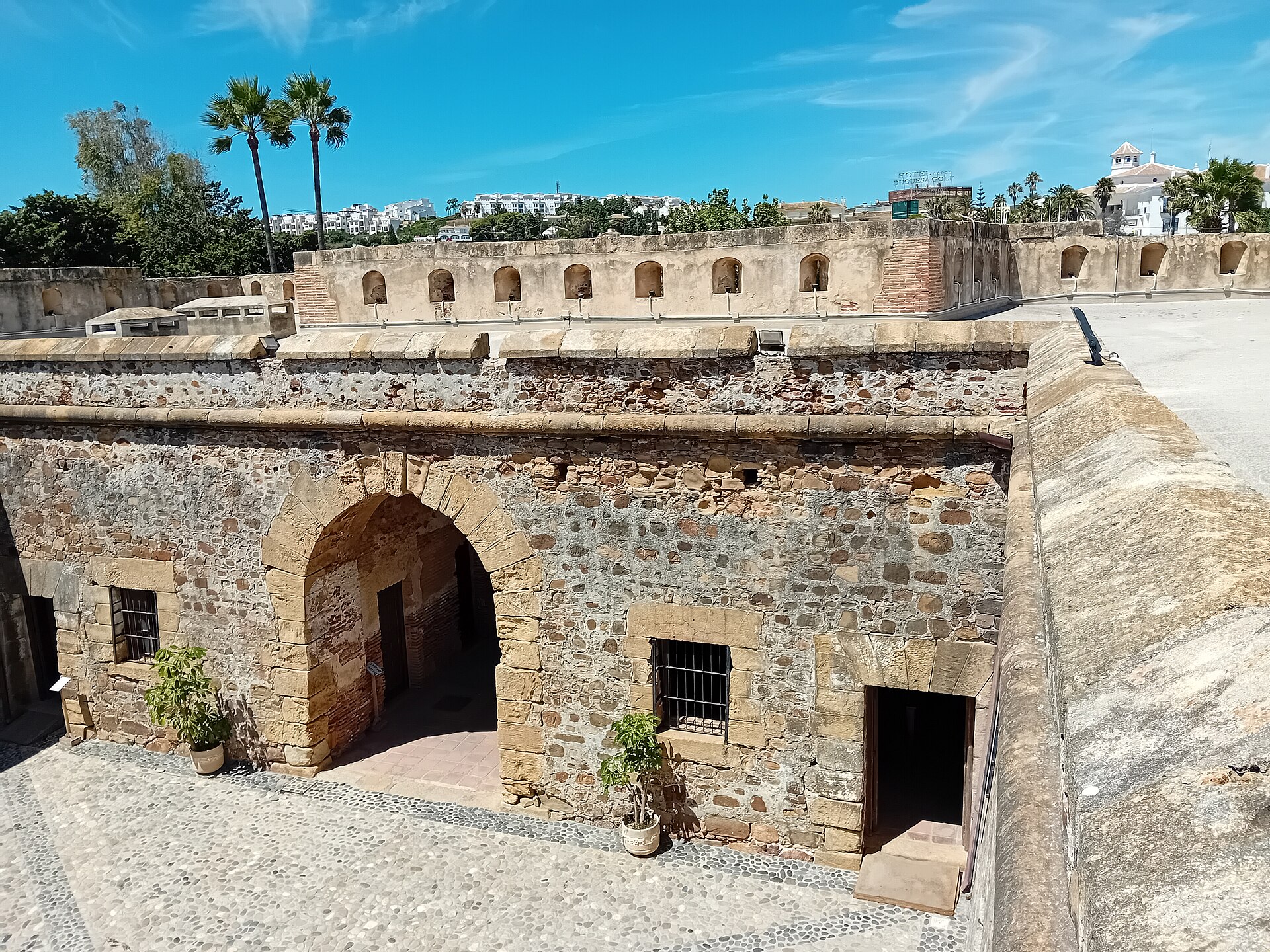
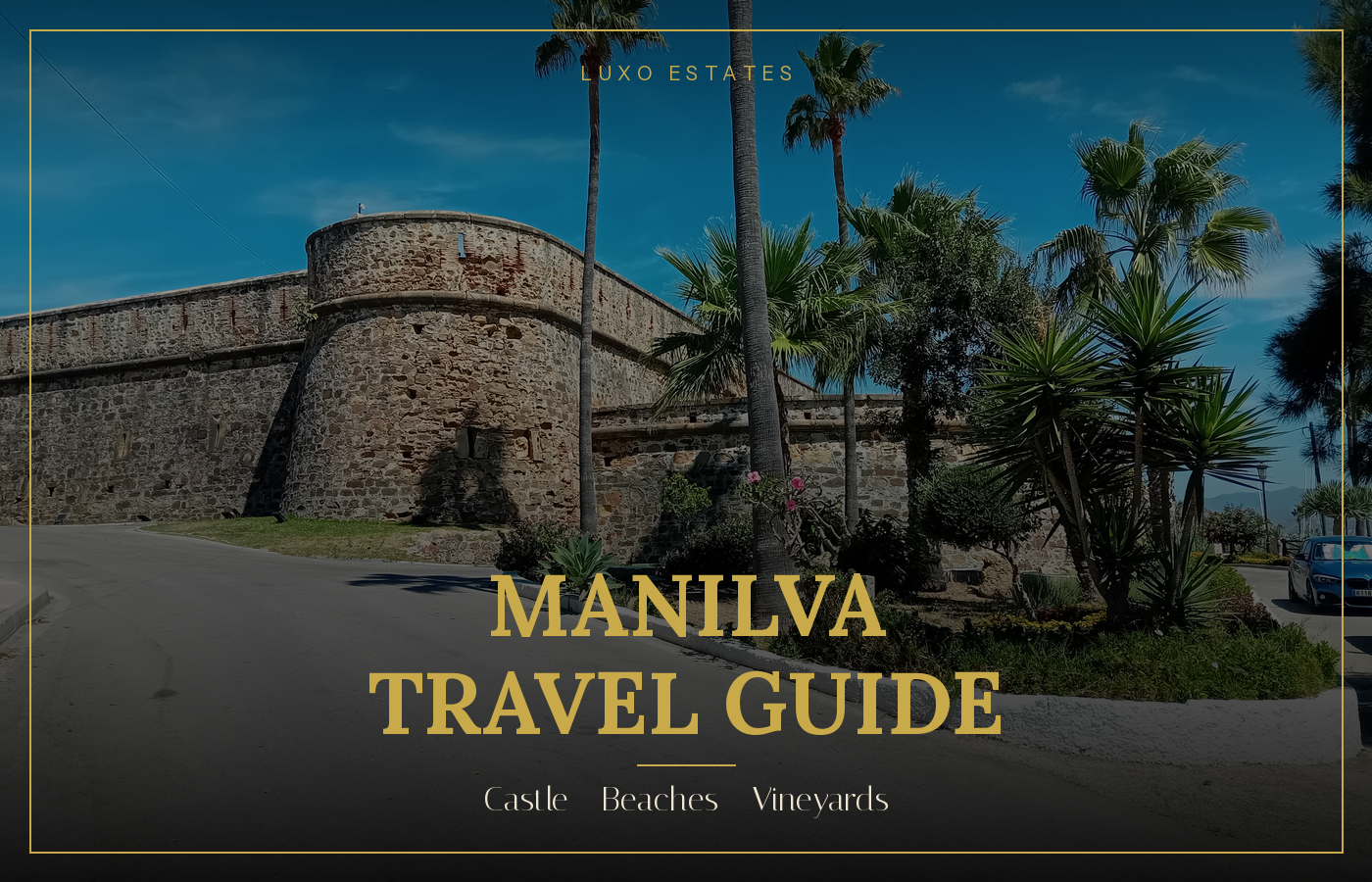
Castillo de la Duquesa, Manilva. Photo: CarlosVdeHabsburgo, Wikimedia Commons, CC BY-SA 4.0.
Manilva Travel Guide: The Quick Picture
Manilva sits at the far western end of the Costa del Sol, next to the province of Cádiz. Marbesol, a car-rental firm that publishes a town guide, calls it the westernmost municipality in Málaga province. However, the name covers more than one place. It includes a hill village among vineyards and three coastal settlements. Those are San Luis de Sabinillas, El Castillo and La Duquesa.
Wikipedia gives the municipality an area of 35 km² and a population of 17,774 in 2023. In short, this is a small town with a long coast. Marbesol counts more than 8 km of beaches.
This Manilva travel guide follows that shape. First, we cover the coast. Then we move to the history, and finally we head inland.
Where Manilva Sits and How to Get There
Marbesol puts Manilva 94 km by road from Málaga airport. It says the drive takes around an hour along the AP-7 toll motorway, or a little longer on the A-7 via Marbella and Estepona. Therefore, the town makes a natural last stop on a drive west along the coast.
We did not find a source for a train service to Manilva, so plan on a car or a taxi. Also, the hotel-listings site Hoteles.net says the village of Manilva stands about two kilometres from the sea. The castle address is Carretera N-340, km 142.9, according to Andalucía.org, which also lists parking there.
| Item | What the source says | Source |
|---|---|---|
| Distance from Málaga airport | 94 km by road | Marbesol |
| Drive time | About an hour on the AP-7, a little longer on the A-7 | Marbesol |
| Castle address | Carretera N-340, km 142.9, 29692 | Andalucía.org |
| Parking at the castle | Listed as a service | Andalucía.org |
How Manilva Is Organised: Four Places, One Municipality
Visitors often treat Manilva as one beach town. In fact, it has four distinct places. Hoteles.net says the village sits inland, while San Luis de Sabinillas is the most populated core. It also describes El Castillo as the fishermen’s quarter around the castle.
La Duquesa is the marina and golf district. Wikipedia says the marina and golf course date from the 1970s, and that tourism joined fishing, farming and wine after that.
| Place | Character | Main draw |
|---|---|---|
| Manilva village | Inland, among vineyards | Santa Ana church, Muscat wine |
| San Luis de Sabinillas | Largest seafront core | Promenade, long beach |
| El Castillo | Old fishermen’s quarter | Castillo de la Duquesa, Roman remains |
| La Duquesa | Marina and golf district | Puerto de la Duquesa, restaurants |
Manilva Travel Guide: Facts at a Glance
The table below gathers the main figures in one place. Each row names its source. In addition, we leave out any figure that we could not trace.
| Fact | Figure | Source |
|---|---|---|
| Area | 35 km² | Wikipedia |
| Population | 17,774 (2023) | Wikipedia |
| Coastline | More than 8 km | Marbesol |
| Castle built | 1767 | Andalucía.org |
| Marina | More than 300 berths | Marbesol |
| Wine festival | First weekend of September | Marbesol, Wikipedia |
A Short History From the Stone Age to Charles III
Wikipedia says people settled this corner of the coast as far back as the Stone Age. Traces turned up in caves in the Sierra Utrera. A Bronze Age hill fort is also under excavation.
Andalucía.org adds detail on one prehistoric site. Its museum text mentions Castillejos de Alcorrín, a Late Bronze Age fortress with large circular towers and a great wall. The Romans came next. They ran a fish-processing industry here, and Wikipedia says it exported garum paste to Rome.
Later, the coast needed defending. Marbesol notes that 16th-century watchtowers such as the Torre de la Chullera guarded against pirates. Then, in 1767, the castle went up under Charles III. Manilva belonged to Casares until the late 18th century, when it became a municipality in its own right.
Castillo de la Duquesa and the Archaeological Museum
The Castillo de la Duquesa is also called the Fortín de Sabinillas. Andalucía.org says it protected a large anchorage near Gibraltar during the war with England that followed the Family Compact. A man from Seville named Francisco Paulino sponsored the work in 1767. Charles III rewarded him with command of a cavalry company.
The builders used a Roman villa as their base. They also reused its materials. Today the castle houses the Municipal Archaeological Museum, and Marbesol notes that the site is a listed Bien de Interés Cultural.
Andalucía.org lists free entry. It gives opening hours of Monday to Friday, 8:00 to 15:00. However, that listing is undated and names no weekend opening. Our advice: visit on a weekday morning, and ask before you plan a weekend trip.
Roman Remains Beside the Castle
The ground around the castle matters as much as the building. Andalucía.org lists spas, a villa, fish-salting facilities and a necropolis. Marbesol describes the same trio of baths, salting factory and burial ground next to the castle.
Wikipedia adds that the factory, villa and bathhouse remains can be seen today in Castillo de la Duquesa. As a result, a short walk here gives a clear picture of Roman life on the coast.
The museum shows finds from this site and from other digs. Andalucía.org says it covers prehistory, the Roman period and the Middle Ages. We found no source for a visitor trail through the open-air remains, so ask at the museum.
Manilva Travel Guide to the Beaches
Marbesol names five main beaches: Punta Chullera, La Duquesa and Las Gaviotas, Sabinillas, El Castillo and Los Toros. The figures below come from listings sites and vary a little. For that reason, treat the lengths as rough.
| Beach | As listed | Source |
|---|---|---|
| Sabinillas | About 1,700 to 1,900 m long, around 50 m wide, sand, calm water, promenade | Hoteles.net, Inspain.org |
| La Duquesa | 1,600 m long, around 30 m wide | Hoteles.net |
| Las Gaviotas | Blue Flag in 2026 | Marbesol, El Español |
| El Castillo | Near the castle, described as picturesque | Komoot |
| Punta Chullera | 850 m long, 5 to 20 m wide | Hoteles.net |
| Los Toros | Pebble beach that gets deep close to the shore | Marbesol |
Sabinillas is the easy choice. A car-rental firm’s beach page says it has adapted access, lifeguards, showers, toilets, water-sports hire and playgrounds. In contrast, Punta Chullera is a narrower beach with a wilder feel, according to the lifestyle site Trendencias.
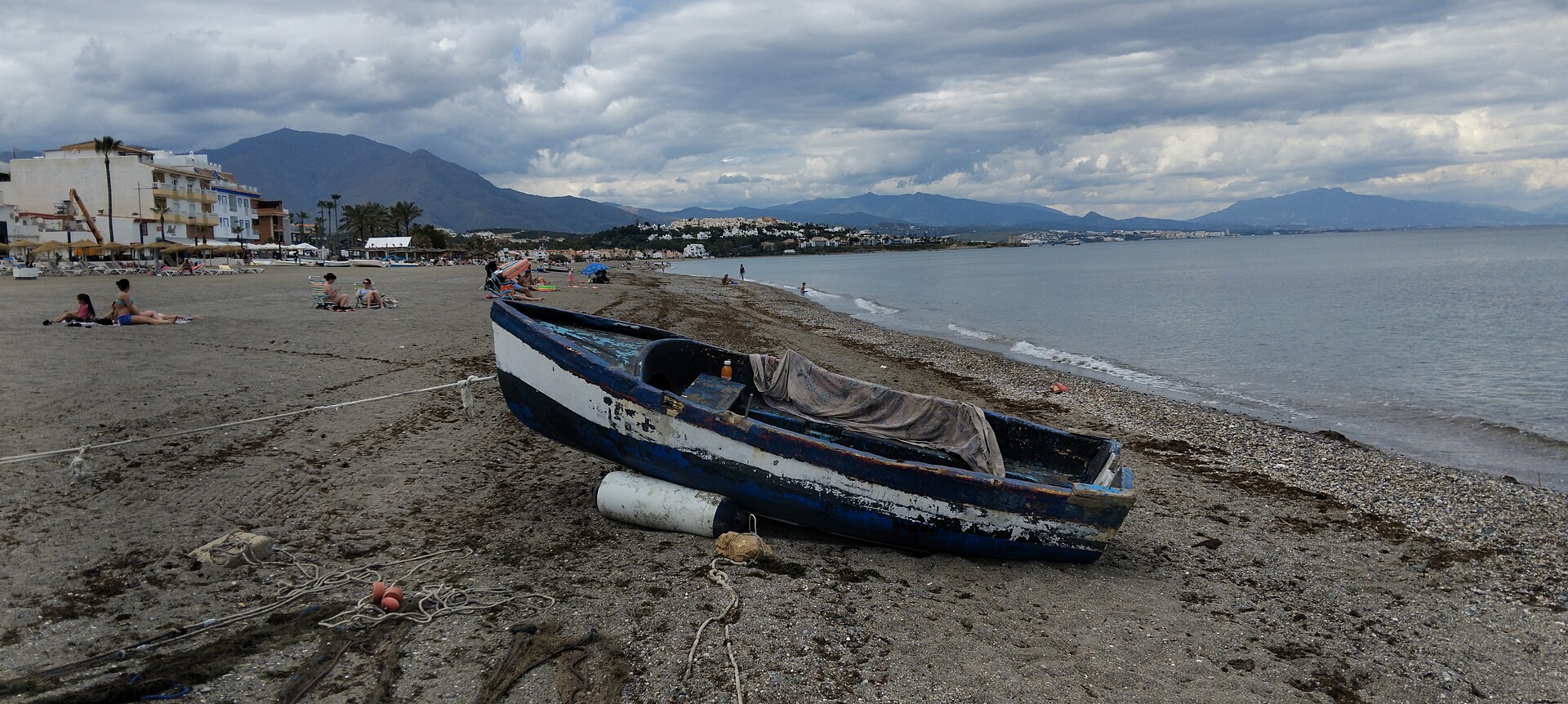
The beach at San Luis de Sabinillas, May 2025. Photo: Plazadelcamino, Wikimedia Commons, CC BY-SA 4.0.
Blue Flags in 2026: What the Sources Say
El Español reported on 5 May 2026 that Málaga province holds 45 Blue Flag beaches. It says Manilva adds Las Gaviotas, which joins Sabinillas. Marbesol agrees, and it also lists the Puerto de la Duquesa marina.
One car-rental blog lists only Sabinillas among Manilva’s beaches. It does list the marina. Because the other sources are more specific, we treat two beaches and the marina as the best reading.
Interempresas reported in July 2024 that the La Duquesa marina had flown its flag for 27 consecutive years. That figure is two seasons old, so check the current count with the marina. Our advice: look for the flag on the day, because the award covers a season and not a lifetime.
San Luis de Sabinillas: Promenade and Seafront
Sabinillas is where most visitors spend their time. Hoteles.net calls it the most populated core of the municipality. A pedestrian promenade runs along the seafront, and Andalucia.com says it stretches from the Río Manilva to the Castillo de la Duquesa.
Along the promenade you find bars, beach restaurants and small shops. A car-rental firm’s town page also mentions weekly markets, but it gives no days. Barceló’s travel guide says the promenade restaurants serve espetos, the grilled sardine skewers of the Andalusian coast.
The village celebrates its patron on 25 August. The San Luis day brings sport, music and dancing by the sea, according to the same car-rental page. Moreover, Marbesol places the San Luis festivities in the August calendar.
Puerto de la Duquesa: The Marina
Marbesol calls the Puerto de la Duquesa one of the liveliest spots in the municipality. It counts more than 300 berths. Restaurants and terraces face the water.
The marina holds a Blue Flag for 2026, according to Marbesol. Wikipedia says the marina and the golf course arrived in the 1970s. Since then, the area around the port has become a residential and leisure district.
We found no sourced restaurant list for the marina, so we name none. Instead, walk the quay and read the menus. Our advice: choose a place where the fish is shown on the day’s board, and ask the price before you order.
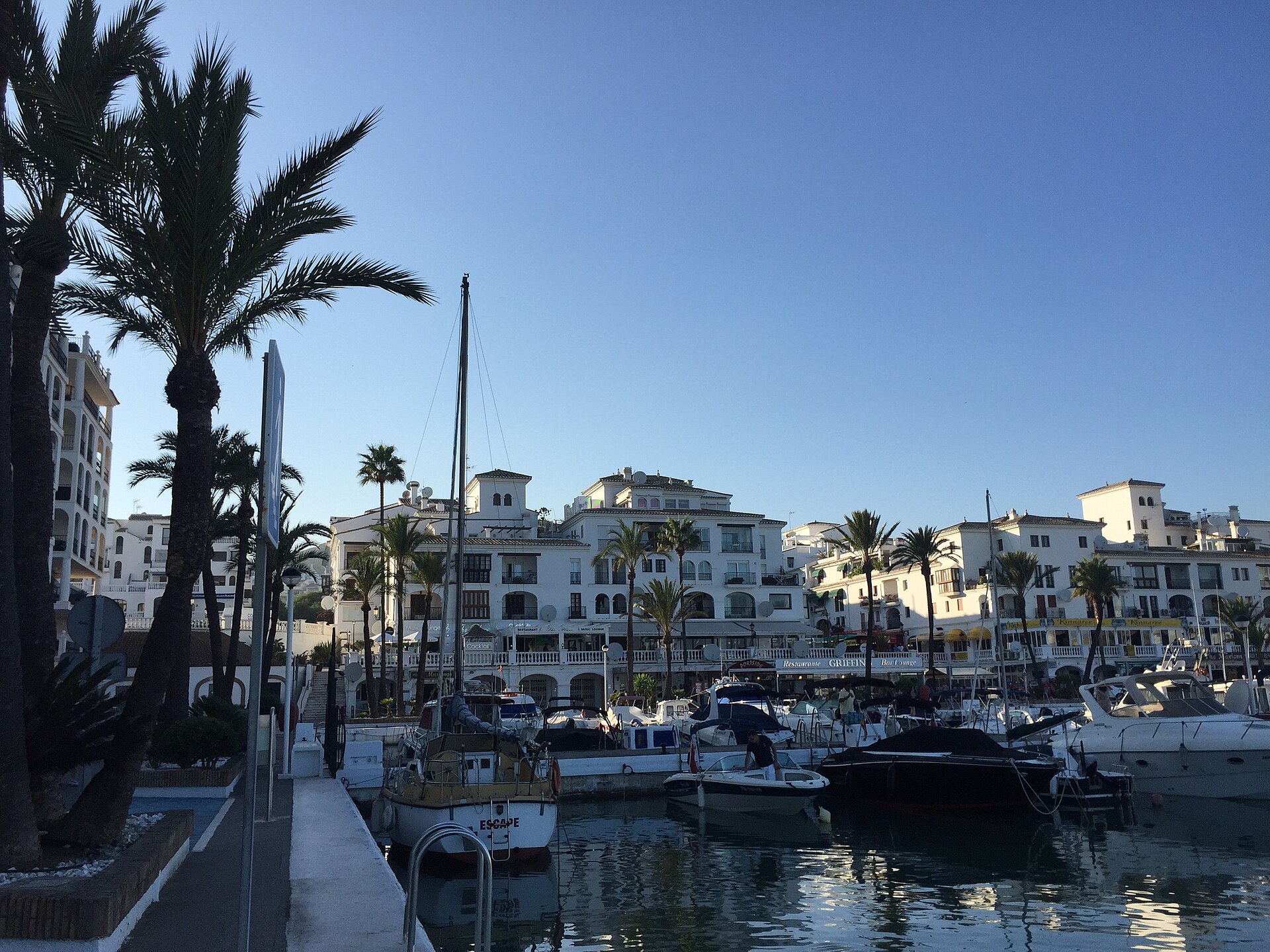
Puerto de la Duquesa, October 2016. Photo: Andalusien Aktuell, Wikimedia Commons, CC BY-SA 4.0. No newer free photo was available.
Torre de la Chullera and Punta Chullera
At the western edge of the coast stands the Torre de la Chullera. Marbesol describes it as a 16th-century watchtower on the headland of the same name. Pirates were the threat, and the tower gave the warning.
Beside the headland lies the Punta Chullera beach. Hoteles.net gives it 850 m of length and a width of 5 to 20 m. Trendencias says the landscape here turns wilder than in Sabinillas or La Duquesa.
Wikipedia also notes the Torre almenada de la Duquesa as another coastal tower, and Komoot lists it among the historic sites. We did not find opening or access details for either tower, so treat them as sights to view from outside.
The Senda Litoral Coastal Path
The Senda Litoral is a coastal path project that links Manilva with Nerja. Hoteles.net gives its length as 180 km. Andalucía.org describes it as running from the Balcón de Europa in Nerja to the Castillo de la Duquesa in Manilva.
In Manilva, the path runs between Sabinillas and Punta Chullera, according to Hoteles.net. It uses the promenade, wooden walkways and quieter beaches. Andalucia.com adds that the stretch for Casares and Manilva starts at the Torre de la Sal headland and passes the Sabinillas promenade and the castle.
The same site says the path continues almost complete to Urbanización Playa Paraíso. For the exact distances, see the table of disagreements below.
Baños de la Hedionda: Roman Sulphur Baths in Casares
The Baños de la Hedionda sit beside the Manilva river, but Marbesol says they lie just inside the municipality of Casares. They are a listed Bien de Interés Cultural. A local legend, repeated by El Debate, links the sulphur water to Julius Caesar. We treat that as a legend and not as proof.
El Español reported on 24 July 2026 that the Casares town hall regulates access to the baths building in the 2026 high season. That season ran from 20 June to 6 September. The paper says the hall issues at most 24 entries per hour, and each person can book two places.
Reservations are free and go through Eventbrite, according to the same report. The opening hours were 12:00 to 19:00 on weekdays and until 20:00 at weekends. Moreover, the outdoor pools stayed open to bathers at any time without a booking, and taking mud from the baths is banned.
We found no source for the rules outside the high season. Therefore, check with the Casares town hall before you travel. Our guide to things to do in Casares covers the rest of that village.
Walks Inland: The Utrera Gorge and the Vineyards
A walking route on Visit Andalucia starts and finishes at the Puerto de la Duquesa. It passes Manilva village, the Roman baths and the Utrera gorge, and it returns through Sabinillas. The page does not state the length in the part we read.
A walking blog from 2020 describes the approach to the baths. It mentions the smell of sulphur, an old stone bridge and the chapel of San Adolfo. The same blog says spring and autumn are the best seasons for the gorge.
Expedia describes a route that starts at Los Llanos, north-east of the village. It crosses limestone walls called canutos and ends at the baths. We did not walk any of these routes, so confirm the distance, the surface and the signs with the town hall.
Manilva Village, Santa Ana Church and Muscat Wine
Marbesol says the highlight of the old quarter is the church of Santa Ana, where the town’s patron saint is venerated. It dates the church to the 18th century. Komoot says the 17th and 18th centuries, so the date is not settled.
Wine is the other draw. Marbesol says Muscat of Alexandria grapes grow here without irrigation and go into a local Muscat wine. Wikipedia adds that the grapes also make raisins.
The town’s tourism site lists a wine route, three wineries and an interpretation centre for the vineyards, known as CIVIMA. The wineries are Bocanegra, Manilva and Nilva. We could not confirm any opening hours or prices, so call before you go.
Eating and Drinking in Manilva
Marbesol says the cooking looks to the sea, with fresh fish and seafood in the marina and in Sabinillas. It also points to Muscat wine and grapes from the vineyards. Barceló’s guide mentions fried anchovies and Andalusian-style squid on the seafront.
Trendencias describes a mix of land and sea on the table. However, none of these sources names a verified restaurant with prices or a rating we could check. For that reason, this guide lists no restaurants.
Our advice: eat on the Sabinillas promenade for espetos, then try the marina for a sit-down fish lunch. Order the Muscat wine by the glass first, because it is a sweet style and not to everyone’s taste.
A Manilva Travel Guide to the Festival Calendar
Manilva keeps a full festival calendar. Wikipedia lists the Three Kings cavalcade, Carnival, Holy Week, an international festival, San Juan and the summer fiestas. We list the main dates below, and we mark which ones have a confirmed 2026 date.
| Festival | Timing | Source |
|---|---|---|
| Three Kings cavalcade | 5 January (2027 programme not seen) | Wikipedia |
| Carnival | Around the start of Lent | Wikipedia |
| Holy Week | Processions at Easter; Easter Sunday is 28 March 2027 | Wikipedia |
| International Festival | Around the end of May | Wikipedia |
| San Juan | Summer solstice bonfires and fireworks | Wikipedia |
| Virgen del Carmen | Sea procession on 16 July in Sabinillas and El Castillo | Marbesol |
| Santa Ana | 26 July | Marbesol |
| August fair | 6 to 10 August in 2026 | Festivales de España |
| San Luis de Sabinillas | 25 August | Car-rental town page |
| Vendimia | 5 and 6 September in 2026 | Festivales de España |
The Vendimia Grape Harvest Festival
The Vendimia is Manilva’s signature event. Marbesol says it features grape treading, the first must, a grape offering and a contest for the heaviest bunch. It adds that the provincial council has declared it of tourist interest.
Festivales de España, an events aggregator, lists the 2026 edition for 5 and 6 September. It names a Mass and a procession of the Virgen de las Viñas, and a riders’ parade. It also lists grape treading in the Plaza de la Vendimia and performances of flamenco and verdiales.
Euro Weekly News reported on 2 September 2026 that Sunday was the main day, known as the Domingo Rociero. The same aggregator says the 2025 treading took place at 19:00 on 6 September. If the pattern holds, the 2027 festival would fall on 4 and 5 September. That is our inference, and not an announcement.
When to Follow This Manilva Travel Guide
We did not source climate data for Manilva, so we do not quote temperatures. Instead, we tie the seasons to dated facts. The beach season matters most for Sabinillas, and the Blue Flag covers the bathing season.
For the Roman baths, the Casares town hall ran its regulated high season from 20 June to 6 September in 2026. In contrast, a walking blog recommends spring and autumn for the Utrera gorge. For the castle, pick a weekday, because the listing names none at the weekend.
For culture, September brings the Vendimia and August brings the fair. Winter offers the Three Kings cavalcade on 5 January, according to Wikipedia, but we have not seen the 2027 programme.
One-Day Manilva Travel Guide Itinerary
This plan is ours, and it follows the sourced hours. The museum closes at 15:00 on weekdays, so the castle comes first. Everything else flexes around the beach.
| Time | Stop | Why |
|---|---|---|
| 09:00 | Castillo de la Duquesa and museum | Listed hours start at 8:00 on weekdays |
| 10:30 | Roman remains beside the castle | Baths, salting factory and necropolis |
| 11:30 | Walk the promenade to Sabinillas | Part of the Senda Litoral |
| 13:30 | Lunch on the Sabinillas seafront | Espetos and fried fish |
| 15:00 | Beach time at Sabinillas | Lifeguards and showers listed |
| 18:00 | Evening at Puerto de la Duquesa | Marina terraces |
Manilva With Children, Dogs and Limited Mobility
Andalucía.org tags the castle as suitable for families and lists parking. Sabinillas beach has adapted access and playgrounds, according to a car-rental firm’s beach page. A tourism post also mentions the Parque del Duque and the Villa Matilde park.
We found no sourced rule about dogs on Manilva’s beaches, so ask the town hall. In the photos we used, the castle shows cobbled courtyards and stone stairs. Therefore, ask the museum about step-free access before you bring a pushchair or a wheelchair.
Manilva Travel Guide: Three Ways to Plan Your Visit
The sources suggest three kinds of day, so pick the one that fits your mood. Each plan uses only the places and hours we cited above. Also, each one starts at the castle or the coast, because those sit closest together.
The history day. Start at the Castillo de la Duquesa on a weekday, because the museum closes at 15:00. Then walk through the Roman remains beside it. If you still have energy, take the promenade towards Sabinillas, since Andalucia.com says it links the castle with the river. Finally, eat on the seafront and leave the beach for another trip.
The beach day. Choose Sabinillas first, because a car-rental firm’s beach page lists lifeguards, showers and toilets there. Then, if you want a quieter stretch, move towards Punta Chullera, which Trendencias describes as wilder. When the sun drops, head to the marina for the terraces.
The wine and baths day. Drive inland to Manilva village, then look at the church of Santa Ana. Next, call one of the three wineries before you go, because we found no opening hours. If you visit in summer, book the Hedionda building first, since entry in the 2026 high season needed a free reservation. Otherwise, the outdoor pools are the simpler option, because El Español says they stayed open without a booking.
Manilva Travel Guide for Autumn and Winter
Most sources focus on summer, so winter planning takes more care. Still, the facts we have point to a few clear options.
The castle listing names no seasonal change, so the weekday hours are our best guide. Likewise, the promenade needs no ticket, and the Senda Litoral stretch runs along it. The Blue Flag covers the bathing season, so check the signs if you plan to swim. Meanwhile, the Hedionda high season ended on 6 September in 2026, and we found no later rules.
Then look at the calendar. The Three Kings cavalcade falls on 5 January, and Holy Week follows at Easter, which is 28 March 2027. However, we have not seen either 2027 programme. So ask the town hall in December, and treat the dates as provisional.
Meanwhile, the wine side of Manilva does not stop when the festival ends. The three wineries and the interpretation centre appear on the town’s tourism site all year, but we saw no seasonal hours. Therefore, call ahead before a winter drive inland. If a winery is closed, the village and the church of Santa Ana still make a short stop. Besides, the Roman remains beside the castle sit outdoors, so a dry winter morning works well there. We have not tested that, so it remains our suggestion and not a sourced fact.
Pairing Manilva With Casares and Gibraltar
Marbesol says the beach and the village combine easily with trips to Casares or Gibraltar. We did not find drive times for either, so use a route planner. Because the Baños de la Hedionda lie in Casares, a bathing visit already crosses the boundary. So, if you want a second stop, the baths and the old village of Casares fit together. In contrast, Gibraltar needs its own plan, since we sourced nothing about the crossing.
Also, the Senda Litoral links Manilva with the next stretch of coast. Andalucia.com groups Casares and Manilva into one stretch of 8 km, so a longer walk is possible in principle. However, the sources disagree on the distance, so treat it as a rough guide.
Where the Sources Disagree
Sources on a small town often differ by a few hundred metres or a year. We list the clearest conflicts here. In each case, we say which figure we used.
| Topic | What the sources say | What we used |
|---|---|---|
| Sabinillas beach length | 1,700 m (Hoteles.net), 1,900 m (Inspain.org), almost 2 km (car-rental page) | A range of 1,700 to 1,900 m |
| 2026 Blue Flag beaches | Sabinillas and Las Gaviotas (El Español, Marbesol); Sabinillas only (one car-rental blog) | Two beaches plus the marina |
| Senda Litoral through Manilva | 8 km for Casares and Manilva (Andalucia.com); 7.3 km (car-rental page); a 2.4-mile trail past Torre de la Sal (Komoot) | No single figure; the routes differ |
| Independence from Casares | 1795 (Wikipedia); 1796 (car-rental page); late 18th century (Marbesol) | Late 18th century |
| August fair dates | Second week of August around 15 August (Wikipedia); 6 to 10 August 2026 (Festivales de España) | 6 to 10 August for 2026 |
| Santa Ana church date | 18th century (Marbesol); 17th and 18th centuries (Komoot) | Both, flagged as unsettled |
| Tourist office | At the marina, Edificio Mikonos (tourism site home page); in Villa Matilde in the centre (listings site) | Unconfirmed; ask the town hall |
What Is Confirmed and What Is Not
Confirmed by at least one dated or official source: the castle date of 1767, free entry and weekday hours as listed by Andalucía.org, the 2026 Blue Flag for Sabinillas, the Vendimia in the first weekend of September, and the 2026 high-season rules at the Baños de la Hedionda.
Not confirmed: the 2027 festival dates, the Three Kings programme for 2027, the Christmas 2026 programme, castle closures on public holidays, weekend museum hours, the Hedionda rules outside the high season, weekly market days, winery hours and any restaurant list or prices.
How to Check the Facts Before You Go
Because this guide rests on desk research, a few quick calls will save you a wasted trip. We list the questions that matter most, and we say who can answer them.
- Ask the museum whether it opens at weekends, since the listing names only weekdays.
- Ask the Casares town hall about the Hedionda baths outside the high season, because we found no rules.
- Call the wineries for their hours and prices, because we could not confirm either.
- Weekly market days need a question to the town hall, since the sources give none.
- The tourist office location also needs a check, because two sources disagree.
Also, check the date on any source you read. A 2016 photo, a 2020 walking blog and a 2024 marina report all appear in this guide, so each one needs a second look. Then, if a figure matters to your plan, confirm it with the venue itself.
Practical Tips for This Manilva Travel Guide
These tips are ours. They rest on the facts above, and we have not tested them on the ground.
- Bring a car, because the village, the gorge and the baths lie inland.
- Visit the castle on a weekday morning, before the 15:00 close.
- Book the Hedionda building in advance if you travel in summer.
- Carry water and sun protection on the gorge walk.
- Check the Blue Flag on arrival, and ask the lifeguards about conditions.
- Go to the Vendimia on the Sunday if you want the main day.
If you stay longer, read our guide to the new golden miles of the western coast.
For diving and snorkelling along this coast, see our dive and snorkel guide. For living nearby, our Sotogrande living guide is the closest match. Finally, our page on getting to Marbella explains the airport side of the trip.
Frequently Asked Questions About Manilva Travel Guide
Where is Manilva?
Manilva is the westernmost municipality in Málaga province, next to Cádiz, according to Marbesol.
How far is Manilva from Málaga airport?
Marbesol gives 94 km by road, or around an hour on the AP-7 toll motorway.
Is the Castillo de la Duquesa free to visit?
Andalucía.org lists free entry, Monday to Friday, 8:00 to 15:00. The listing is undated, so confirm first.
Does Manilva have Blue Flag beaches in 2026?
Yes. Marbesol and El Español name Sabinillas and Las Gaviotas for 2026, and Marbesol adds the marina.
Can you swim at the Baños de la Hedionda?
El Español says the outdoor pools stayed open to bathers without a booking in the 2026 high season. Rules outside it are unconfirmed.
When is the Manilva Vendimia festival?
The first weekend of September. Festivales de España lists 5 and 6 September for 2026.
How long is the Senda Litoral through Manilva?
Sources differ. Andalucia.com gives 8 km for Casares and Manilva together, and a car-rental page gives 7.3 km.
What is Manilva known for?
The 1767 castle, Roman remains, Muscat wine, the long Sabinillas beach and the marina, according to the sources we read.
Is Manilva a good day trip from Marbella?
We think so, but we found no sourced drive time from Marbella, so use a route planner.
The Bigger Picture
Manilva shows how the Costa del Sol looks beyond its famous names. It keeps Roman remains, vineyards and a working seafront within a small area. For a neutral overview of its history and festivals, read the Manilva entry on Wikipedia.
Looking for a home on the western Costa del Sol?
Our team can guide you from the first visit to the keys. Explore LUXO Estates
Related Reading
- Things to Do in Casares 2026: Village, Beaches, Baths
- Estepona Old Town: Flowers, Murals and Squares Guide
- White Villages Near Marbella: Worth the Detour?
- Best Day Trips from Marbella 2026: 10 Destinations Ranked
Image credits: the cover uses a photo of the Castillo de la Duquesa by CarlosVdeHabsburgo, Wikimedia Commons, CC BY-SA 4.0. The three photos in the article are credited under each image.