Ronda Travel Guide 2026: Bridge, Old Town and Arab Baths
This Ronda travel guide covers the town on the gorge, about 54 km inland from Marbella. It explains the bridges, the old town, the bullring, the Arab baths, the wine and the food. Every figure has a named source, and we say clearly when a fact is unconfirmed.
Checked on 13 November 2026.
Quick Answer
Ronda is the best day trip inland from Marbella if you want drama, history and good food in one place. The official Andalucía guide puts it 54 km from Marbella. Plan at least a full day for the Puente Nuevo, the old town, the Arab Baths and the bullring.
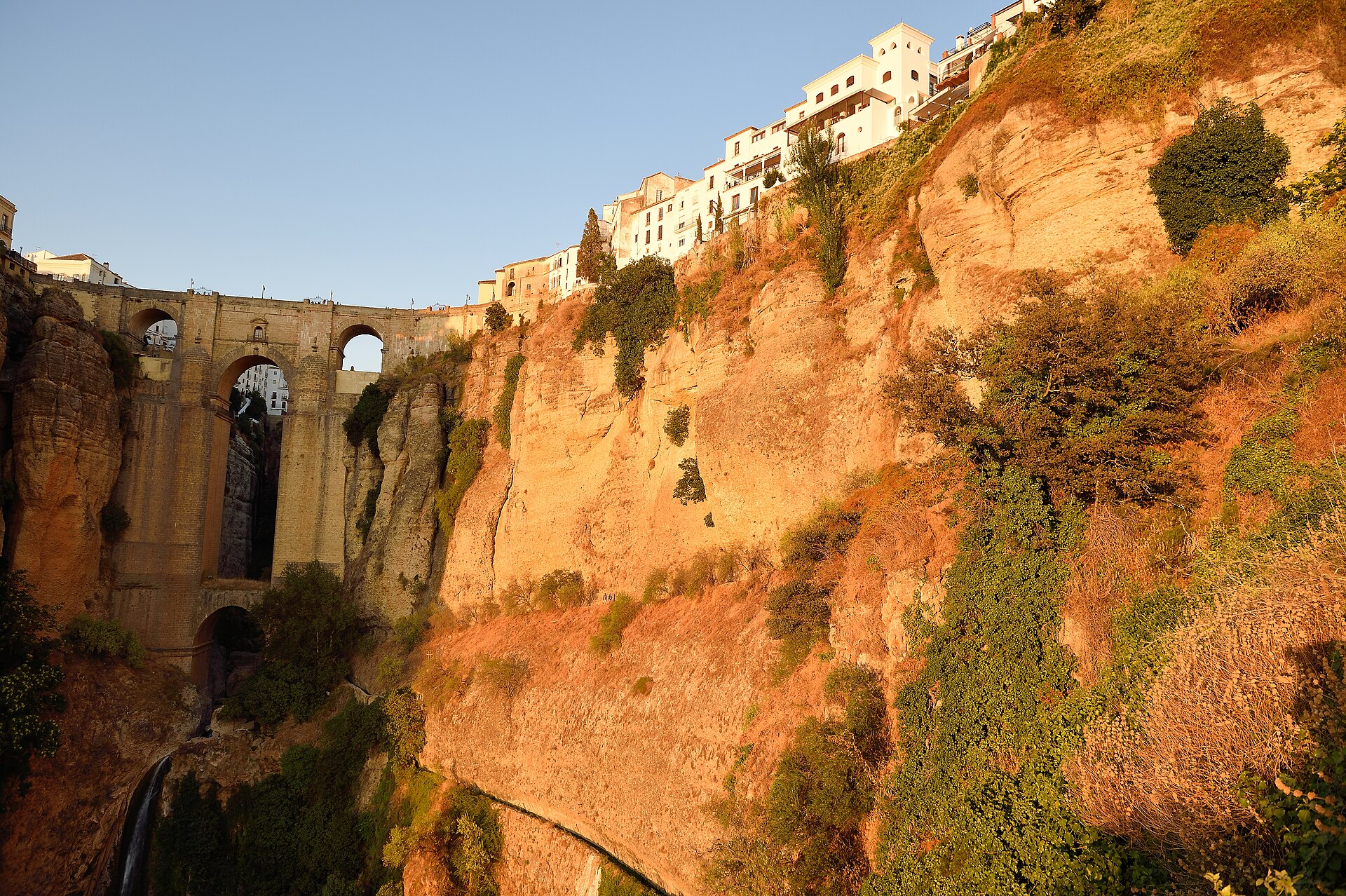
Puente Nuevo over the Tajo gorge. Photo: Tim Adams, CC BY 3.0, via Wikimedia Commons.
Ronda Travel Guide: The Short Version
Any Ronda travel guide starts with the gorge. Ronda sits on a cliff split by a deep gorge called El Tajo. Three bridges cross it. The newest and tallest, the Puente Nuevo, is the image most people know.
In practice, the town has two halves. On one side of the gorge lies the old town, called La Ciudad. The newer Mercadillo district lies on the other, with the bullring and most shops.
For a visitor from the coast, this Ronda travel guide boils down to three things. First, see the bridge and the views. Next, walk the old town and visit the Arab Baths. Finally, eat well and, if you like wine, book a winery.
| Key fact | Detail | Source |
|---|---|---|
| Distance from Marbella | 54 km | Official Andalucía guide (October 2020) |
| Distance from Málaga airport | 110 km | Official Andalucía guide (October 2020) |
| Population | 33,671 (2025) | Wikipedia, citing INE |
| Altitude | About 750 m | Wikipedia |
| Main sight | Puente Nuevo, completed 1793 | Wikipedia; official guide |
How We Researched This Ronda Travel Guide
First, we read the official pages that still work. The Junta de Andalucía publishes the Arab Baths page. The Real Maestranza publishes the bullring hours and prices. Also, the regional tourism board publishes a practical city guide, dated October 2020.
Next, we used Wikipedia for history and numbers. We also read spain.info for the Casa del Rey Moro gardens. One independent local site, Ronda Today, helped with museums, and we label it.
However, the town’s own tourism website refused automated reading, which limits any Ronda travel guide written from a distance. So some museum hours in this guide come from older or secondary pages, and we mark them. In short, treat every price as a guide, not a promise.
Ronda at a Glance: Gorge, Bridges and Two Towns
The official guide describes the Tajo as about 120 m deep, cut by the Guadalevín river. Wikipedia describes it as more than 100 m deep. An older promotional page says more than 150 m, so the depth depends on where you measure.
Three bridges join the two sides. The Puente Nuevo is the tallest. The Puente Viejo dates from the 17th century, according to the official guide. Lowest of all, the Puente Romano, also called the Arab bridge, sits near the baths.
In addition, the guide lists a mean annual temperature of about 15 °C and about 2,700 hours of sun a year. Because the town sits high, it feels cooler than the coast. Bring a jacket from November to March. That last tip is ours.
| Bridge | What the sources say | Best for |
|---|---|---|
| Puente Nuevo | Built 1751–1793; about 120 m above the canyon floor (Wikipedia) | Classic views and photos |
| Puente Viejo | 17th century (official guide) | Quieter crossing |
| Puente Romano / Árabe | Lowest bridge, beside the Arab Baths (Junta) | Walk down to the baths |
The Puente Nuevo: Ronda’s Famous Bridge
Wikipedia says work on the Puente Nuevo began in 1751 and ended in 1793. It credits the architect José Martín de Aldehuela. The bridge stands about 120 m above the canyon floor, by the same account.
Every Ronda travel guide sends you here first. Most visitors see it from three angles. First, walk across it at street level. Next, look at it from the viewpoints on the cliff edge. Finally, take the paths below the town for the full height, if you are fit enough.
An older promotional page lists an interpretation centre inside the bridge, at 2.50 euros. That page dates from January 2020, so the price and hours are unconfirmed for 2026. Ask at the tourist office on Paseo Blas Infante.
Our advice: come early in the morning or at sunset. The stone glows at both times, and the crowds are thinner in the morning.
Photographers should also look for the view from below. Many classic pictures of the bridge are taken from the paths under the cliff, not from the road. Allow extra time for the walk back up, because it is steep.
Ronda Travel Guide to the Old Town (La Ciudad)
The old town sits south of the gorge. For this Ronda travel guide, the official sights list is the starting point. It includes the Colegiata de Santa María de la Encarnación, the Palacio de Mondragón and the Casa del Gigante. It also lists the Puerta de Almocábar and the Arco del Cristo.
Meanwhile, Wikipedia mentions the Palacio del Marqués de Salvatierra, which opens irregularly. It also mentions the Casa del Rey Moro and its water mine.
We suggest a loop. Start at the Puente Nuevo, walk down to the Arab Baths, then climb back through the old gates. That route is ours and takes a few hours with stops.
| Old town sight | Type | Source |
|---|---|---|
| Colegiata de Santa María de la Encarnación | Church | Official guide |
| Palacio de Mondragón | Municipal museum | Official guide |
| Casa del Gigante | Historic house | Official guide |
| Puerta de Almocábar | City gate | Official guide |
| Palacio de Salvatierra | Palace, irregular opening | Wikipedia; official guide |
The Arab Baths (Baños Árabes)
For history lovers, the baths are the highlight of this Ronda travel guide. The Junta de Andalucía calls them one of the best-preserved hammams in the Iberian Peninsula. They date from the 13th to the 14th century. They sit on Calle San Miguel, beside the Puente Árabe and the Arroyo de las Culebras.
Inside, you walk through cold, warm and hot rooms. The hydraulic system is almost intact, according to the Junta. Excavations in 2009 and 2010 found a latrine and the old reception staircase. A small audiovisual room shows how the baths worked.
The Junta lists general entry at 4.50 euros. Groups, students under 26 and retirees pay 3 euros. Residents, under-14s and people with disabilities enter free. Capacity is limited to 25 people at a time.
Ronda Today, an independent local site, says to allow 30 to 45 minutes. It also warns that the walk down from the centre is steep. Therefore, wear good shoes.
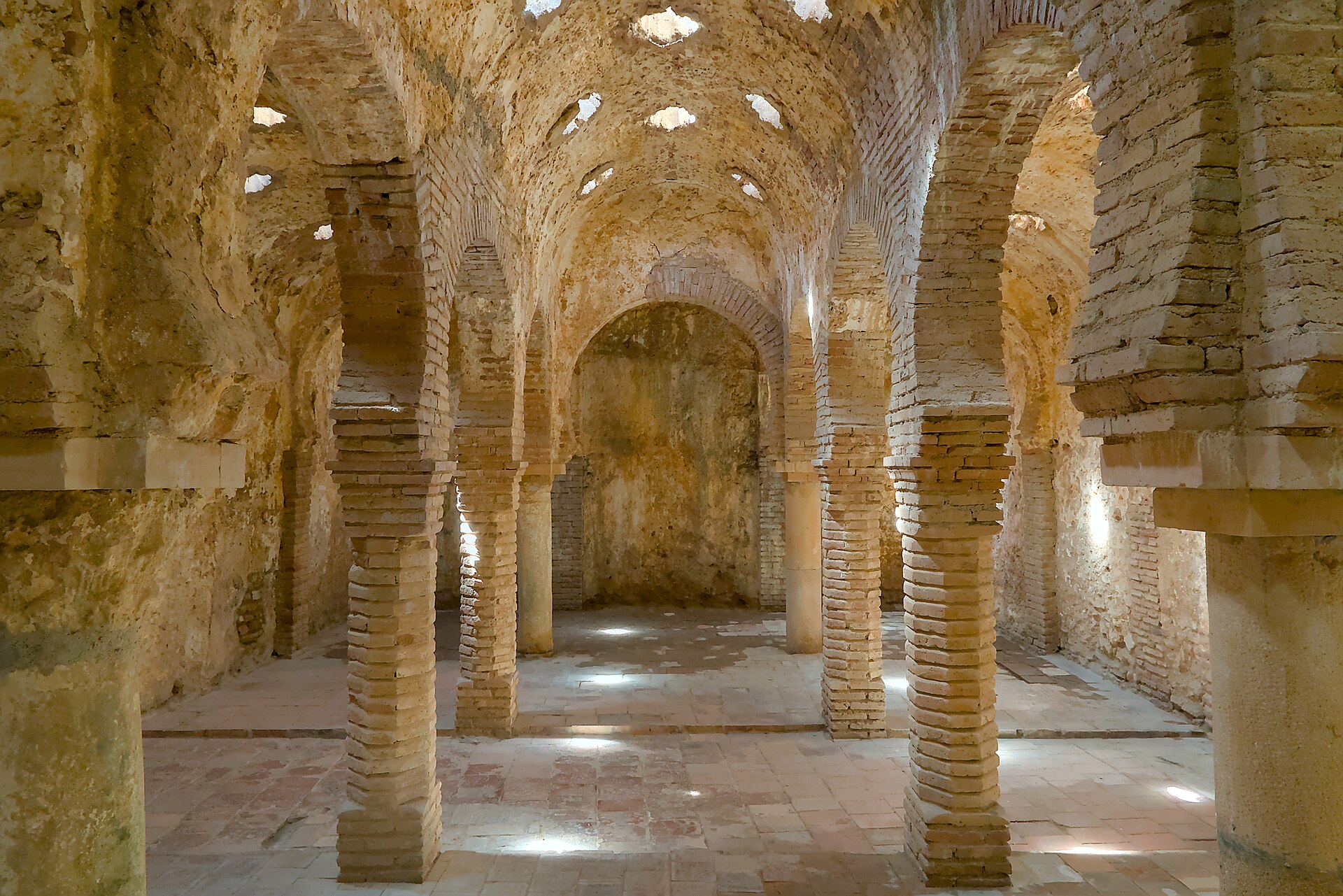
Inside the Arab Baths of Ronda. Photo: Benjamin Smith, CC BY-SA 4.0, via Wikimedia Commons.
Arab Baths Hours and Prices
Hours change by season. The table below copies the official Junta schedule. The baths close on 1 and 6 January, 1 May, and 24, 25 and 31 December.
| Season | Tuesday to Friday | Monday and Saturday | Sunday and holidays |
|---|---|---|---|
| November to February | 9:30–18:00 | 10:00–14:00 and 15:00–18:00 | 10:00–15:00 |
| March to June, September, October | 9:30–19:00 | 10:00–14:00 and 15:00–18:00 | 10:00–15:00 |
| July and August | 9:30–20:00 | 10:00–14:00 and 15:00–18:00 | 10:00–15:00 |
Ronda Today prints a single 9:30–20:00 slot for Tuesday to Friday. That differs from the Junta’s seasonal hours, so we follow the official page.
The Bullring and the Real Maestranza
No Ronda travel guide is complete without the bullring. The Real Maestranza de Caballería de Ronda runs it, along with its museum. Its English page says the institution was founded in 1573, at the request of Philip II. It describes itself as a non-profit cultural body with a riding school, archives and a library.
Wikipedia dates the bullring to 1784 and calls it one of the oldest and best-preserved in Spain. The official Andalucía guide gives 1785 instead. We show both in the table of disagreements below.
Visitors can tour the ring and the museum every day. The official page lists audio guides in 13 languages, including English, French, German and Chinese. It also shows a notice about consolidation works on the bullring. So some areas may look different during your visit.
| Ticket | Price as listed (EUR) | Source |
|---|---|---|
| General with audio guide | 12 | Real Maestranza, visit page (modified 13 October 2026) |
| General | 10 | Same page |
| Group (15 to 30 people) | 8 | Same page |
| Months | Opening hours as listed |
|---|---|
| November to February | 10:00–18:00 |
| March and October | 10:00–19:00 |
| April to September | 10:00–20:00 |
In addition, the Real Maestranza publishes printed guides and a city map as PDF files on its visit page. Downloading them before you travel helps you plan, especially if mobile data is weak in the old streets.
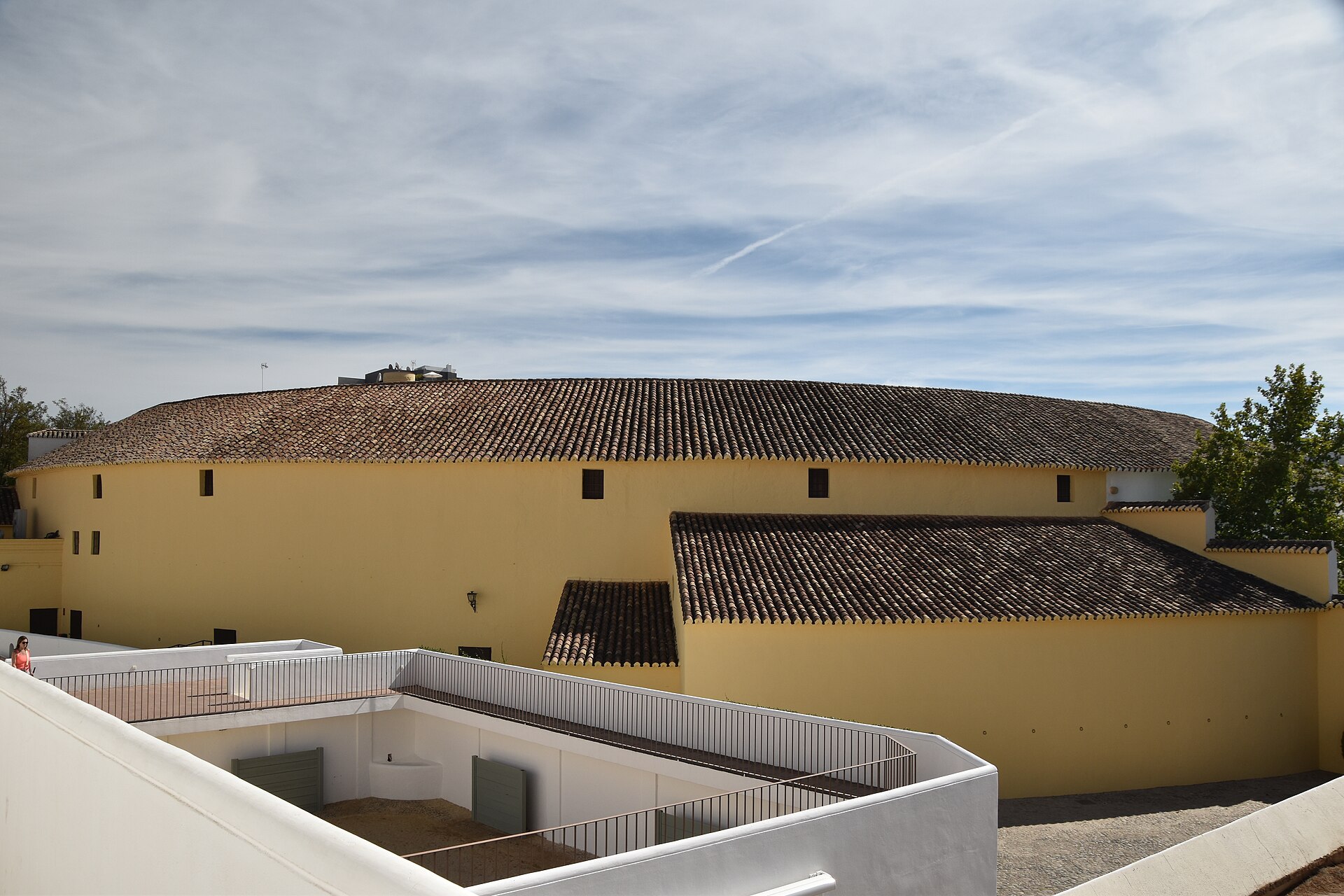
The Plaza de Toros de Ronda. Photo: Thomas Dahlstrøm Nielsen, CC BY 4.0, via Wikimedia Commons.
Casa del Rey Moro and the Water Mine
Spain’s national tourism portal, spain.info, lists the gardens at Cuesta de Santo Domingo 9. It says the house reopened to visitors after more than thirty years closed. The gardens and their main feature, the Mina, have been partly restored.
The Mina is a stairway cut down to the river. Wikipedia describes it as the Water Mine. The gardens have three terraces with rose beds designed by Jean Claude Forestier, dated to 1912 by Wikipedia.
However, spain.info says the palace itself is still closed. It lists no hours or prices. So check the official site, casadelreymoro.org, before you go. Our advice: the stairs are long and steep, so skip them if you have knee trouble.
Museums in Ronda
Beyond the big sights, this Ronda travel guide also covers several small museums. The official guide names the Palacio de Mondragón, which houses the municipal museum. It also names the Museo Joaquín Peinado and the Museo del Bandolero.
Ronda Today lists the Lara Museum, a hunting museum, a wine museum and the bullring museum. Importantly, it says the bandit museum has closed in Ronda and moved to El Borge. An older 2020 page still lists it in Ronda, so treat it as closed until you confirm.
| Museum | Price seen | Date and type of source |
|---|---|---|
| Palacio de Mondragón (municipal) | 3.50 euros | 2020, promotional page; unconfirmed |
| Museo Lara | 4 euros (3.50–4 on Ronda Today) | 2020 and 2026; secondary |
| Museo Joaquín Peinado | 4 euros; free under 14 | Secondary sources |
| Bullring museum | 10 euros (12 with audio guide) | Official, October 2026 |
| Museo del Bandolero | Reported closed and moved to El Borge | Ronda Today, 2026 |
Ronda Travel Guide to Wine and Wineries
In this Ronda travel guide, wine is one of the best reasons to stay longer. An older promotional page places Ronda’s wines under the DO Sierras de Málaga, in the Serranía de Ronda subzone. The official guide also mentions local wine and a young wine called mosto de la sierra.
The regional tourism board lists Bodega Descalzos Viejos. It sits in a 16th-century Trinitarian convent on the edge of the Tajo, with terraced gardens and a spring. Visits are small-group tours, booked in advance, in Spanish and English. The listing shows Monday to Friday, 9:00 to 15:00, with weekends and holidays closed. It lists no price.
For more estates and booking tips, read our guide to the vineyards near Ronda. Our advice: never drive after a tasting. Book a driver or stay the night.
| Winery facts | As listed | Source |
|---|---|---|
| Building | 16th-century Trinitarian convent | andalucia.org |
| Visits | Small groups, booked ahead, Spanish and English | andalucia.org |
| Hours | Monday–Friday 9:00–15:00 | andalucia.org (listing from October 2024) |
| Price | Not listed | Ask the winery |
Ronda Today, the independent local site, also lists a small wine museum in town, at Bodegas La Sangre. We could not confirm its hours, so ask the tourist office before you plan a visit around it.
What to Eat in Ronda
The official guide lists a long menu of local dishes. They include rabo de toro, an oxtail stew. Migas con chorizo, gazpacho a la serrana and conejo a la rondeña also feature. Game dishes appear too.
For dessert, the guide names yemas del Tajo, a sweet egg-yolk treat, and convent sweets. These are traditional names from the guide. We did not taste them or review any restaurant.
Our advice: eat your main meal at lunch, Spanish style. Many kitchens close between lunch and dinner. In addition, book ahead on weekends and holidays.
| Dish | What it is |
|---|---|
| Rabo de toro | Oxtail stew |
| Migas con chorizo | Fried breadcrumbs with chorizo |
| Gazpacho a la serrana | Mountain-style gazpacho |
| Conejo a la rondeña | Ronda-style rabbit |
| Yemas del Tajo | Egg-yolk sweets |
Getting There: The Ronda Travel Guide Route From Marbella
The official guide puts Ronda 54 km from Marbella and 110 km from Málaga airport. It gives no driving times, and we did not test the road. So plan generous time, because the mountain road has many bends.
Wikipedia says Ronda has a railway station, opened in 1892, on the line to Algeciras. It also mentions a direct train from Madrid twice a day. We could not confirm 2026 timetables, so check Renfe before you travel.
For flights and transfers to the coast first, see our guide on getting to Marbella. Our advice: park on the edge of the town and walk in, because the centre is busy.
| Option | What we know | Status |
|---|---|---|
| Car from Marbella | 54 km | Official guide; time not stated |
| From Málaga airport | 110 km | Official guide |
| Train | Station since 1892; Madrid service twice daily | Wikipedia; check Renfe |
| Bus | No data obtained | Unconfirmed |
When to Visit Ronda
This Ronda travel guide works all year, although each season feels different. Summer days are long, so the Arab Baths and the bullring stay open later. Winter is quieter and cooler, and opening hours are shorter.
Events shape the calendar. The official guide lists Carnival in February, Holy Week and the Real Feria de Mayo. It also lists the Feria de Pedro Romero in September. The Pedro Romero fair includes the Goyesca bullfight, according to the guide.
Separately, the Real Maestranza lists a free public lecture on Thursday 19 November 2026 at 19:00. Entry is free until the room is full. For more winter ideas on the coast, read about winter in Marbella.
| Season | What to expect (our view) | Sourced detail |
|---|---|---|
| Spring | Mild, green, busy at Easter | Holy Week and May fair (official guide) |
| Summer | Hot days, long opening hours | Baths open to 20:00 on weekdays (Junta) |
| Autumn | Fair season, then calm | Pedro Romero fair in September |
| Winter | Cool, quiet, shorter hours | Bullring 10:00–18:00 (Real Maestranza) |
Ronda Travel Guide for Families
This part of the Ronda travel guide is for parents. Ronda suits children who like big views and short walks. The bridges and viewpoints need no tickets. The Arab Baths are free for under-14s, according to the Junta.
Still, the cliffs are steep, and some paths have no railings. Keep a close eye on young children near the edge. The Casa del Rey Moro stairs are long. So is the walk down to the baths, so carry small children or skip them. That is our advice.
For a gentler village day out with kids, compare a trip to Istán near Marbella.
A One-Day Ronda Plan From Marbella (Ours)
This part of the Ronda travel guide is our own plan, not an official route. Leave Marbella early, park, and walk to the Puente Nuevo for morning light.
Next, cross into the old town and walk down to the Arab Baths. Check the opening time first, because it changes by season and day.
Then climb back up for lunch. In the afternoon, visit the bullring and its museum. Finally, end with a drink at a viewpoint before the drive home.
| Time (our plan) | Stop | Note |
|---|---|---|
| 09:30 | Puente Nuevo and viewpoints | Free |
| 11:00 | Old town and Arab Baths | 4.50 euros general (Junta) |
| 13:30 | Lunch | Book ahead on weekends |
| 16:00 | Bullring and museum | 10 euros general (Real Maestranza) |
| 18:00 | Sunset viewpoint, then drive back | Allow time for the mountain road |
One more point on timing. We expect weekends to draw more day-trippers than weekdays. So a Tuesday or Wednesday visit is likely to feel calmer. That view is ours, not a sourced fact.
Staying the Night in Ronda
Our Ronda travel guide favours an overnight stay. A day trip works, but a night lets you see the bridge lit up and the town without coach groups. Wikipedia mentions the Hotel Reina Victoria, opened in 1906, where the poet Rilke stayed.
We did not compare hotels or check prices, so we name no favourites. Instead, look for a room with a gorge view and free parking. Also ask whether the hotel sits in the old town or the Mercadillo. The walk between them crosses the bridge.
Our advice: a weekday night in spring or autumn often feels calmest. However, avoid fair weeks if you want quiet.
Beyond the Town: Acinipo, Caves and Mountains
The official guide places Acinipo, a Roman site with a theatre, 12 km from Ronda. Its map labels the Sierra de las Nieves 13 km away. Wikipedia adds that Ronda lies within the Sierra de las Nieves National Park.
Wikipedia also mentions the Cueva de la Pileta nearby. We did not check its booking rules, so contact the cave before you go.
Moreover, Ronda is a good base for the white villages. Our guide to white villages near Marbella compares several of them, and our Casares guide covers one in detail.
| Nearby place | Distance or note | Source |
|---|---|---|
| Acinipo Roman site | 12 km | Official guide |
| Sierra de las Nieves | 13 km (map label) | Official guide |
| Cueva de la Pileta | Nearby; distance not given | Wikipedia |
Practical Tips: Our Ronda Travel Guide Advice
Our Ronda travel guide tips are simple. First, wear shoes with grip. The streets are steep and the paths to the baths and the Mina are uneven.
Second, carry cash and a card. Third, check closures on public holidays, because several sights shut on key dates. The Arab Baths, for example, close on 1 and 6 January.
Finally, visit the tourist office. The official guide lists it on Paseo Blas Infante, phone 952 169 311. The municipal office phone is 952 187 119.
| Tip | Why |
|---|---|
| Grippy shoes | Steep streets and stairs |
| Start early | Fewer crowds at the bridge |
| Check holiday closures | Several sights shut on key dates |
| Book wineries ahead | Descalzos Viejos takes bookings only |
Ronda Travel Guide: History in Brief
Ronda’s past is long. The official guide traces three early names. Arunda was the Celtic settlement, Acinipo the Roman town nearby, and Izn-Rand Onda the Arab city. Each left a mark on the town you see today.
Later, Ronda drew writers and artists. The official guide names the poet Rilke, plus Gautier and Mérimée. It also mentions Orson Welles and Ernest Hemingway.
Wikipedia adds detail. Hemingway spent summers in the old town, and a scene in For Whom the Bell Tolls is thought to draw on events in Ronda. Welles’s ashes lie on the rural property of the bullfighter Antonio Ordóñez, by the same account.
Wikipedia also notes that Blas Infante showed the Andalusian flag in Plaza del Socorro in 1918. Therefore, the square has a special place in Andalusian history.
| Period or figure | Link to Ronda | Source |
|---|---|---|
| Arunda | Celtic settlement | Official guide |
| Acinipo | Roman town, 12 km away | Official guide |
| Izn-Rand Onda | Arab city | Official guide |
| Rilke | Stayed at the Hotel Reina Victoria | Wikipedia |
| Hemingway and Welles | Long links to the town | Wikipedia; official guide |
Ronda Travel Guide to Crafts and Shopping
Ronda has a long craft tradition. The official guide lists carved wood furniture, called muebles rondeños, as well as ceramics and wrought iron. It also names leatherwork, cork, esparto and cane.
Most shops sit in the Mercadillo district, near the bullring. We did not review any shop, so we name none here.
Our advice: look for pieces made in the Serranía de Ronda, and ask the maker how to ship larger items. Also, keep receipts for anything valuable.
Ronda Travel Guide Costs at a Glance
Ronda can be cheap or expensive, depending on how you spend the day. The viewpoints and bridges are free. Paid sights cost a few euros each, according to the sources below.
| Item | Price as listed | Source and date |
|---|---|---|
| Arab Baths, general | 4.50 euros | Junta de Andalucía |
| Arab Baths, reduced | 3 euros | Junta de Andalucía |
| Bullring, general | 10 euros | Real Maestranza, October 2026 |
| Bullring with audio guide | 12 euros | Real Maestranza, October 2026 |
| Puente Nuevo centre | 2.50 euros | 2020 promotional page; unconfirmed |
| Museo Lara | 3.50–4 euros | Secondary sources |
As a result, a full sightseeing day with two paid sights costs well under 20 euros a person in entry fees. That sum is our calculation from the listed prices.
Ronda Versus Other Day Trips From Marbella
Ronda is not the only day out from the coast. Nerja offers caves and beaches. Casares and Istán offer small white villages closer to Marbella.
Choose Ronda for monuments and big views. Choose a smaller village for a slow lunch and a short walk. For the coast, our Nerja day trip guide covers the caves.
| Day trip | Best for (our view) | Distance from Marbella |
|---|---|---|
| Ronda | Gorge, bridges, history, wine | 54 km (official guide) |
| Nerja | Caves and beaches | See our Nerja guide |
| Casares | Castle walk, white village | See our Casares guide |
| Istán | Reservoir and quiet walks | See our Istán guide |
Walking and Accessibility in Ronda
Ronda is a walking town, but it is not flat. The old town has slopes and cobbles. The paths down to the Arab Baths and the Mina are steep.
By contrast, the bridge and the main streets of the Mercadillo are easier. So visitors with limited mobility can still enjoy the views from the top. We did not check step-free access at any sight, so ask each venue.
Our advice: plan short loops with rests, and take a taxi between the two halves if the hills are too much.
Ronda Travel Guide Checklist Before You Go
A little planning makes the day smoother. Use this checklist from our Ronda travel guide the evening before you leave Marbella.
First, check the weather, since the town is often cooler than the coast. Next, confirm the opening hours of the sights you want, because they change by season and by day. Then book any winery visit, as the one we found takes bookings only.
Also, decide where to park and where to eat lunch. Finally, save the tourist office phone numbers in case plans change.
| Before you go | Done? |
|---|---|
| Check the weather in Ronda | |
| Confirm Arab Baths and bullring hours | |
| Book a winery visit | |
| Plan parking and lunch | |
| Save tourist office numbers |
Tourist Information in Ronda
Two offices can help. The regional office sits on Paseo Blas Infante, according to the official guide, with phone 952 169 311 and the email otronda@andalucia.org.
The municipal office uses phone 952 187 119 and the email informacion@turismoderonda.es. Its website is turismoderonda.es, although we could not read it for this guide.
Our advice: ask the office about the current museum prices, the fair dates and any combined ticket. Because sources disagree on a museum pass, a quick question there can save money.
Where the Sources Disagree
Several details clash between sources. We list them so you can decide which to trust.
| Topic | Source A | Source B | Our reading |
|---|---|---|---|
| Depth of the Tajo | About 120 m (official guide) | More than 100 m (Wikipedia); more than 150 m (2020 promotional page) | Varies by measuring point |
| Bullring date | 1784 (Wikipedia) | 1785 (official guide) | Either year appears in sources |
| Bullring entry | 10 euros (Real Maestranza, 2026) | 8 euros (2020 promotional page) | Use the official 2026 price |
| Arab Baths weekday hours | Seasonal: 18:00, 19:00 or 20:00 close (Junta) | 9:30–20:00 all year (Ronda Today) | Use the Junta hours |
| Bandit museum | Listed in Ronda (2020 page) | Closed, moved to El Borge (Ronda Today, 2026) | Treat as closed |
| Museum pass | No all-in-one pass (Ronda Today FAQ) | A ‘Ronda Tourist Ticket’ is mentioned on the same site | Ask the tourist office |
What Is Confirmed and What Is Not
Confirmed on official pages
The Arab Baths hours, prices and closing days come from the Junta de Andalucía. The bullring hours and prices come from the Real Maestranza, updated in October 2026. Finally, the distances come from the official Andalucía guide.
Not confirmed
We could not confirm 2026 hours or prices for the Palacio de Mondragón or the Museo Lara. The same applies to the Puente Nuevo interpretation centre and the Casa del Rey Moro. We also could not confirm train or bus timetables, or the 2026 fair dates.
Frequently Asked Questions About This Ronda Travel Guide
How far is Ronda from Marbella?
The official Andalucía guide puts Ronda 54 km from Marbella. It gives no driving time, so allow extra time for the mountain road.
Is Ronda worth a day trip?
Yes, in our view. The Puente Nuevo, the old town and the Arab Baths fit into one full day from Marbella.
How much does the Ronda bullring cost?
The Real Maestranza lists 10 euros general entry and 12 euros with an audio guide. Groups of 15 to 30 pay 8 euros each.
When are the Arab Baths open?
Hours change by season. From November to February the Junta lists Tuesday to Friday 9:30 to 18:00. Check the full table above for other days.
How old is the Puente Nuevo?
Wikipedia says building began in 1751 and finished in 1793. It credits the architect José Martín de Aldehuela.
How deep is the Tajo gorge?
The official guide says about 120 m. Other sources give different figures, so treat it as an estimate.
Can I visit a winery in Ronda?
Yes. The regional tourism board lists Bodega Descalzos Viejos, with booked tours on weekdays from 9:00 to 15:00.
Is Ronda good for children?
Yes, for views and short walks. However, the cliffs are steep, so keep children close to you near the edges.
What should I eat in Ronda?
The official guide lists rabo de toro, migas con chorizo and Ronda-style rabbit. For dessert, it names yemas del Tajo.
Is the Casa del Rey Moro open?
Spain’s tourism portal says the gardens and the Mina are open after restoration, but the palace is still closed. It lists no hours.
The Bigger Picture
Ronda shows a different Andalusia from the coast: older, higher and quieter. The Wikipedia article on Ronda covers its long history, from Roman times to the writers who loved it. So a day here adds depth to any stay in Marbella.
Living on the Costa del Sol?
LUXO Estates helps buyers and renters find homes from Marbella to the mountains.
Image credits: cover photo of the Puente Nuevo by Tim Adams, CC BY 3.0, via Wikimedia Commons, edited with text. Inside photos as captioned.