
Horse Riding in Marbella 2026: The Complete Guide to Stables, Treks & Lessons
Andalusia’s relationship with horses runs centuries deep — the Pura Raza Española, the region’s own breed, has shaped local culture from the ferias and romerías of inland villages to the classical dressage arenas of the Costa del Sol’s most prestigious estates. Horse riding in Marbella inherits all of that history while adding a distinctly international, luxury-inflected layer: beach treks at dawn with dolphins passing offshore, mountain trails through pine forest with views stretching to Africa, and equestrian centres polished enough to host national show jumping championships. This guide ranks the stables and riding centres actually worth booking in 2026, verified for current operating status, with real ratings, honest caveats where they exist, and the specific detail that separates a genuinely well-run yard from one simply trading on a scenic backdrop.
This guide goes further than a simple ranked list. It covers the deep cultural history behind Andalusian horsemanship, the specific breeds you’ll encounter and what makes each distinct, honest pricing across every format of ride, how to choose between beach and mountain riding, what to look for when booking children’s lessons, seasonal riding considerations, and how Marbella’s equestrian scene compares to other riding destinations across Spain and Europe.
A Short History of Horses in Andalusian Culture
The horse’s place in Andalusian identity predates Marbella’s modern tourism economy by centuries. The Pura Raza Española developed across this region through selective breeding that stretches back to the Iberian horses recorded by Roman writers, refined over generations specifically for the qualities that still define the breed today — compact power, a naturally elevated, elegant gait, and a famously willing, people-oriented temperament that made it equally suited to cattle work, military use and classical dressage. This is not a breed invented for tourism; it is one of Europe’s oldest documented horse breeds, and riding one in its home region carries genuine cultural weight.
That deep tradition shows up constantly in the rhythms of rural Andalusian life beyond any single stable’s marketing — the region’s ferias, most famously Seville’s, are built substantially around horses and traditional dress; romerías, the pilgrimage-festivals that mark much of the Andalusian calendar, frequently involve mounted processions stretching back generations. Marbella’s modern equestrian centres, whatever their level of polish or international clientele, sit within this considerably older cultural continuity rather than existing apart from it, and several of the yards covered in this guide specifically draw on Andalusian riding tradition and horsemanship passed down through generations of local families.
The vaquero tradition — Andalusian cattle-working horsemanship, historically centred on managing herds across the region’s wide open countryside — also shaped the specific riding style still taught at several yards covered in this guide, a technique built around a single-handed rein grip and close, responsive communication between horse and rider rather than the two-handed, more formal approach common in Northern European riding schools. Visitors with prior riding experience elsewhere in Europe often notice this stylistic difference immediately, and several reviews across this guide’s research specifically mention instructors introducing this traditional Spanish technique as part of a lesson, treating it as a genuine point of cultural interest rather than simply a regional quirk.
|
Quick Answer Ranch Siesta Los Rubios in Estepona is the most consistently praised stable near Marbella, with a perfect 5.0-star rating across 95 reviews and a genuinely warm, family-run atmosphere. For a beach ride specifically, Marbella Horses at Pony Club Villacana is the strongest, most convenient option, while riders wanting the most polished, prestigious setting should look to the Marbella Club Equestrian Centre in Benahavís. |
|
Did You Know? The Marbella Club Equestrian Centre’s main arena is built with a mixture of sand and geo-textile specifically engineered to protect horses’ hooves — one of only two arenas of this exact specification anywhere in Spain, and the most modern of its kind in Europe when it was completed. |
Why Marbella Is a Genuine Equestrian Destination
Andalusia is, in a real sense, one of the birthplaces of European horsemanship — the Pura Raza Española developed here over centuries, and classical Spanish riding technique remains internationally respected among dressage professionals today. That deep cultural foundation gives Marbella’s equestrian scene a substance that a purely tourist-driven “ride a horse on your holiday” offering elsewhere might lack.
What makes the area specifically compelling is geography: the coastline gives way within minutes to genuinely dramatic mountain terrain, meaning a rider can trot along sand with the Mediterranean at one stirrup in the morning and canter through pine forest with sweeping views toward the Rif mountains of Morocco by afternoon. Few equestrian destinations anywhere in Europe offer that specific combination of beach and mountain riding within such a short radius of one town.
The concentration of equestrian talent drawn to this specific area over recent decades adds a further, less visible dimension to Marbella’s strength as a riding destination. International instructors — several of this guide’s entries specifically employ trainers with formal certification from riding schools in Ireland, the UK and elsewhere — have settled here alongside Marbella’s broader international resident community, bringing training methodologies and teaching standards that blend productively with deep local Andalusian horsemanship rather than displacing it. This cross-pollination of international coaching expertise and native equestrian tradition is, in its own way, a genuinely distinctive feature of Marbella’s riding scene compared to more purely traditional or more purely international riding destinations elsewhere.
🐎 The Ranked List
1. Ranch Siesta Los Rubios — Best Overall, Most Consistently Loved
A perfect 5.0-star rating across 95 reviews in Estepona, roughly 10 minutes from Marbella, and the standout choice on this list for anyone wanting a genuinely warm, family-run yard rather than a purely commercial operation. Reviewers describe an intimate, welcoming stable where the same visitors return year after year, with specific, repeated praise for the calibre of instruction — Polish trainer Paulina, who completed her instructor training in Ireland, draws detailed praise for teaching “at a very high level” while remaining patient and accommodating with nervous beginners and children.
The ranch’s signature “Saddle Up” experience, a 90-minute introduction designed specifically for complete beginners, draws consistent praise for genuinely engaging even reluctant or anxious first-timers, while experienced riders can head straight out for 2-2.5 hour mountain treks on Spanish and Arabian horses. The horses themselves are repeatedly described as exceptionally well-trained, patient and calm — “perfect companions for everyone, regardless of experience level,” as one reviewer put it.
💡 Insider tip: Open mornings run periodically for anyone who used to ride and wants to ease back in — check current dates directly, since these informal drop-in sessions are a genuinely low-pressure way to meet the horses and team before committing to a full booking.
What distinguishes Ranch Siesta Los Rubios most clearly from larger, more commercially oriented yards is the sheer consistency of return visits described in its reviews — multiple reviewers describe returning across several separate holidays specifically to ride at this ranch again, treating it less as a one-off tourist activity and more as a genuine annual tradition. One reviewer specifically credits the “intimate stable with a friendly, family atmosphere” for making them feel at home from their very first visit, a sentiment echoed closely across the majority of this yard’s reviews.
📍 Bda. el Velerín, 115, 29689 Estepona, Málaga · 📞 +34 645 41 56 97 · 💰 Mid-range · Best for: beginners, families, a genuinely warm and personal atmosphere
2. Hacienda Monte Marina — Best for Mountain Views and Organic Estate Grounds
A 4.7-star rating across 109 reviews at a genuinely beautiful estate in Los Altos de los Monteros, east of central Marbella, combining horse treks with organic gardens and sweeping mountain views. Reviewers consistently praise guide Dorota by name for detailed, engaging tours that go beyond simply leading a horse along a trail — several mention learning about the estate’s organic produce and horse care alongside the riding itself, and one reviewer with over 30 visits to the yard speaks to a level of loyalty that says as much as any single review could.
The honest caveat: one detailed negative review describes a frustrating experience with an unstaffed meeting point at the booked start time and no receipt provided for a cash payment — worth confirming payment and meeting arrangements clearly in advance, particularly for an early-morning booking, even though this appears to be an isolated incident against a broader pattern of strong reviews.
The estate’s organic growing operation adds a genuinely distinct dimension to a visit here compared to a purely riding-focused yard — guides specifically walk visitors through the gardens as part of the tour, connecting the horses’ care and feeding to the broader rhythm of the working estate. For visitors who enjoy understanding the fuller context behind a ride, rather than simply mounting up and following a trail, this additional layer of engagement is a genuine point of difference from the more purely transactional trail rides available elsewhere.
📍 Urbanización los Altos de los Monteros, 29602 Marbella, Málaga · 📞 +34 650 30 30 80 · ⏰ Daily 8:00–20:00 · 💰 Mid-to-premium · Best for: mountain scenery, organic estate grounds, longer guided tours
3. Marbella Horses at Pony Club Villacana — Best for Beach Riding
A 4.6-star rating across 60 reviews, and the clearest choice on this list for anyone specifically wanting a beach ride rather than a mountain trek. Run by Kim and Max, reviewers describe genuinely personalised lessons and treks — one visitor specifically credits the team with treating them as a valued regular despite only being in Marbella for a month, and multiple reviews describe early-morning beach rides with dolphins visible offshore, a detail that turns a simple trek into a genuinely memorable experience.
The pony club side of the operation draws specific praise for children’s progress — one reviewer’s six-year-old daughter is described as thriving under Max and Kim’s instruction after making little progress at a previous club, a meaningful signal for parents specifically researching riding schools for young children. The honest caveat: one review describes a rushed, somewhat impersonal experience during a busier period, worth bearing in mind if booking during peak season specifically.
The dawn beach ride specifically deserves emphasis as this yard’s signature offering — several reviews describe the specific combination of calm early-morning water, quiet sand before the beach fills with sunbathers, and genuine wildlife sightings as a uniquely memorable experience that a later, busier ride simply cannot replicate. For visitors willing to set an early alarm during a Marbella stay, this appears to be the single most consistently magical individual experience described anywhere across this guide’s research.
📍 C. Nilo, 2, 29688 Playa del Sol Villacana, Málaga · 📞 +34 610 70 45 73 · ⏰ Mon–Fri 8:00–20:00, Sat 8:00–15:00, Sun closed · 💰 Mid-range · Best for: beach rides, children’s pony club lessons, personalised instruction
4. Centro Hípico El Repique — Best for Convenience to Central Marbella
A 4.6-star rating across 130 reviews, and the most centrally located option on this list, making it especially convenient for anyone staying in or near central Marbella without a car. The centre runs a genuine riding school alongside trail rides, with classes for children and adults at every level from complete beginner through to competition, plus a dedicated pony club for young children just starting out.
The honest caveat, and it’s a genuine one: several reviews describe inconsistent guide engagement, with one visitor noting a guide who “spent most of her time on her phone” and gave little instruction on horse commands, and another describing minimal English communication during a trail ride. Against this, other reviewers describe genuinely great instructors and beautiful mountain scenery, alongside a well-regarded Argentine steakhouse on site — this is a centre where requesting a specific, well-reviewed guide by name matters more than at some other entries on this list.
The centre’s on-site restaurant deserves a specific mention as a genuine point of difference from the other entries on this list — several reviewers specifically combine a ride with a meal afterward, making El Repique a naturally complete half-day outing rather than requiring a separate trip elsewhere for lunch. This practical convenience, alongside the centrally located address, makes it a genuinely sensible choice for visitors without a car who still want mountain scenery without a long taxi journey out of town.
📍 Camino de los Altos, s/n, 29603 Marbella, Málaga · 📞 +34 637 00 45 47 · 💰 Mid-range · Best for: central location, riding lessons at all levels, combining a ride with dinner on-site
5. Marbella Club Equestrian Centre — Most Prestigious Setting, Premium Positioning
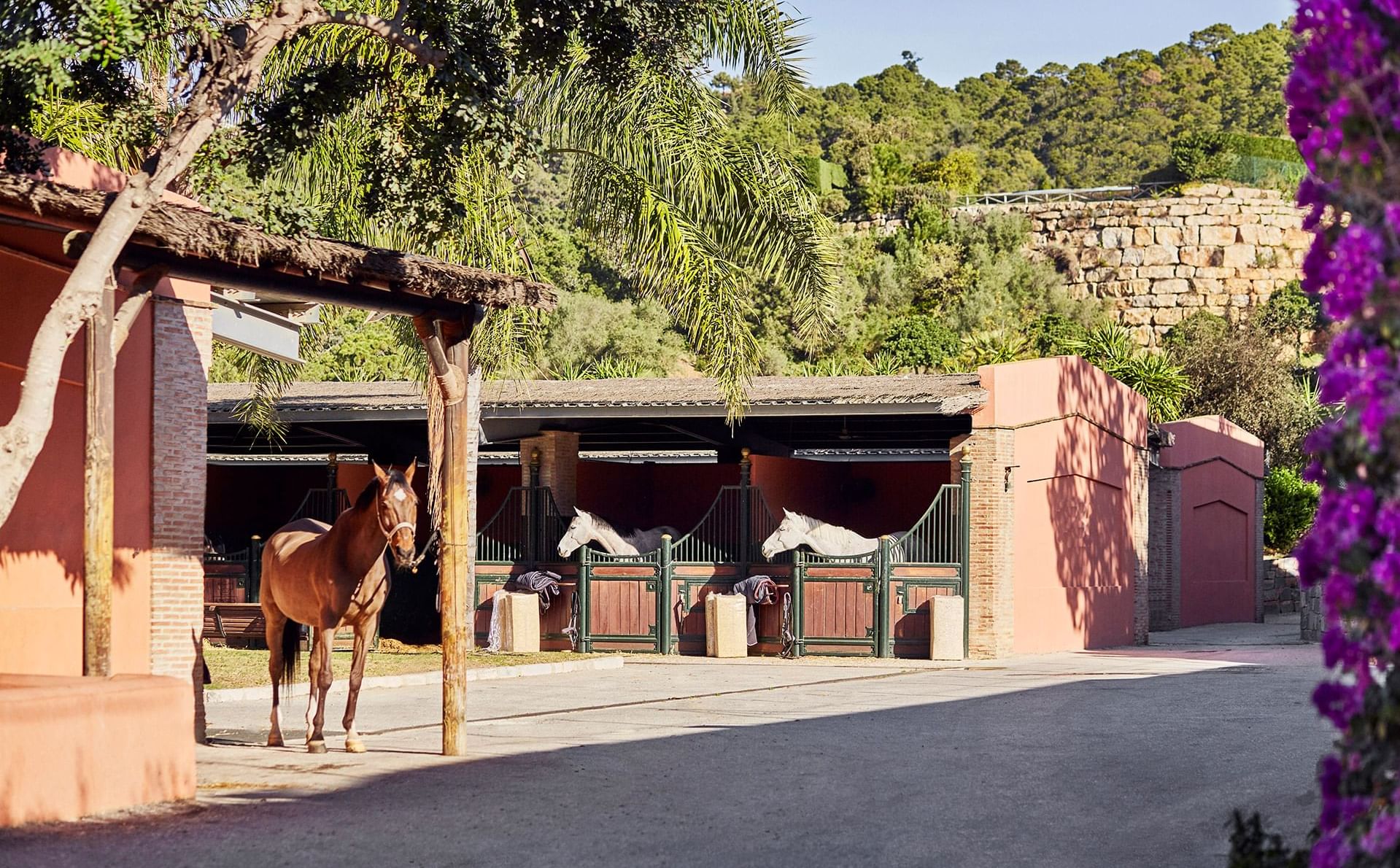
Part of the Marbella Club Golf Resort in Benahavís, roughly 20 minutes from central Marbella, and the clear choice on this list for anyone wanting the single most polished, prestigious equestrian environment on the Costa del Sol. Host of the Spanish Show Jumping Championships, the centre’s 36 large boxes with Monarch Victorian fronts house Arabian, Spanish, German and French horses, and its 4,500 square metre arena — built with a specialist sand and geo-textile mixture — was, at completion, the most modern of its kind in Europe.
Set in the elevated countryside of Benahavís, the centre’s location is a genuine part of its appeal — from its highest points, riders can see over 100 kilometres of Andalusian coastline and, on a clear day, a good part of the North African coast beyond it. Hacks and guided tours are available to hotel guests and visitors regardless of experience level, with riders first assessed in the arena to confirm they can safely manage their assigned horse before heading out onto the estate’s trails.
The centre’s origin story is worth understanding for context — it began as modest stables serving Marbella Club hotel guests wanting a casual hack during their stay, and has since grown into a genuinely world-class competition venue without losing that original, accessible hotel-guest offering. This dual identity means the same facility hosting Spain’s National Show Jumping Championship on one weekend can, the following week, offer a complete beginner their very first hack through the Benahavís countryside — a range few equestrian centres anywhere manage to sustain simultaneously.
💡 Insider tip: This is the premium end of Marbella’s equestrian scene, priced accordingly — book through the Marbella Club Golf Resort directly, and expect a more formal, resort-style experience than the smaller, family-run yards elsewhere on this list.
📍 KM 3.7, Carretera de Benahavís, Benahavís, Málaga · 📞 +34 952 88 06 08 · ✉️ reserv.golf@marbellaclub.com · 💰 Premium · Best for: a prestigious setting, competition-standard facilities, hotel-guest hacks and tours
Quick Guide: Horse Riding Near Marbella by Priority
| If you want… | Go to | Why |
|---|---|---|
| The most consistently excellent, warmest experience | Ranch Siesta Los Rubios | 5.0 stars, family-run, genuinely patient instruction |
| Sweeping mountain views and organic estate grounds | Hacienda Monte Marina | Detailed guided tours, loyal repeat clientele |
| A beach ride with a real chance of seeing dolphins | Marbella Horses (Villacana) | Dawn beach treks, strong children’s pony club |
| Central convenience without a car | Centro Hípico El Repique | Closest to central Marbella, on-site restaurant |
| The most prestigious, competition-grade setting | Marbella Club Equestrian Centre | Championship venue, elevated Benahavís countryside |
🤯 Things That Surprise First-Time Riders in Marbella
| Things that genuinely catch first-timers off guard
1. Cash is still the default payment method at many yards. Several of this guide’s entries specifically expect cash payment, and reviewers who received no receipt highlight why it’s worth confirming payment and cancellation terms clearly before a ride begins. 2. English fluency varies considerably between yards. The larger, more internationally staffed centres communicate easily in English, but several smaller or more traditional yards work primarily in Spanish — worth confirming in advance if language matters to your booking, especially for children’s lessons. 3. Beach riding and mountain riding are genuinely different experiences. A beach trek is flatter, calmer and more scenic in a coastal sense; a mountain trek involves real elevation, rockier terrain and a considerably more physical ride — choosing the right format for your fitness and confidence level matters more than picking based on scenery photos alone. 4. The individual guide matters as much as the stable’s overall reputation. Several of this guide’s strongest and weakest reviews for the same yard trace back to which specific guide led the ride — requesting a named guide based on recent reviews, where possible, is worth the extra step. 5. Booking windows shrink dramatically during peak season. Popular yards, particularly those with strong reviews and small guide teams, can book out considerably faster in July and August than the quieter shoulder-season months. |
Understanding the Pura Raza Española
Any serious guide to riding in Andalusia should say a word about the horses themselves. The Pura Raza Española, or PRE, is Spain’s own native breed — a compact, powerfully built horse historically prized for both classical dressage and working cattle, and instantly recognisable by its arched neck, thick mane and tail, and famously calm, willing temperament. Several of this guide’s stables specifically breed or prioritise PRE horses, and riding one is, for many visitors, a genuine part of the appeal of choosing Andalusia over any other European riding destination.
Arabian horses, also commonly found across this guide’s entries, bring a different set of qualities — renowned globally for stamina and a particularly intelligent, people-oriented temperament, making them well suited to the longer mountain treks several of these yards specialise in. German and French warmbloods, mentioned specifically in reviews for the Marbella Club Equestrian Centre, tend to appear more at the competition-focused end of this list, bred specifically for dressage and show jumping performance.
Understanding these breed differences matters practically, not just academically, when choosing where to ride — a PRE’s naturally calm, willing temperament tends to suit nervous beginners particularly well, which is part of why yards emphasising this breed, like several of this guide’s top entries, draw such consistent praise for beginner-friendly instruction. An Arabian’s stamina and forward-going nature, by contrast, tends to reward riders with a bit more existing confidence and experience, particularly on longer, more demanding mountain routes where sustained pace over several hours matters more than on a shorter, gentler beach trek.
What to Expect: Pricing for Horse Riding Near Marbella
Pricing across this guide’s entries varies considerably by format and duration, with beach and mountain treks generally priced by the hour and lessons priced per session. A standard one-hour trail ride typically runs €50-€60 per person, with longer 2-2.5 hour mountain treks running €100-€150. Beginner-specific introductory experiences, like Ranch Siesta Los Rubios’ 90-minute Saddle Up format, tend to sit in a similar range once instruction time is factored in.
Group size also meaningfully affects per-person pricing at several yards — smaller, more private groups generally command a premium over larger shared treks, given the guide’s attention is divided across fewer riders. For visitors specifically wanting a more personalised, unhurried experience, asking directly about private or small-group options, and the associated price difference, is worth doing before booking a standard shared trek by default.
| Experience | Approximate Price | Notes |
|---|---|---|
| Beginner introductory session (60-90 min) | €60-€90 | Includes basic instruction before riding |
| Standard trail ride (1 hour) | €50-€60 per person | Beach or lower mountain trails |
| Extended mountain trek (2-2.5 hours) | €100-€150 per person | More demanding terrain, experienced riders |
| Private or semi-private lesson | €40-€70 per session | Regular children’s or adult lessons |
| Luxury resort hack (Marbella Club) | Premium, quote on request | Priced considerably higher than independent yards |
Most yards expect cash payment, as noted earlier in this guide, and it’s worth asking directly about cancellation policy and what happens in case of poor weather before paying upfront, given at least one review across this guide’s research describes a payment dispute over an unclear arrangement.
Tipping conventions for guides follow a similar pattern to Marbella’s broader hospitality economy covered throughout LUXO’s companion guides — appreciated but not obligatory, with a modest tip of a few euros per person a reasonable gesture for a guide who provided genuinely attentive, informative instruction throughout a ride. Given how many of this guide’s strongest reviews specifically name and praise an individual guide, a tip acknowledging that specific, personalised effort is a meaningful way to recognise service that went beyond simply leading a horse along a fixed trail.
Package deals and multi-session discounts are worth asking about directly for anyone planning several rides during an extended Marbella stay, or for residents considering regular lessons — several yards across this guide’s research offer meaningful per-session savings for block bookings, similar to the pattern seen across Marbella’s wider fitness and wellness economy covered in LUXO’s other lifestyle guides.
Riding With Children: What to Look For
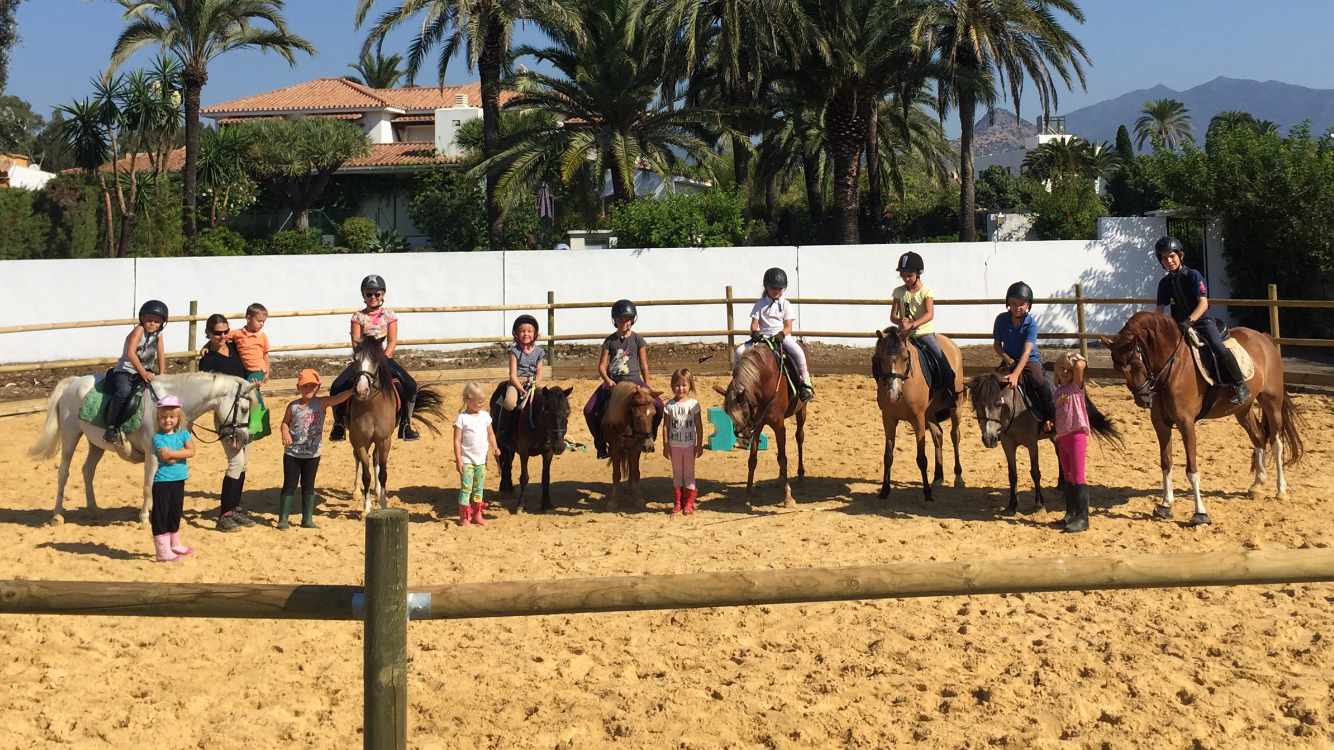
Several of this guide’s entries specifically cater to children through dedicated pony clubs, and the research behind this guide surfaced some genuinely important distinctions worth knowing before booking a young child’s first lesson. Marbella Horses’ pony club draws specific, detailed praise for a six-year-old’s rapid progress under patient, engaged instruction — exactly the kind of outcome worth seeking out directly through recent, detailed reviews rather than assuming any yard offering children’s lessons will deliver a comparably attentive experience.
Conversely, this guide’s research also surfaced a serious, detailed negative review concerning inadequate supervision and age-inappropriate equipment in a children’s class at one Estepona-area school — a reminder that safety standards for young children specifically deserve direct, careful questioning before booking, regardless of a yard’s overall star rating. Asking specifically about instructor-to-child ratios, safety equipment sizing, and how a school handles a nervous or reluctant young rider are all reasonable, important questions before committing a child to a series of lessons.
Age-appropriate pony sizing matters considerably more than many first-time parents realise — a child mounted on a horse too large for confident, secure control develops anxiety and poor habits far more easily than one matched to a genuinely appropriately sized pony, and the strongest children’s programmes across this guide’s research specifically maintain a range of pony sizes rather than putting every young beginner on the same animal regardless of age or size. Progression pathways are similarly worth asking about directly — the best children’s programmes, per this guide’s research, offer a clear sense of how a child advances from leading-rein basics through to independent walk, trot and eventually canter work, rather than leaving progress feeling arbitrary or unstructured.
Beach Riding vs. Mountain Riding: Which Suits You
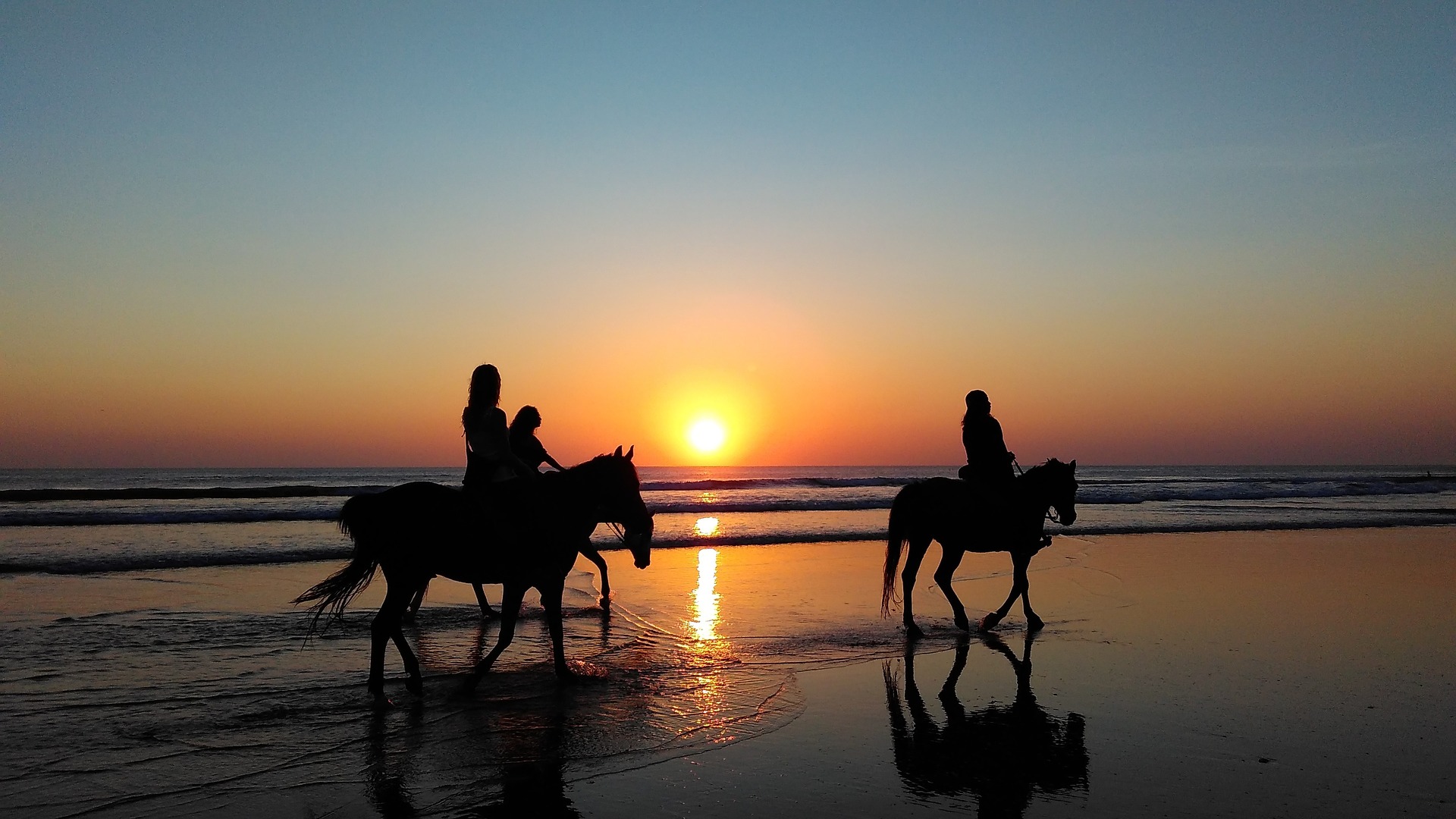
This guide’s entries split fairly evenly between beach-focused and mountain-focused riding, and it’s worth understanding the practical difference before choosing. Beach rides — Marbella Horses’ speciality — offer flatter, calmer terrain and a genuinely photogenic coastal backdrop, generally suiting beginners, families and anyone prioritising a relaxed, scenic experience over physical challenge. Early-morning beach rides specifically, before the beach fills with sunbathers, offer the best combination of calm conditions and a real chance of spotting dolphins offshore, as several reviewers across this guide’s research specifically describe.
Mountain treks — the speciality at Hacienda Monte Marina, Centro Hípico El Repique and the Marbella Club Equestrian Centre — involve genuine elevation change, rockier and more varied terrain, and correspondingly more physically demanding riding, generally better suited to riders with at least some prior experience or a good base level of fitness and confidence in the saddle. The reward is proportionate: sweeping views over the coastline and, from the highest points around Benahavís, toward the North African coast on a clear day.
For visitors genuinely torn between the two formats, several yards across this guide’s research offer some combination of both within a single longer route, or across separate bookings during a single Marbella stay — starting with a gentler beach ride to build confidence before attempting a more demanding mountain trek later in the trip is a genuinely sensible progression for anyone newer to riding who wants to experience both landscapes without overreaching on day one.
What to Wear and Bring for a Ride
Comfortable, closed-toe shoes with at least a small heel are the single most important practical requirement — trainers or sandals genuinely aren’t safe in stirrups, and a proper riding boot or a sturdy ankle boot is worth wearing or bringing even if a specific yard doesn’t enforce this strictly. Long trousers protect against saddle friction on longer rides, particularly the extended mountain treks covered earlier in this guide, and are worth choosing over shorts even on a hot day given several hours in the saddle.
Helmets are provided as standard at every reputable yard covered in this guide, and wearing one is worth insisting on regardless of experience level or how relaxed a specific ride might feel — a fall from horseback carries genuine injury risk that a properly fitted helmet meaningfully reduces. Sun protection matters considerably given Marbella’s climate specifically — sunscreen, a hat that fits securely under a riding helmet, and water for longer treks are all worth bringing, particularly for the extended mountain routes where shade is limited for significant stretches.
For anyone riding with long hair, tying it back securely before mounting up avoids both a practical annoyance and a genuine safety consideration, since loose hair can catch on tack or obscure vision at an inconvenient moment. Bringing a small amount of cash, given how many of this guide’s entries operate on a cash-payment basis as noted earlier, avoids any awkward last-minute scramble to find a card machine or ATM near a rural stable.
Camera or phone protection is worth a brief mention too, particularly for beach rides — a securely zipped pocket or a small waterproof pouch prevents an expensive accident if a horse decides to wade deeper into the surf than expected, a genuinely common occurrence on beach treks that catches unprepared riders off guard more often than most first-timers anticipate.
Horse Welfare: What Reputable Yards Look Like
This guide’s research surfaced a genuinely important theme worth addressing directly rather than glossing over — not every riding operation in the wider Marbella and Estepona area treats its horses to the same standard, and one specific review among this guide’s research described serious concerns about overwork and welfare at a stable outside this guide’s top five specifically because of those concerns. Knowing what genuine care looks like helps any visitor make an informed choice beyond simply comparing star ratings.
Signs of a well-run yard include horses that appear calm, well-fed and in good physical condition rather than visibly overworked or thin; guides who check in on horses’ wellbeing during a ride rather than pushing relentlessly toward a schedule; and a yard that limits how many consecutive rides a single horse takes in a day, particularly during Marbella’s intense summer heat. Every entry ranked in this guide’s top five was selected specifically because its reviews describe exactly this kind of visible, consistent care, and the honest caveats included for entries like Hacienda Monte Marina and Centro Hípico El Repique relate to service and communication issues rather than any concern about animal welfare specifically.
For visitors who care deeply about this issue and want to verify standards directly before booking, asking a yard specific questions — how many hours per day a given horse works, how often horses rotate or rest, and what veterinary care arrangements are in place — is entirely reasonable, and a reputable operation will generally answer these questions readily and specifically rather than deflecting with vague reassurance.
Rotational rest schedules, where individual horses work only a portion of available riding slots each day rather than being ridden continuously from opening to close, represent genuine best practice worth specifically asking about. A yard with a sufficiently large string of horses to rotate meaningfully is generally better positioned to protect individual animal welfare than a smaller operation running the same few horses on every available booking slot — though this doesn’t mean every small yard is problematic, simply that scale and rotation policy are both worth understanding directly rather than assumed from a yard’s general reputation alone.
La Zagaleta and Sotogrande: The Ultra-Exclusive Tier
Beyond the five stables ranked in this guide’s main list sit two further equestrian environments worth knowing about specifically for their exclusivity, even though they operate outside the general public booking model this guide otherwise focuses on. La Zagaleta Riding Club, situated within the private, gated La Zagaleta estate above Benahavís, offers personalised lessons and livery services exclusively to residents and members of the estate — a genuinely private club rather than a facility a visiting tourist could book directly, with access to riding trails winding through the estate’s own protected 900-hectare nature reserve.
Sotogrande, roughly 30 minutes west of Marbella toward Gibraltar, hosts one of the Costa del Sol’s largest dedicated equestrian complexes, with over 100 stable boxes, dedicated arenas for dressage, show jumping and warming up, a full cross-country track, and its own on-site veterinary clinic and farrier service. This scale of dedicated infrastructure — considerably larger than any single yard covered in this guide’s main ranking — reflects Sotogrande’s own long-established identity as a serious equestrian community in its own right, distinct from Marbella’s more scattered collection of smaller yards.
Daily care standards at La Zagaleta specifically reflect this ultra-exclusive positioning — stable cleaning occurs seven days a week including public holidays, with horses exercised on lead ropes twice weekly and given supervised freedom in exercise rings once weekly, a level of individualised daily attention considerably beyond what a standard commercial livery yard typically provides. For property buyers specifically drawn to this kind of dedicated equestrian lifestyle, access to facilities like these forms a genuine, tangible part of what a La Zagaleta or Sotogrande address delivers beyond the property itself.
For visitors or residents specifically drawn to this ultra-exclusive tier of Costa del Sol equestrian life — whether considering property specifically for its equestrian access, or simply curious about the top of this market — both La Zagaleta and Sotogrande represent a genuinely different scale and character of horse culture from the family-run yards and resort centres covered in this guide’s main rankings, worth understanding as a distinct category rather than directly comparable entries.
Seasonal Riding Considerations in Marbella
Marbella’s climate shapes horse riding here in ways genuinely worth planning around, much as it does for the outdoor activities covered across LUXO’s other Costa del Sol guides. Summer, particularly July and August, brings intense midday heat that affects both rider comfort and horse welfare — the reputable yards covered in this guide’s welfare section generally shift ride timing toward early morning or evening during peak summer specifically to protect horses from the most dangerous heat exposure, and booking a ride during these cooler windows is worth prioritising over a convenient but genuinely risky midday slot.
Spring and autumn offer close to ideal riding conditions — warm enough for a comfortable ride without the extreme heat risk of high summer, and with the Andalusian countryside at its greenest and most scenic following winter rainfall. Winter remains mild enough for comfortable riding on most days, though occasional wet weather can affect trail conditions on the more exposed mountain routes specifically, worth checking directly with a yard before a booking during the wetter winter months.
For visitors specifically planning a Marbella trip with horse riding as a genuine priority rather than an incidental activity, April, May, October and November generally offer the most reliably pleasant combination of comfortable temperatures and good trail conditions across every yard covered in this guide.
Wildflower season, typically peaking through March and April across the countryside surrounding several of this guide’s mountain-focused yards, adds a further seasonal dimension worth knowing about for anyone specifically drawn to scenic beauty alongside the riding itself — the Andalusian hills surrounding Benahavís and the Los Monteros area turn genuinely spectacular during this window, a detail several reviewers across this guide’s research specifically mention as elevating an already excellent ride into something considerably more memorable.
How Marbella Compares to Other Spanish Riding Destinations
Marbella’s equestrian scene is worth understanding relative to other major Spanish riding destinations, since the specific character of what’s available here differs meaningfully from other well-known Spanish horse country. Jerez de la Frontera, roughly two hours west, remains Spain’s most historically significant centre for classical Spanish riding specifically, home to the Royal Andalusian School of Equestrian Art and a considerably deeper concentration of professional dressage and classical training than Marbella’s more leisure-and-trekking-oriented scene offers.
Doñana and the wider Andalusian countryside further inland offer a different character again — vast, wild landscapes historically associated with traditional cattle-working horsemanship, genuinely distinct from Marbella’s coastal blend of beach trekking and resort-style riding. What Marbella offers that these other Andalusian riding destinations generally don’t is the specific, practical convenience of combining serious riding with a genuine beach-and-luxury-resort holiday within the same short trip — a rider can trek along sand in the morning and be back at a beachfront restaurant for lunch, a combination that a purely inland, horse-focused destination like Jerez cannot replicate.
Within the Costa del Sol specifically, Marbella and its immediate surroundings — Estepona, Benahavís, the Los Monteros area — represent the strongest concentration of accessible, well-reviewed riding options, with Sotogrande further west offering the largest dedicated equestrian infrastructure for anyone specifically prioritising scale and competition-level facilities over Marbella’s more intimate, varied collection of smaller yards.
Internationally, this specific combination of coastal leisure and genuine equestrian tradition places Marbella in a distinctive position among Mediterranean riding destinations — the French and Italian Rivieras, for comparison, offer beautiful coastal scenery but lack anything approaching Andalusia’s depth of indigenous horse culture and breed heritage, while inland European riding destinations with comparably deep equestrian traditions rarely pair that history with genuine beach access and a Mediterranean holiday climate. For visitors specifically seeking both authentic equestrian culture and a beach holiday within a single trip, Marbella’s combination remains genuinely difficult to match elsewhere in Europe.
Frequently Asked Questions About Horse Riding in Marbella
Where is the best place for horse riding near Marbella?
Ranch Siesta Los Rubios in Estepona is the most consistently praised, with a perfect 5.0-star rating and a genuinely warm, family-run atmosphere suited to beginners and experienced riders alike.
Can I go horse riding on the beach in Marbella?
Yes. Marbella Horses at Pony Club Villacana specialises in beach rides, including early-morning treks where dolphins are sometimes visible offshore.
Do I need previous riding experience to go horse riding in Marbella?
No. Several stables on this list, Ranch Siesta Los Rubios in particular with its 90-minute Saddle Up experience, are specifically designed for complete beginners.
How much does horse riding cost near Marbella?
A standard one-hour trail ride typically costs €50-€60 per person, with longer mountain treks running €100-€150. Luxury resort experiences at venues like the Marbella Club Equestrian Centre are priced considerably higher.
Is there a riding school for children in Marbella?
Yes. Several of this guide’s entries, including Marbella Horses and Centro Hípico El Repique, run dedicated pony clubs and lessons for children, though it’s worth confirming instructor-to-child ratios directly before booking.
What breed of horse will I ride in Marbella?
Most stables use a mix of Pura Raza Española (the native Spanish breed), Arabian horses, and at more competition-focused centres, German and French warmbloods.
What should I wear for horse riding in Marbella?
Closed-toe shoes with a small heel, long trousers, and sun protection that fits under a helmet. Helmets are provided as standard at every reputable yard.
Can I go horse riding in Marbella in summer?
Yes, though early morning or evening rides are strongly preferable during peak summer heat, both for rider comfort and horse welfare.
How do I know if a riding stable in Marbella treats its horses well?
Look for calm, well-conditioned horses, guides who check in on animal wellbeing during a ride, and yards willing to answer specific questions about working hours and veterinary care.
The Bigger Picture
Horse riding in Marbella offers something genuinely rare among European coastal destinations — a real, living equestrian culture inherited from centuries of Andalusian tradition, delivered through a range of experiences spanning intimate, family-run yards to championship-grade resort facilities. The five entries ranked in this guide span that full range honestly, caveats included, because a genuinely good ride depends as much on the specific yard and guide as it does on the scenery. Whether the goal is a dawn beach trek, a demanding mountain climb, or a child’s first pony lesson, Marbella’s equestrian scene has a genuine answer, verified rather than assumed.
What distinguishes this specific guide’s approach from a purely marketing-driven “best of” list is a willingness to name the genuine caveats alongside the genuine praise — Hacienda Monte Marina’s payment confusion, El Repique’s guide inconsistency, and the broader welfare concern this guide’s research surfaced about at least one operation outside this list’s top five are all worth knowing before booking, not because these are bad businesses overall, but because informed visitors make better decisions than ones relying purely on a polished website or a single five-star review pulled out of context.
For residents specifically building a genuine equestrian lifestyle in Marbella rather than a single holiday activity, the relationships built with a trusted yard, a specific guide or instructor, and — for anyone eventually considering ownership — a reliable vet and farrier, compound in value over years in exactly the way this guide’s other lifestyle guides have described across categories from beauty to fitness. Marbella’s horse culture rewards exactly this kind of patient, informed engagement rather than treating a ride as a disposable tourist activity indistinguishable from any other coastal town’s pony trek.
|
LUXO Live an Equestrian Lifestyle in Marbella From countryside estates near Benahavís to beachfront villas close to Marbella’s stables, LUXO Estates knows which properties suit a life lived close to the horses. |
Related: Best Yacht Charters Marbella 2026 · Nueva Andalucía Area Guide · LUXO Estates Marbella Properties