Marbella News · Urban Planning & Real Estate · 29 September 2026
Marbella PGOM Approved: After 40 Years, Marbella Finally Has a New Urban Plan
The Marbella PGOM has received final approval, making it the first general plan in Andalusia adapted to the LISTA law and ending four decades of living under a 1986 rulebook. It brings 53 million m² of urban land, a 20% affordable housing reserve and, above all, legal certainty. Here is what changes, what doesn’t, and what it means if you own, sell or plan to buy in Marbella.
Key facts
- What: final approval of Marbella’s new General Municipal Plan (PGOM).
- When: extraordinary council session on 18 September 2026.
- Vote: PP, Opción Sampedreña and VOX in favour; PSOE abstained.
- Milestone: the first PGOM in Andalusia adapted to the LISTA law, replacing the 1986 plan.
- Urban land: from around 40 to 53 million m².
- Affordable housing: 20% of buildable area in new urban developments.
- Next step: the detailed POU (Urban Ordering Plan), still in progress.
It has taken a long time. On 18 September, Marbella’s town council gave final approval to its new General Municipal Plan, known as the Marbella PGOM. The vote closes one of the longest and most complicated planning stories in Spain, and gives the city a modern legal framework for the first time since 1986.
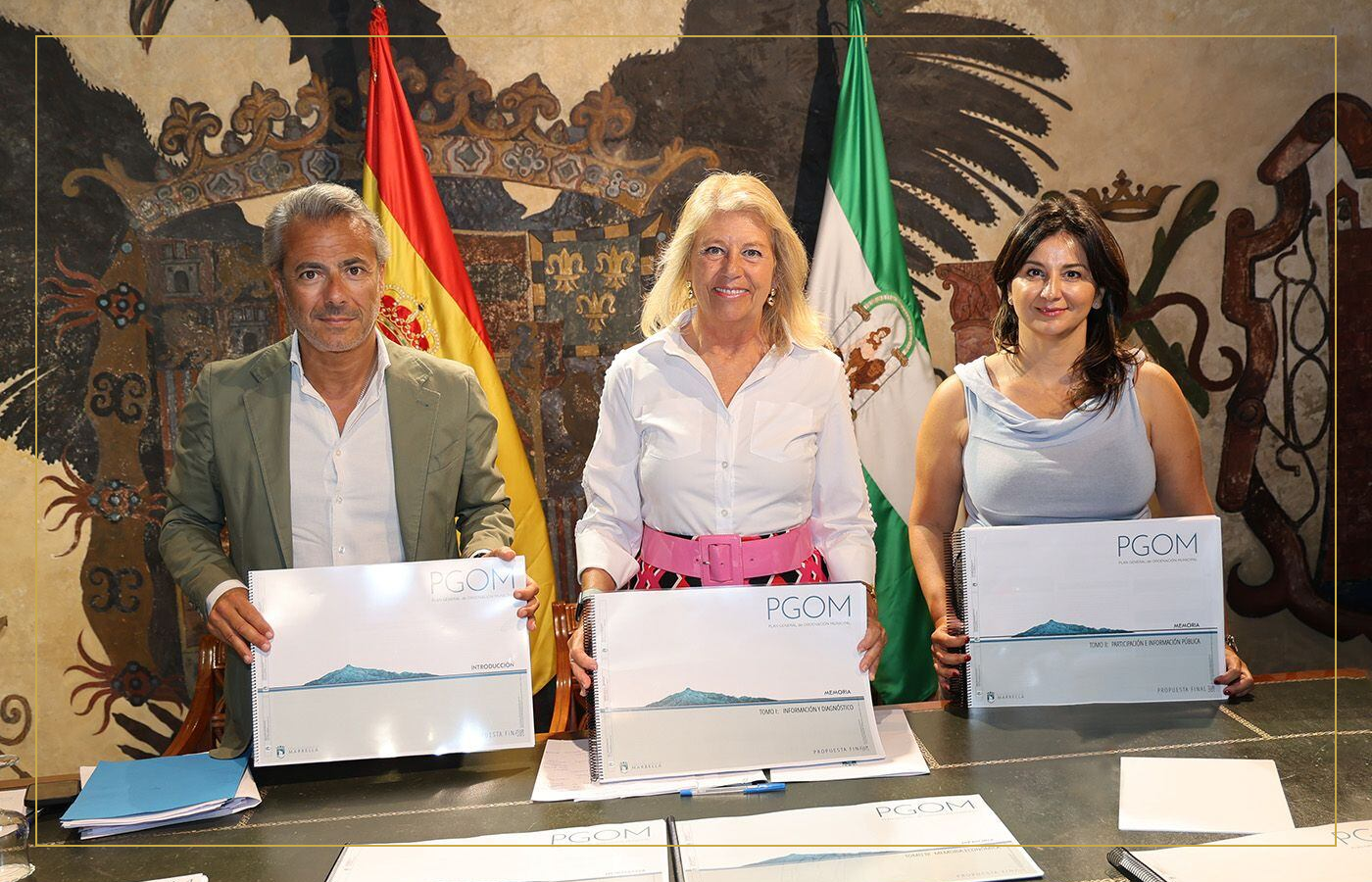
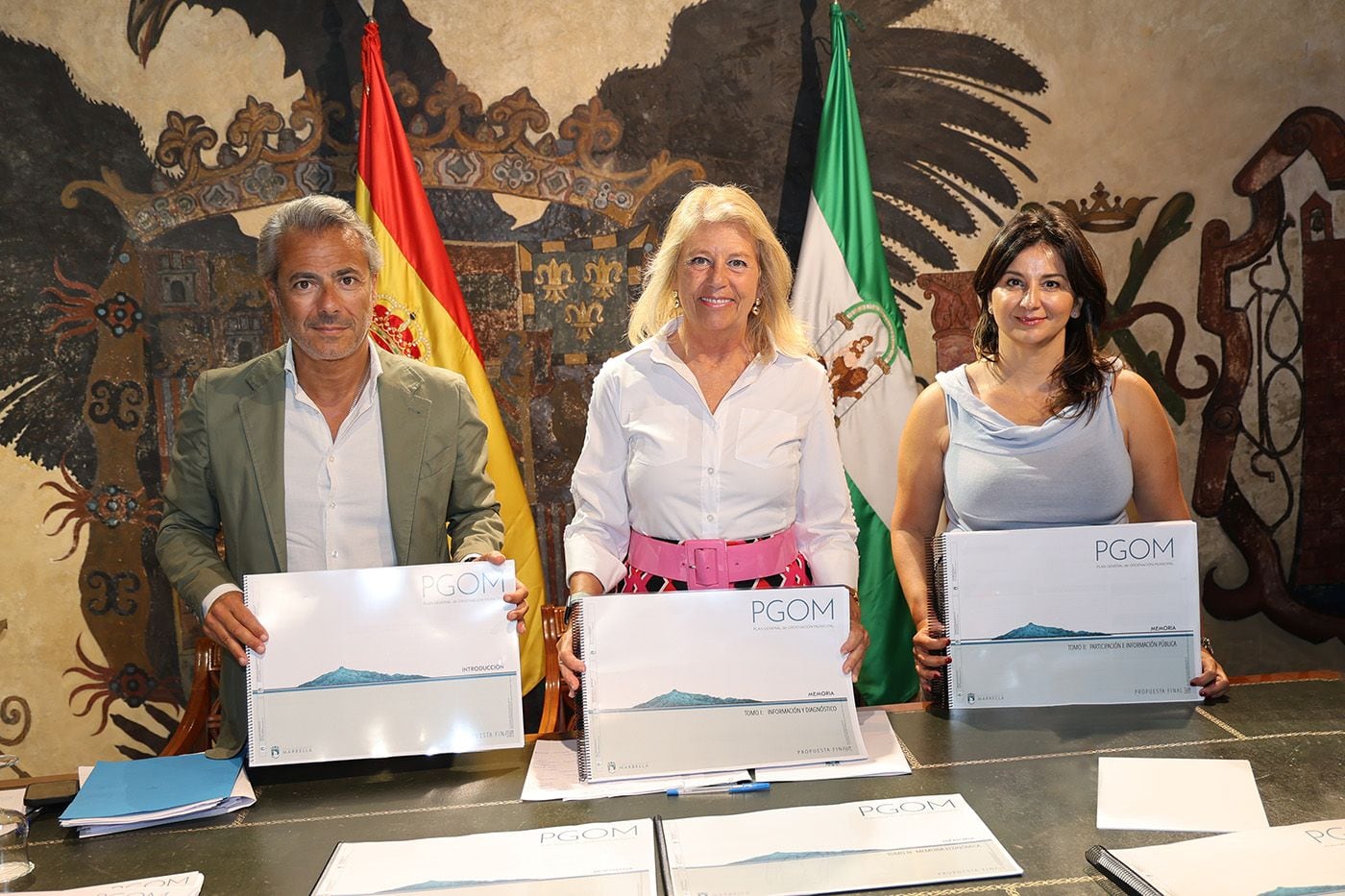
The plan passed with votes from the ruling Partido Popular, local party Opción Sampedreña and VOX, while the PSOE abstained. Mayor Ángeles Muñoz said it opens a new era for the city and called it a plan made by and for Marbella, designed to outlast political cycles and give the municipality legal certainty. She stressed that the document had passed every review stage with favourable reports.
Urban planning councillor José Eduardo Díaz described the vote as the culmination of years of technical work, studies, public participation and sectoral reports. Both he and the mayor were careful to make the same point: approval is not the end of the process, but the beginning of a new one.
📜 What Is the Marbella PGOM?
The PGOM (Plan General de Ordenación Municipal) is the master document that decides how a municipality can grow. It classifies land as urban or rural, sets out the major systems of green spaces, mobility and public facilities, protects heritage buildings, and lays down the strategy for housing, regeneration and development in the countryside.
Under Andalusia’s LISTA law (Law 7/2021 on the Promotion of Territorial Sustainability), the old single-document PGOU has been replaced by a two-tier system. The PGOM sets the general model; a separate POU (Plan de Ordenación Urbana) turns that model into the detailed zoning, building rules and plot-level conditions that architects, developers and buyers actually work with.
That distinction matters. The Marbella PGOM is now approved, but the POU is still being processed. Until it is in force, some detailed provisions of the 1986 plan and its development instruments may continue to apply to urban land, as long as the new PGOM has not expressly replaced them.
| PGOM | POU | |
|---|---|---|
| Role | General model of the city | Detailed rules for urban land |
| Covers | Land classification, growth, infrastructure, protected areas | Zoning, building parameters, plot conditions |
| Who uses it | Council, regional government, large developers | Architects, builders, owners, buyers |
| Status | Approved, 18 Sep 2026 | In progress |

🕰️ Forty Years in the Making: Why This Plan Matters
To understand why the Marbella PGOM is such a big deal, you need a short history lesson. For most of the last four decades, Marbella’s official planning rulebook has been the PGOU approved in 1986, a document written for a very different city.
During the 1990s and early 2000s, thousands of homes were built under licences that did not comply with that plan. In 2010, a new PGOU was approved, partly to regularise that situation. But in 2015 Spain’s Supreme Court annulled it, and the 1986 plan returned as the reference. Marbella was left with an outdated framework, a large stock of homes in legal limbo and a reputation for planning uncertainty that weighed on investors for years.
The road to the new plan has been long:
1986 — Marbella approves the PGOU that will govern the city for four decades.
2010 — A new PGOU is approved.
2015 — The Supreme Court annuls the 2010 plan; the 1986 plan returns.
2021 — Andalusia’s LISTA law creates the new PGOM/POU system.
Mar 2023 — Initial approval of the new Marbella PGOM.
Jun 2025 — The council approves the final proposal.
Feb 2026 — Favourable report from the Junta de Andalucía.
Sep 2026 — The Coastal Authority signs off the last pending procedure.
18 Sep 2026 — Final approval in an extraordinary council session.
Regional housing minister Rocío Díaz summed up its main value in one phrase ahead of the vote: the first thing the plan does is provide legal certainty. For a city like Marbella, that is worth more than any individual zoning change.
🏗️ What the Marbella PGOM Changes
These are the headline measures in the new plan:
- More urban land. Urban land grows from around 40 million to 53 million m², reflecting how the city has actually developed since 1986.
- Affordable housing. New actions in urban land must reserve 20% of residential buildable area for affordable housing, a response to one of Marbella’s most pressing social issues.
- Homes in limbo. The council says the plan addresses the situation of around 18,000 homes that were left outside the regulatory framework.
- Green corridors. Natural corridors and open spaces will connect the mountains with the coast.
- Mobility. Land is reserved for future infrastructure, including a railway connection, along with expanded cycling networks and parking.
- Growth linked to resources. New development is tied to the availability of water, sanitation and energy infrastructure.
The railway reservation deserves a special mention. Marbella is famously one of the largest cities in Spain without a train station. The plan does not build a railway, but by protecting the land it keeps the door open for a project that has been discussed for decades.
⚠️ What the Marbella PGOM Does Not Do
Headlines can create false expectations, so it is worth being clear about the limits:
- No automatic legalisation. A new general plan does not retroactively cure annulled licences, unauthorised extensions or other historical irregularities. Every property needs its own assessment.
- No instant building rights. A new classification does not mean a plot can be built on tomorrow. Development still depends on detailed plans, infrastructure and sectoral permits.
- Not yet the full rulebook. The detailed rules for urban land will come with the POU, which is still in progress.
- Not uniform. The impact on value is location-specific. Some properties and plots will benefit a lot; others will see little change.
In short, the Marbella PGOM is a foundation, not a finished building.
🚀 The First Effects: A Wave of New Projects
It did not take long for the new plan to start moving projects. Within days of the vote, several large developments to the east and north of the city were in the news. Together they add up to more than 6,400 potential homes:
| Project | Area | Highlights |
|---|---|---|
| Golf Reserva de Marbella (Grupo Peñarroya) | Alicate / Arroyo Sequillo | Up to 2,759 homes (1,462 subsidised) and a 50,000 m² five-star hotel with branded residences |
| Interpromo 2006 | La Víbora | 2,776 homes (1,333 subsidised) and a 13,000 m² commercial zone |
| Alfil Patrimonial Socimi | La Vizcaína | 685–872 homes, education facilities and hotel potential |
| URP-MB-2 | Near La Cañada | 156 detached villas, first approved in 1991, now cleared by the regional environmental authority |
The developers of the larger sectors have two years to draw up and submit their detailed partial plans, so construction is still some way off. Separately, San Pedro Alcántara will get 172 new subsidised rental homes of up to four bedrooms, aimed at local families.
The 156-villa project near La Cañada is a good illustration of what legal certainty unlocks. It was originally approved back in 1991, but spent decades stuck, partly because it sits next to the protected Trapiche del Prado sugar mill complex. After more than six years of procedures, including archaeological studies, it now has its environmental authorisation, and the council is preparing to approve around €8 million of infrastructure works.
🏨 Luxury Projects Moving in Parallel
The new plan also arrives as Marbella’s top-end pipeline accelerates. In September alone:
- Waldorf Astoria Marbella cleared its first planning hurdle in Las Chapas, declared of municipal interest four days after the Marbella PGOM vote. Read the story.
- Oakmond Marbella, a €260M longevity resort on the historic Incosol site, secured €145M of financing from Goldman Sachs. Read the story.
- Marbella ranks fifth in the world for the ultra-wealthy in the BARNES City Index, ahead of Monaco. Read the story.
International hotel brands and institutional investors have one thing in common: they hate uncertainty. A modern, approved plan makes Marbella a far easier place to commit hundreds of millions of euros.
💎 What the Marbella PGOM Means for Buyers, Sellers and Investors
The practical effects will differ depending on which side of the table you are on:
🔑 For buyers
More certainty is good news, but it does not replace due diligence. Check the property’s current legal status, its licences and any past irregularities, and distinguish clearly between the rules that apply today and future planning expectations. A plot’s new classification is not a promise that it can be built on.
🏷️ For sellers
A clear legal position is now a stronger selling point than ever. Verify any planning claims before marketing a property; buyers and their lawyers will check. If your home was affected by the old uncertainty, it is worth getting a professional assessment under the new framework.
📈 For investors and developers
The plan reduces risk and opens new areas for growth, particularly to the east and north. But viability still depends on the POU, partial plans, infrastructure and sectoral permits. Separate current rights from future expectations when pricing land.
For the luxury segment specifically, the biggest effect is reputational. For years, planning uncertainty was the one question every international buyer asked about Marbella. The Marbella PGOM does not make that question disappear overnight, but it finally gives a credible answer.
Planning a purchase? Read our guide to buying property in Marbella or explore our East Marbella area guide.
🧾 Due Diligence Checklist Under the New Plan
- Request an urban planning certificate (certificado urbanístico) from the town hall for the specific property.
- Check the licences: building licence and first occupation licence, or their equivalent.
- Compare the built reality with the records: Land Registry, Cadastre and any extensions or pools added later.
- Ask about the transition: which rules apply to the plot today, and what may change with the POU.
- Look at the neighbourhood: new sectors, roads or facilities planned nearby can affect views, traffic and value.
- Get independent legal advice from a lawyer who knows Marbella’s planning history well.
⏭️ What Happens Next
- Official publication of the Marbella PGOM in the Andalusian official gazette (BOJA), required for it to enter into force.
- Processing of the POU, which will set the detailed rules for urban land.
- Partial plans for the new development sectors, with a two-year deadline for the large eastern and northern projects.
- Case-by-case regularisation of properties affected by past irregularities.
It will take years for the full effects to show on the ground. But for the first time in a generation, Marbella knows the rules of its own game. We’ll keep following each step.
❓ Frequently Asked Questions
What is the Marbella PGOM?
It is Marbella’s new General Municipal Plan, the master planning document that classifies land and sets the city’s growth model. It replaces the plan approved in 1986.
When was the Marbella PGOM approved?
It received final approval in an extraordinary council session on 18 September 2026. It must be published in the BOJA to enter into force.
What is the difference between the PGOM and the POU?
The PGOM sets the general model for the whole municipality. The POU sets the detailed rules for urban land, such as zoning and building parameters. Marbella’s POU is still being processed.
Does the new plan legalise irregular homes?
Not automatically. The council says the plan addresses around 18,000 homes left outside the framework, but each property must be assessed individually.
How much urban land does the new plan include?
About 53 million m², compared with around 40 million m² under the previous framework.
Will property prices in Marbella go up?
Greater legal certainty generally supports confidence and value, but the effect will vary by location and property. There is no automatic, uniform price increase.
What is the LISTA law?
Andalusia’s Law 7/2021 on the Promotion of Territorial Sustainability, which replaced the old planning system with the new PGOM and POU structure. Marbella’s is the first PGOM in Andalusia adapted to it.
Sources: Ayuntamiento de Marbella, Junta de Andalucía, regional and local press.
LUXO Estates
New rules. Same eye for the best homes.
Prime villas and residences across Marbella, with the legal clarity today’s buyers expect.